Revolutionizing Brain-Computer Interfaces: the BISC Implant and the Future of Neural Technology
For decades, the promise of seamless brain-computer interaction has captivated scientists and fueled science fiction. Now,a groundbreaking progress from researchers at Columbia University,Stanford,and NewYork-presbyterian/Columbia University Irving Medical Center is bringing that future significantly closer. The Brain Interface System Chip (BISC) represents a paradigm shift in brain-computer interface (BCI) technology, offering unprecedented bandwidth, miniaturization, and potential for clinical application. This article delves into the BISC’s innovative design, its potential impact on neurological treatment and human-AI interaction, and the path towards widespread adoption.
Addressing the Limitations of existing BCIs
Current BCI systems often suffer from limitations in data transmission speed, size, and biocompatibility. Conventional wired systems restrict patient movement and pose risks of infection, while wireless solutions typically lack the bandwidth necessary for complex neural signal processing. The BISC directly addresses these challenges through a highly integrated, fully wireless design.
A System-on-a-Chip Approach: Unprecedented Integration and Performance
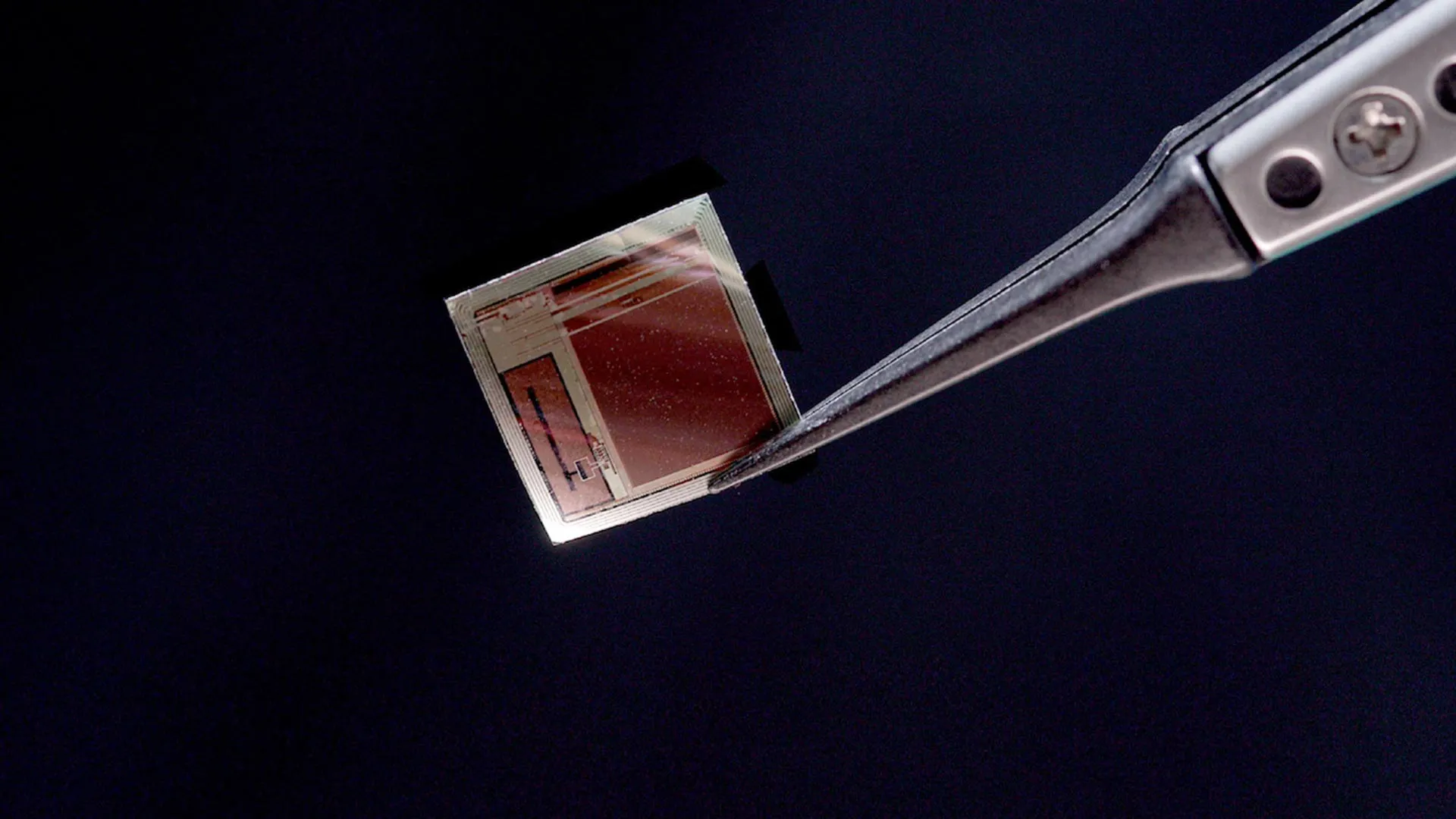
The BISC implant is a remarkable feat of engineering, integrating a complete suite of functionalities onto a single silicon chip. This includes a radio transceiver,wireless power circuitry,digital control electronics,power management systems,data converters,and all necessary analog components for both recording and stimulating brain activity. Critically, the system utilizes a custom ultrawideband radio link achieving a data throughput of 100 Mbps – a staggering 100 times faster than any other currently available wireless BCI. This high bandwidth is crucial for capturing the nuanced complexity of brain signals.
The relay station, operating as a standard 802.11 WiFi device,provides a seamless bridge between the implant and any computer,simplifying data access and analysis. This eliminates the need for specialized hardware and software, broadening accessibility for researchers and clinicians.
Advanced Fabrication for Optimal Performance
The BISC’s performance is underpinned by its fabrication using TSMC’s 0.13-μm Bipolar-CMOS-DMOS (BCD) technology. This advanced process combines three distinct semiconductor technologies - CMOS for digital logic, bipolar and DMOS for high-current/voltage analog functions, and DMOS for power devices – into a single chip. This integration allows for efficient operation of all essential components, maximizing performance and minimizing power consumption. This mixed-signal IC approach is a key differentiator, enabling the BISC to handle the demanding requirements of neural recording and stimulation.
From Preclinical Success to Human Trials
The development of the BISC hasn’t been confined to the laboratory. A collaborative effort led by Dr. Kevin Shepard at Columbia University and Dr. Andrew Youngerman at NewYork-Presbyterian/Columbia University Irving Medical Center has focused on translating this technology into clinical reality.
Preclinical studies have demonstrated the safe and effective placement of the thin, flexible implant in animal models, yielding high-quality, stable recordings. Importantly, the BISC’s paper-thin form factor and lack of penetrating electrodes or wires minimize tissue reactivity and signal degradation – a significant advantage over traditional implant designs.
Short-term intraoperative studies in human patients are already underway, providing invaluable data on the device’s performance in a real surgical setting. The minimally invasive surgical procedure, involving a small incision and direct placement of the implant onto the brain’s surface in the subdural space, further enhances the device’s safety profile. Extensive preclinical work, conducted in collaboration with Dr. Andreas Tolias and Professor Bijan Pesaran at the University of Pennsylvania, has focused on the motor and visual cortices, leveraging their expertise in computational and systems neuroscience.
Kampto Neurotech: Driving Commercialization and Innovation
recognizing the transformative potential of the BISC, researchers founded Kampto Neurotech, a startup dedicated to bringing this technology to market. led by Dr. Nanyu Zeng, a columbia electrical engineering alumnus and key engineer on the project, Kampto Neurotech is currently producing research-ready versions of the chip and actively seeking funding to support clinical trials and broader adoption.
“This is a fundamentally diffrent way of building BCI devices,” states Dr. Zeng, highlighting the BISC’s superior technological capabilities.
The Future of BCIs: AI Integration and Beyond
The BISC’s high-bandwidth recording capabilities unlock the potential for advanced machine learning and deep learning algorithms to interpret complex intentions, perceptual experiences, and brain states.This opens doors to a wide range of applications, including:
* Restoring Lost Function: BCIs powered by the BISC could restore movement in paralyzed individuals, provide communication pathways for those with speech impairments, and potentially restore sensory function.
* Treating Neurological Disorders: The BISC’s stimulation capabilities could be used to treat conditions like epilepsy, Parkinson’s disease, and depression.
*
Related reading