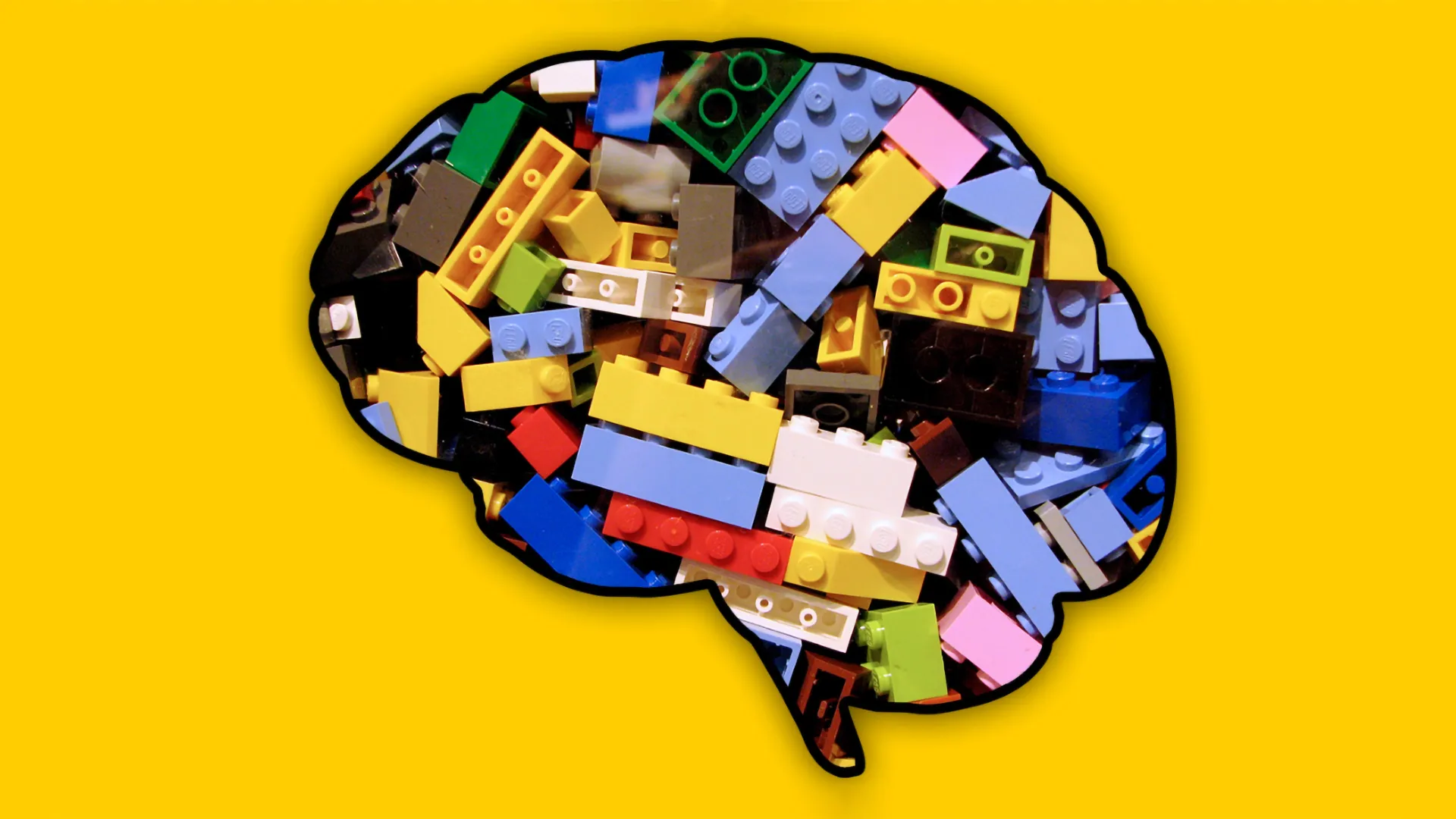
The Brain’s Modular Architecture: How “Cognitive Legos” Enable Flexible Thinking adn Offer Insights into AI & Mental Health
For decades, neuroscientists have sought to understand the fundamental principles governing the brain’s remarkable ability to learn, adapt, and perform a vast array of tasks. Recent research from the University of Washington, led by Dr. Sam Tafazoli and Dr. Timothy Buschman,offers compelling evidence that the brain operates on a modular principle,utilizing reusable “cognitive building blocks” - akin to Lego bricks – to construct complex behaviors. This revelation not only sheds light on the neural mechanisms underlying cognitive adaptability but also holds notable implications for the future of artificial intelligence and the treatment of neurological and psychiatric disorders.
Unlocking the Brain’s Code: A Novel Experimental Design
The study, published and funded by the national Institutes of Health (R01MH129492, 5T32MH065214), employed a clever experimental design using macaque monkeys. Researchers presented the animals with tasks involving both color and shape categorization. Crucially, the tasks were designed to isolate specific cognitive components. Shape tasks required the monkeys to look in the same direction to indicate their choice, while color tasks demanded categorization (more red or more green) but different gaze directions for signaling their judgment.
This nuanced approach wasn’t arbitrary. it allowed Tafazoli and Buschman to meticulously examine whether the brain re-employed the same neural patterns – the same underlying cognitive processes – when tasks shared common features, even if the behavioral output differed. This is a critical distinction; simply observing brain activity during different tasks isn’t enough. The researchers needed to determine if the way the brain processed information was consistent across tasks, suggesting a fundamental organizational principle.
The Prefrontal Cortex: A Hub for Cognitive Compositionality
The results pointed decisively to the prefrontal cortex (PFC), the brain region responsible for higher-level cognitive functions like planning, decision-making, and working memory. Analysis of brain activity revealed recurring patterns within the PFC whenever groups of neurons collaborated towards a specific goal, such as distinguishing colors or identifying shapes.
Dr. Buschman aptly described these patterns as the brain’s “cognitive Legos.” These aren’t monolithic blocks representing entire tasks, but rather fundamental functional units. ”I think about a cognitive block like a function in a computer program,” he explained. “One set of neurons might discriminate color, and its output can be mapped onto another function that drives an action.”
This “compositionality” – the ability to combine simpler components into more complex ones – is key. Such as, the brain could assemble a block dedicated to color identification alongside a block controlling eye movements, and then seamlessly switch to activating a shape-processing block while reusing the eye movement block. This sharing of blocks was significantly more pronounced in the PFC than in other brain regions, suggesting the PFC is uniquely equipped for this type of cognitive construction.
Sharpening Focus: Activating and Suppressing Cognitive Blocks
The research also revealed a crucial dynamic process: the brain doesn’t simply activate all available blocks simultaneously. Tafazoli and Buschman observed that the PFC actively suppressed cognitive blocks when they weren’t needed. This selective activation and suppression is vital for efficient cognitive control.
“The brain has a limited capacity for cognitive control,” Tafazoli noted. “You have to compress some of your abilities so that you can focus on those that are currently crucial. Focusing on shape categorization, for example, momentarily diminishes the ability to encode color because the goal is shape discrimination, not color.” This dynamic prioritization prevents cognitive overload and ensures resources are allocated to the task at hand.
Implications for Artificial Intelligence: Overcoming Catastrophic Interference
The discovery of these cognitive Legos has profound implications for the field of artificial intelligence. Current machine learning models frequently enough suffer from “catastrophic interference” – the tendency to forget previously learned information when acquiring new skills.
“A major issue with machine learning is catastrophic interference,” tafazoli explained. “When a machine or a neural network learns something new, they forget and overwrite previous memories.If an artificial neural network knows how to bake a cake but then learns to bake cookies, it will forget how to bake a cake.”
Incorporating the brain’s compositional architecture into AI systems could revolutionize their learning capabilities. By allowing AI to reuse and recombine existing “cognitive blocks” instead of constantly retraining from scratch, we could create artificial systems that learn more efficiently, retain knowledge over time, and exhibit a level of cognitive flexibility currently beyond their reach. This represents a significant step towards truly human-like artificial intelligence.
A New Frontier in Mental Health: Restoring Cognitive Flexibility
Beyond AI, understanding the brain’s modular architecture offers exciting possibilities for treating neurological and psychiatric
Keep reading