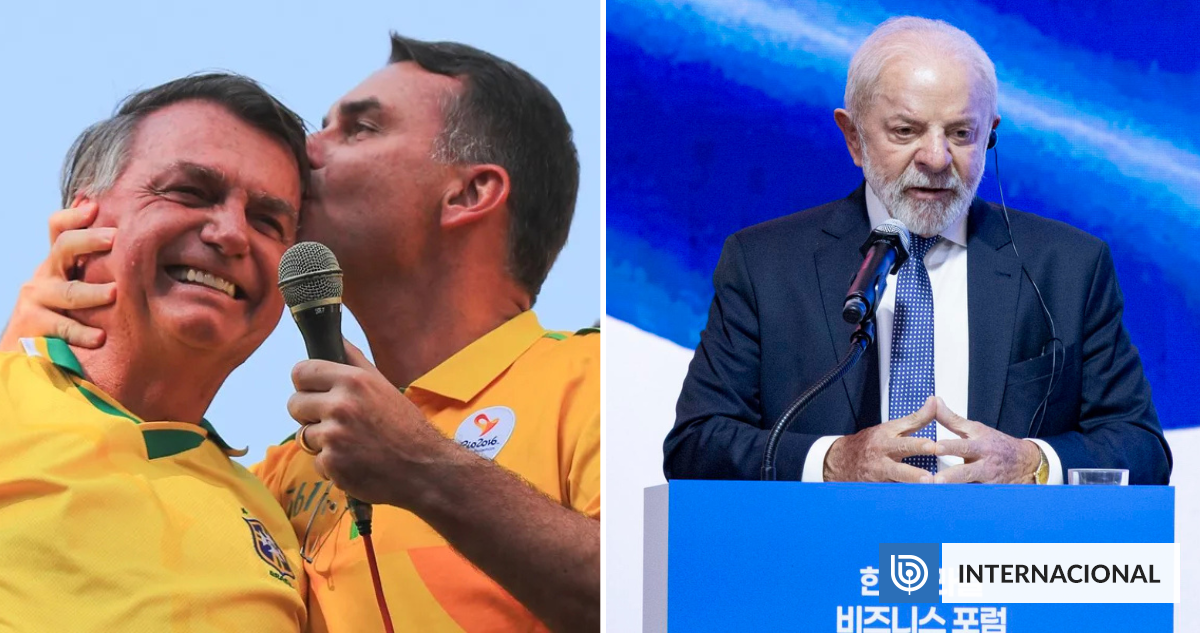
Tight Race in Brazil as Lula and Bolsonaro’s Son Vie for Presidency
Brazil’s political landscape is bracing for a potentially divisive election this October, with recent polling data revealing a remarkably close contest between incumbent President Luiz Inácio Lula da Silva and Flávio Bolsonaro, son of the former president, Jair Bolsonaro. The tightening race signals a continued polarization within the country, even as Bolsonaro Sr. Remains incarcerated following a conviction for attempting to undermine Brazil’s democratic institutions. The outcome will likely shape the direction of Latin America’s largest economy and its role on the global stage.
The latest figures, released by Atlas Intel and reported by Bloomberg on February 25, 2026, show Flávio Bolsonaro with 46.3% of voter intention, narrowly trailing Lula da Silva at 46.2%. This represents a significant shift from December, when Lula held a more comfortable lead of 53% to Bolsonaro’s 41%. The gap further narrowed in January, to 49% for Lula and 45% for Bolsonaro. This dramatic shift underscores the enduring appeal of the Bolsonaro family and the challenges facing Lula’s administration as it navigates a complex political and economic climate.
Bolsonaro’s Political Ascent and Family Legacy
Flávio Bolsonaro, a current Senator representing Rio de Janeiro, officially launched his presidential bid in December 2025, with his father’s endorsement. Jair Bolsonaro, despite being imprisoned, reportedly chose his son to lead the conservative opposition. The former president is serving a 27-year sentence after being convicted of plotting a coup d’état, leading an armed criminal organization, and attempting to violently abolish the democratic rule of law. As Fox News reported, Bolsonaro remains a popular figure, particularly in the southern strongholds of Rio de Janeiro and São Paulo, commanding a devoted following despite his legal troubles.
The Bolsonaro family’s political ambitions extend beyond Flávio’s presidential run. Eduardo Bolsonaro, another son of the former president, is actively engaged in diplomatic efforts to secure his father’s release, lobbying for sanctions against Brazil and pursuing Magnitsky sanctions against Alexandre de Moraes, the head of the Brazilian Supreme Court. This “maximum pressure campaign,” as described by Fox News, highlights the family’s determination to regain political influence and challenge the current administration.
Lula’s Challenges and the Carnival Controversy
While Flávio Bolsonaro has gained ground, Lula da Silva faces his own set of challenges. The recent dip in his polling numbers is partially attributed to controversies surrounding the Carnival celebrations in Rio de Janeiro. A float depicting Lula, and a representation of the “traditional family” within a can, sparked outrage among opponents, who accused the display of being offensive to religious Brazilians and an inappropriate campaign tactic before the official start of the electoral period. BioBioChile reported that the incident fueled criticism and contributed to a decline in Lula’s support.
Lula’s return to the presidency in 2022 followed a dramatic release from prison in 2019, after the Brazilian Supreme Court overturned his corruption conviction. His narrow victory over Bolsonaro in 2022 marked the closest election since Brazil’s return to democracy in 1985. But, the lingering political divisions and economic uncertainties continue to shape the current electoral landscape.
The Political Landscape and Potential Outcomes
The 2026 election was initially expected to feature São Paulo Governor Tarcisio de Freitas as a leading contender. However, Freitas declined to run, clearing the path for Flávio Bolsonaro’s candidacy. This decision significantly altered the dynamics of the race, solidifying the contest as a direct rematch between the Bolsonaro family and the Workers’ Party led by Lula da Silva.
Datafolha polling conducted prior to Flávio Bolsonaro’s official candidacy announcement indicated a 15-point advantage for Lula in a hypothetical second-round runoff. However, the recent tightening of the polls suggests that the race is far from decided. The outcome will likely depend on a number of factors, including economic performance, social issues, and the ability of each candidate to mobilize their base and appeal to undecided voters.
President Luiz Inacio Lula da Silva and Flavio Bolsonaro are deadlocked ahead of Brazil’s October presidential election, according to a recent poll that shows the race tied for the first time https://t.co/aunFbEZFSo
— Bloomberg (@business) February 25, 2026
Internal Family Dynamics and Political Strategy
Adding another layer of complexity to the Bolsonaro campaign is reported internal friction within the family. Flávio Bolsonaro has reportedly clashed with his stepmother, Michelle Bolsonaro, accusing her of being “authoritarian” in party discussions. This internal discord could potentially impact the campaign’s unity, and effectiveness. The 44-year-old Flávio Bolsonaro is the son of Jair Bolsonaro from a previous marriage.
The upcoming months will be crucial as both campaigns refine their strategies and attempt to sway public opinion. The election is expected to be fiercely contested, with significant implications for Brazil’s future. The outcome will not only determine the country’s leadership but also reflect the ongoing struggle between conservative and progressive forces within Brazilian society.
The Brazilian electoral authorities have scheduled the first round of the presidential election for October 2026. Further polling data and campaign developments are expected in the coming weeks, providing a clearer picture of the evolving political landscape. The Supreme Electoral Court will release the official list of candidates and campaign finance reports in September, offering further insight into the dynamics of the race.
As Brazil heads towards a pivotal election, the world will be watching closely. The outcome will have far-reaching consequences for the region and beyond, shaping the future of Latin America’s largest democracy.
What are your thoughts on the Brazilian election? Share your comments below and let us grasp what issues are most important to you.
Related reading