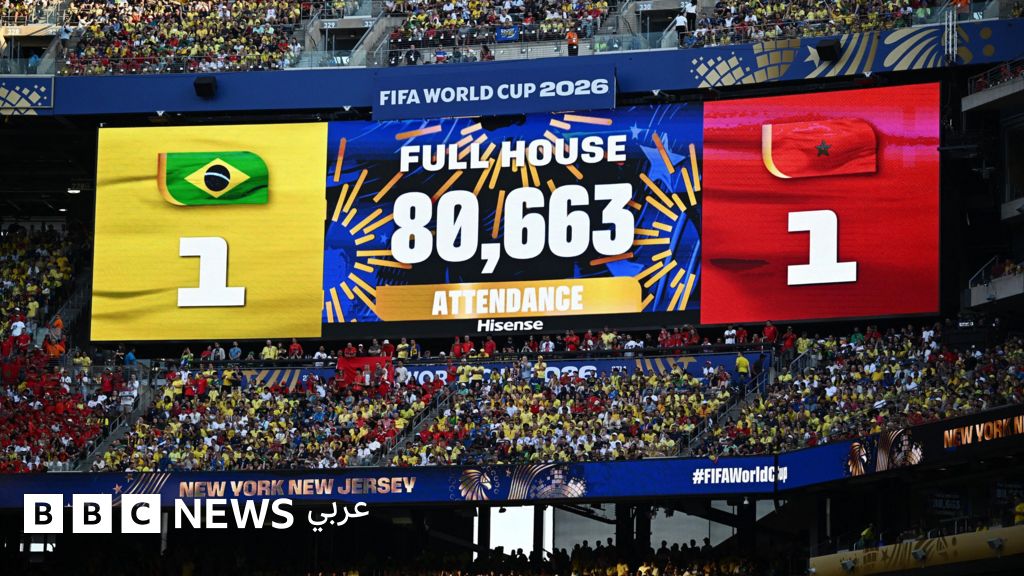
The recent international football encounters featuring Brazil, Morocco, and Qatar have highlighted the unpredictable nature of tournament-level competition, with results reflecting both tactical discipline and the persistent challenges of opening matches. While Brazil and Morocco played to a hard-fought draw, Qatar secured its first point in the ongoing tournament cycle, signaling a period of adjustment for these national programs as they calibrate for future fixtures.
The match between Brazil and Morocco underscored the tactical evolution of both squads. According to reports from the FIFA official match records, such high-stakes fixtures often serve as a litmus test for defensive stability and midfield transition. For Morocco, the result was a continuation of a challenging trend in tournament openers, where the team has historically faced difficulty in securing early victories despite maintaining high levels of possession and organized defensive structures.
Tactical Challenges and Strategic Adjustments
The draw between Brazil and Morocco prompted immediate reflection from the players on the pitch. Achraf Hakimi, the Moroccan captain, emphasized the necessity of clinical decision-making during high-intensity matches. As noted in coverage by Asharq Al-Awsat, Hakimi stated that the squad must learn from its tactical errors against Brazil to improve their performance in subsequent rounds. The sentiment reflects a broader focus on minimizing individual lapses that can prove costly against world-class opposition.
From the Brazilian perspective, the match served as an opportunity to integrate newer tactical frameworks. Carlo Ancelotti, often cited in discussions regarding international management philosophies, has previously remarked that success in long-format tournaments is rarely determined by the outcome of a single opening game. According to analysis provided by Radio France Internationale, the emphasis remains on long-term consistency rather than the immediate result of the first fixture.
Qatar’s First Point and Tournament Context
Meanwhile, Qatar’s acquisition of its first point in the tournament marks a significant milestone for the program. The result provides a foundational platform for the team as it seeks to stabilize its performance in subsequent group stage matches. Tournament data provided by BBC Sport confirms that securing a point in an opening fixture is often a critical psychological boost for host nations and developing squads alike, as it prevents the early exit scenarios that often plague teams following consecutive losses.

The broader implications of these results suggest a tightening of competition across international football. With the 2026 World Cup cycle approaching, national federations are increasingly utilizing these windows to test depth and tactical flexibility. According to the Asian Football Confederation, the ability to grind out results against top-tier opponents is a primary indicator of a team’s readiness for the global stage.
Looking Toward Upcoming Fixtures
For Morocco, the focus shifts toward correcting the “opening match complex” that has historically hindered their tournament momentum. The team’s next scheduled appearance is expected to be a critical indicator of their capacity to adapt under pressure. Similarly, Brazil’s technical staff is expected to review match footage to address the gaps in midfield transition that were exposed during the draw.
Fans and analysts are looking toward the next official FIFA international window for further updates on squad selections and tactical shifts. Official statements regarding the next round of qualifying and friendly matches are expected to be published on the FIFA official website. We encourage our readers to join the conversation in the comments section below or share this report as we continue to track these developments across the international football landscape.
Related reading