Chocolate Honey: A Sweet Fusion of Sustainability and Health
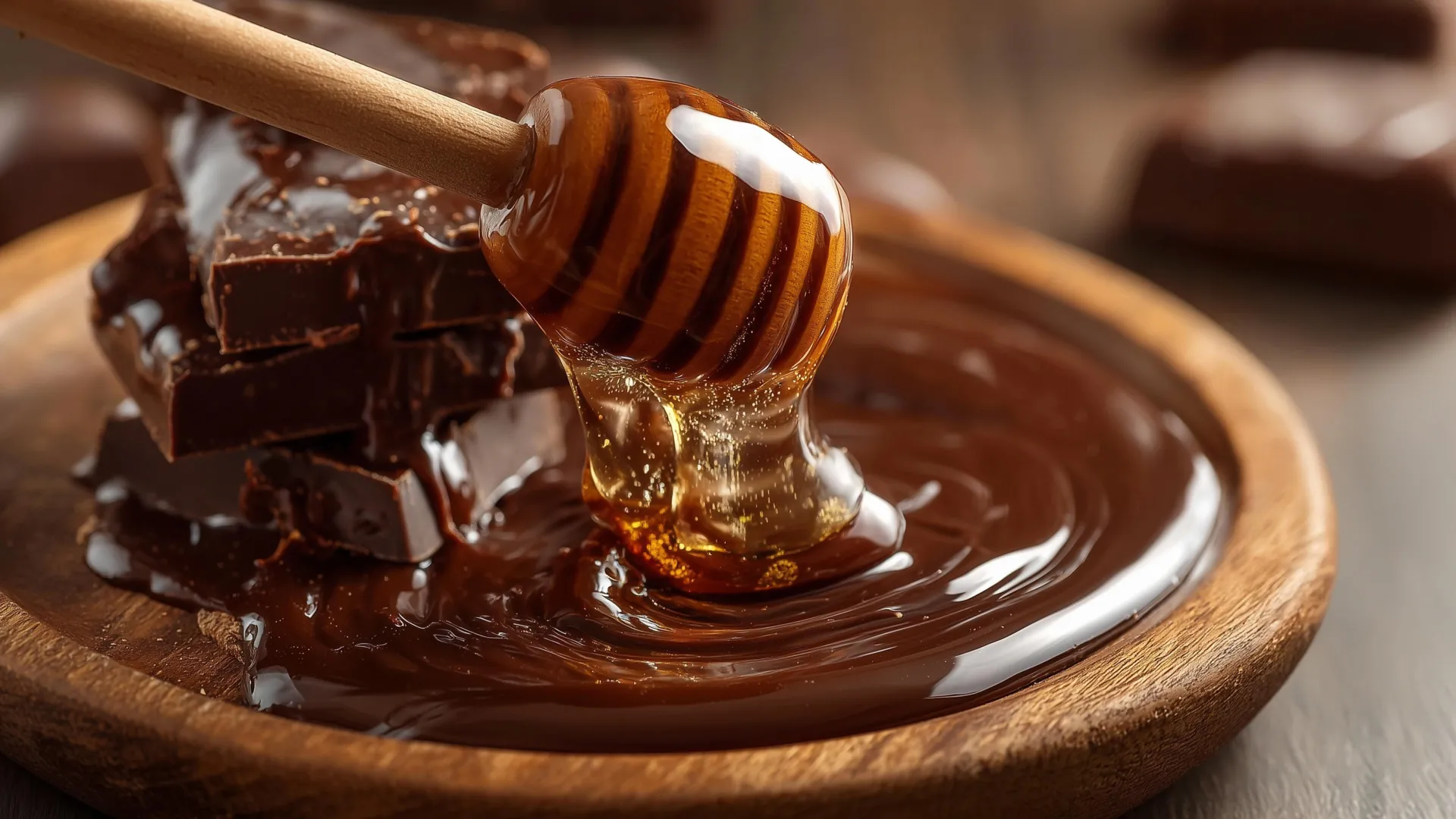
Researchers in Brazil have achieved a remarkable feat of food innovation, transforming cocoa bean shells – a byproduct often discarded during chocolate production – into a delicious and potentially health-boosting chocolate-infused honey. This novel product, created using honey from native Brazilian bees and enhanced with ultrasound technology, represents a significant step towards reducing food waste and harnessing the power of natural biodiversity. The findings, recently published in ACS Sustainable Chemistry & Engineering, have garnered attention for their potential applications in both the gourmet food industry and the cosmetics sector. This innovative approach not only offers a new culinary experience but also highlights a sustainable pathway for utilizing agricultural byproducts.
The project centers around the ingenious apply of native bee honey as a natural solvent to extract beneficial compounds from cocoa shells. These compounds include theobromine and caffeine, both known for their potential cardiovascular benefits, alongside phenolic compounds celebrated for their antioxidant and anti-inflammatory properties. The ultrasound-assisted extraction process amplifies the honey’s ability to draw out these valuable components, creating a product with a pronounced chocolate flavor that varies depending on the proportion of honey to cocoa shell used. This method avoids the need for synthetic solvents, aligning with principles of green chemistry and sustainable food production. The team is currently refining the process to optimize both taste and sensory characteristics, paving the way for potential commercialization.
The development of this unique honey blend isn’t just about creating a novel food product; it’s about embracing a circular economy and valuing local biodiversity. Brazil is home to a diverse range of native bee species, and researchers discovered that honey from these bees – specifically, borá (Tetragona clavipes), jataí (Tetragonisca angustula), mandaçaia (Melipona quadrifasciata), mandaguari (Scaptotrigona postica), and moça-branca (Frieseomelitta varia) – possesses characteristics that make it particularly effective for this extraction process. Compared to honey from European bees (Apis mellifera), native Brazilian bee honey generally has a higher water content and lower viscosity, facilitating the extraction of bioactive compounds from the cocoa shells. This approach underscores the importance of preserving and utilizing local resources for sustainable innovation.
Ultrasound Extraction: A Green Chemistry Approach
The core of this innovation lies in the application of ultrasound technology. Researchers employ a probe that emits sound waves into a mixture of honey and cocoa shells. These sound waves create microscopic bubbles that rapidly expand and collapse, generating localized heat, and pressure. This process effectively breaks down the cell walls of the cocoa shells, releasing the desired compounds into the honey. Ultrasound-assisted extraction is increasingly recognized in the food industry as an environmentally friendly technique due to its efficiency and reduced reliance on traditional, often harsher, extraction methods.
Sustainability was a key consideration throughout the development process. The team utilized Path2Green software, developed at the State University of Campinas (UNICAMP), to evaluate the process against the 12 principles of green chemistry. This analysis assessed factors such as transportation, post-treatment, purification, and application, ultimately assigning the product a score of +0.118, indicating a strong alignment with sustainable practices. Professor Mauricio Ariel Rostagno of FCA-UNICAMP, who supervised the research, believes this technology could be readily adopted by small businesses and cooperatives already working with cocoa and native bee honey, allowing them to diversify their product offerings and create value-added goods, even for the haute cuisine market.
The Benefits of Native Brazilian Bee Honey
The choice of native Brazilian bee honey wasn’t arbitrary. Researchers found that these honeys, due to their unique composition, are more effective at extracting the desired compounds from cocoa shells. The five species tested – borá, jataí, mandaçaia, mandaguari, and moça-branca – each offered slightly different properties, with mandaguari honey initially used to refine the extraction process due to its moderate water content and viscosity. However, the process was successfully adapted for use with all five honey varieties. Felipe Sanchez Bragagnolo, the study’s first author, emphasized that the process is adaptable to locally available honey, meaning it isn’t limited to just mandaguari honey. This flexibility is crucial for scalability and regional implementation.
The selection of cocoa shells as the source material also addresses a significant issue of food waste. Cocoa shells are typically discarded as a byproduct of chocolate production, representing a lost opportunity to utilize valuable bioactive compounds. The cocoa shells used in this study were sourced from the São Paulo State Department of Agriculture and Supply’s Comprehensive Technical Assistance Coordination Office (CATI) unit in São José do Rio Preto, further emphasizing the project’s commitment to local sourcing and sustainability. By transforming this waste product into a marketable ingredient, the researchers are contributing to a more circular and resource-efficient food system.
Future Applications and Shelf Life Considerations
Beyond its immediate application as a chocolate-infused honey, the research team is exploring the potential of ultrasound technology to enhance the shelf life of native bee honey. Native bee honey often requires refrigeration or other preservation methods, unlike European honey, which can be stored at room temperature. Researchers hypothesize that the ultrasound treatment may disrupt the cell walls of microorganisms within the honey, effectively eliminating them and increasing its stability. Further studies are planned to investigate this effect and determine the optimal ultrasound parameters for maximizing shelf life. This could significantly simplify the storage and distribution of native bee honey, making it more accessible to consumers.
Looking ahead, the team intends to expand the application of native bee honey as a solvent in ultrasound-assisted extraction to other plant residues. This opens up possibilities for creating a range of innovative and sustainable products from agricultural byproducts, further reducing waste and promoting a circular economy. The researchers are actively seeking a commercial partner, through INOVA UNICAMP, the university’s innovation agency, to license the patented method and bring this promising product to market. More information about the commercialization efforts can be found on the FAPESP website.
Key Takeaways
- Sustainable Innovation: This research demonstrates a novel approach to reducing food waste by transforming cocoa shells into a valuable ingredient.
- Health Benefits: The resulting chocolate honey is rich in theobromine, caffeine, and phenolic compounds, offering potential cardiovascular and antioxidant benefits.
- Biodiversity Focus: The use of native Brazilian bee honey highlights the importance of preserving local biodiversity and utilizing unique natural resources.
- Green Chemistry: The ultrasound-assisted extraction process is environmentally friendly, avoiding the use of synthetic solvents.
The team’s work, supported by multiple scholarships and grants from FAPESP (23/02064-8, 23/16744-0, 21/12264-9, 20/08421-9, 19/13496-0, and 18/14582-5), represents a compelling example of how scientific innovation can address both environmental and health challenges. The next step for the researchers involves securing a commercial partner to scale up production and bring this unique product to consumers. We will continue to follow this story as it develops and provide updates on its progress. What are your thoughts on this innovative use of agricultural byproducts? Share your comments below, and don’t forget to share this article with your network!
Keep reading