
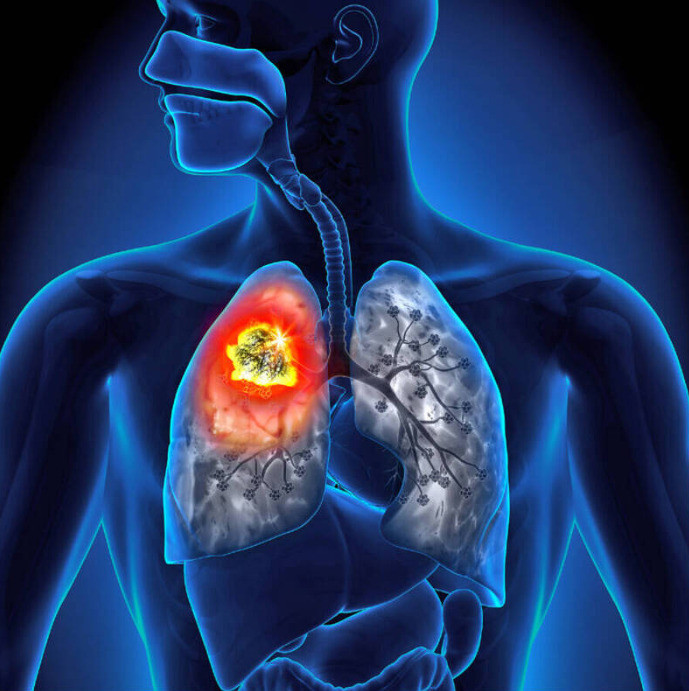
For millions of people battling lung cancer, the fight is rarely just against a tumor. Many patients face a devastating secondary battle: cancer cachexia, a metabolic syndrome characterized by extreme muscle wasting and severe weight loss. This condition often accelerates physical decline, making it harder for patients to tolerate aggressive treatments and significantly shortening survival times.
A promising breakthrough in addressing this dual threat has emerged from the United States. Researchers have developed a dual-effect nano-therapy designed to simultaneously attack lung cancer cells and stimulate muscle growth. By utilizing advanced lipid nanoparticle technology, the team aims to break the cycle of tumor progression and physical deterioration that often leads to a rapid collapse of bodily functions.
This innovative approach, which has shown positive results in animal experiments, represents a shift toward holistic oncology. Rather than focusing solely on the malignancy, the therapy recognizes that maintaining muscle mass is critical to a patient’s overall prognosis and quality of life. The findings, published in the Journal of Controlled Release, suggest a future where genetic medicine can be delivered with surgical precision to multiple targets within the body.
Tackling the Crisis of Cancer Cachexia
Cancer cachexia is a complex complication that affects a staggering number of patients. According to recent data, up to 60% of lung cancer patients experience some degree of muscle atrophy, which can lead to profound weakness and a diminished capacity to withstand chemotherapy GeneOnline News. In some cases, this systemic wasting is so severe that it may contribute to as much as 30% of cancer-related deaths LTN Health.
Traditional cancer treatments often focus exclusively on shrinking the tumor. Even though, this narrow focus can sometimes exacerbate muscle loss, creating a “double hit” to the patient’s health. The new research focuses on a dual-action mechanism: a targeted drug to inhibit the growth and spread of cancer cells by blocking specific signaling pathways, paired with a compound designed to protect muscle tissue. This protective element works by promoting the synthesis of muscle proteins and inhibiting the breakdown of existing muscle mass.
The Science of Nano-Delivery: Precision Genetic Medicine
The core of this breakthrough lies in the delivery system. Led by Professor Gaurav Sahay of the Oregon State University (OSU) College of Pharmacy, in collaboration with Oregon Health & Science University (OHSU) and the University of Helsinki, the team developed a specialized ionizable nano-lipid carrier. After testing more than 150 different materials, they succeeded in creating a “customizable” lung-targeting lipid system Line Today.
This nanoparticle system acts as a high-tech “courier,” capable of delivering genetic material—such as mRNA and gene-editing tools—directly into diseased cells. By ensuring the medication reaches the exact location needed, the therapy can activate immune responses against tumor cells or repair genetic errors without triggering adverse immune side effects. Beyond lung cancer, this delivery system has likewise shown potential in treating cystic fibrosis, a genetic disorder that causes thick mucus buildup and chronic inflammation in the lungs Line Today.
Key Results from Preclinical Trials
The efficacy of the dual-therapy was tested using mouse models of lung cancer. The results provided a glimpse of hope for future human applications:
- Tumor Suppression: Mice receiving the dual-therapy exhibited significantly smaller tumor volumes compared to those receiving only traditional chemotherapy.
- Muscle Preservation: There was a marked improvement in muscle mass and physical strength, with a noticeable reduction in the typical weight loss associated with cancer.
- Anti-Inflammatory Effects: Blood analysis revealed a decrease in inflammatory markers, suggesting the therapy helps improve the overall systemic health of the subject GeneOnline News.
Institutional Support and Future Outlook
The development of this technology was made possible through the support of several major health and research organizations. Funding for the project was provided by the National Cancer Institute (NCI), the National Heart, Lung, and Blood Institute (NHLBI), and the Cystic Fibrosis Foundation Line Today.
While the animal data is encouraging, the research team emphasizes that this is a preclinical stage. The next critical steps involve refining the synthesis process and moving toward clinical trials to determine if these results can be replicated in human patients. If successful, this therapy could redefine the standard of care for lung cancer, moving from a “tumor-only” approach to one that preserves the patient’s physical integrity and functional independence.
Summary of the Nano-Therapy Approach
| Feature | Traditional Chemotherapy | Dual-Effect Nano-Therapy |
|---|---|---|
| Primary Target | Tumor cells | Tumor cells AND muscle tissue |
| Delivery Method | Systemic distribution | Targeted lipid nanoparticles |
| Muscle Impact | Often exacerbates atrophy | Aims to reverse/prevent atrophy |
| Mechanism | Cytotoxic agents | mRNA/Gene-editing tools |
As we move forward, the medical community will be watching for the transition of these lipid nanoparticle carriers into human trials. The ability to “program” the delivery of genetic medicine to specific organs could open the door to treating a wide array of respiratory and systemic diseases.
For those seeking updates on this research, official announcements from Oregon State University or the National Cancer Institute are the most reliable sources for future clinical trial dates and patient eligibility criteria.
Do you believe the focus of cancer treatment should shift more toward managing systemic side effects like muscle loss? We invite you to share your thoughts in the comments below and share this article with others interested in medical innovation.