Breakthrough Gel May Regenerate Tooth Enamel—Restoring Strength Without Fluoride
For the first time in medical history, researchers have developed a gel that may actively regenerate tooth enamel—a tissue that, unlike skin or bone, does not naturally repair itself once damaged. The protein-based formulation, created by scientists at the University of Nottingham, mimics the natural processes that form enamel in infancy, offering a potential paradigm shift in dental care. Unlike current treatments that merely sluggish decay or mask symptoms, this gel appears to promote the growth of new mineral structures that integrate with existing tooth tissue, effectively restoring lost enamel.
The implications are profound: weakened enamel is a global oral health crisis, linked not only to cavities and tooth loss but also to broader systemic conditions like diabetes and cardiovascular disease. Traditional fluoride treatments and remineralization pastes provide temporary relief but fail to address the underlying problem—permanent enamel loss. This new approach, published in Nature Communications, could revolutionize preventive and restorative dentistry, particularly for populations with limited access to advanced dental care.
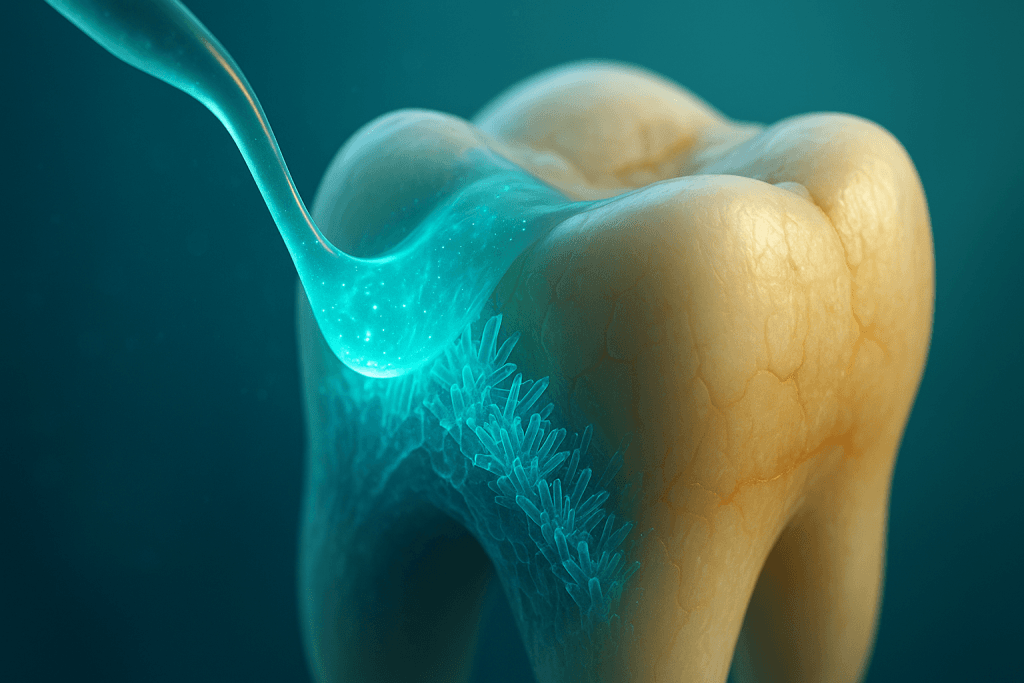
Dr. Abshar Hasan, a postdoctoral fellow and lead author of the study, emphasizes that the gel’s mechanism is inspired by nature itself. “Dental enamel has a unique crystalline architecture that protects teeth from mechanical, chemical, and thermal stress throughout life,” he explains. “Our material promotes organized crystal growth on damaged surfaces, helping to recover the architecture of healthy enamel.” The gel works by forming a thin protective layer that fills microscopic cracks, then acts as a scaffold to draw calcium and phosphate ions from saliva—a process called epitaxial mineralization—to rebuild the enamel structure.
How the Gel Works: A Scientific Breakthrough
Unlike conventional dental treatments that rely on fluoride or synthetic polymers, this gel is fluoride-free and composed of bioinspired proteins that guide mineral deposition. When applied to teeth—using methods similar to standard fluoride varnishes—it forms a temporary matrix that:
- Fills micro-cracks in damaged enamel, preventing bacterial invasion.
- Draws ions from saliva (calcium and phosphate) to nucleate new mineral crystals.
- Promotes epitaxial growth, ensuring the new minerals align with existing enamel structures.
- Strengthens exposed dentine, reducing sensitivity and improving adhesion for dental fillings.
The study’s findings suggest the gel could be particularly effective for:
- Patients with early-stage enamel erosion (e.g., from acid reflux or orthodontic treatment).
- Children and adolescents whose enamel is still developing.
- Individuals with genetic conditions like amelogenesis imperfecta, which impairs enamel formation.
Clinical trials are now needed to assess long-term durability and safety, but preliminary results indicate the material remains stable on tooth surfaces for at least 24 hours, with potential for extended protection.
Who Stands to Benefit—and What Are the Challenges?
The potential impact of this breakthrough extends beyond individual oral health. For dentists and orthodontists, the gel could reduce reliance on invasive procedures like fillings or crowns, offering a non-surgical alternative for early-stage decay. Public health experts note that in regions with limited access to dental care—such as rural areas or low-income communities—the gel’s simplicity (applied like varnish) could democratize enamel repair. Meanwhile, cosmetic dentistry may see new applications, as the gel could help restore the translucency and strength of teeth affected by bleaching or trauma.
However, challenges remain. The gel’s long-term stability in the oral environment must be rigorously tested, and regulatory approval processes—particularly for biomaterial-based treatments—can be lengthy. Cost is another factor: while the gel’s protein-based formulation may ultimately be more economical than repeated fillings, initial production and scaling will require investment. “This represents a promising first step,” says Dr. Hasan, “but we’re still years away from widespread clinical use.”
Enamel Repair: How This Gel Compares to Existing Options
Current Treatments vs. The New Gel
| Treatment | Mechanism | Effectiveness | Limitations |
|---|---|---|---|
| Fluoride varnishes | Strengthens enamel by incorporating fluoride ions. | Slows decay progression; reduces cavities by ~25–40% in high-risk groups. | Does not regenerate lost enamel; requires repeated applications. |
| Remineralization pastes (e.g., CPP-ACP) | Provides calcium and phosphate to repair minor demineralization. | Helps reverse early-stage enamel lesions. | Limited to superficial damage; no structural regeneration. |
| Dental fillings/crowns | Physically replaces lost tooth structure. | Restores function and aesthetics. | Invasive; does not address underlying enamel loss. |
| Protein-based gel (new) | Mimics natural enamel formation; promotes crystal regrowth. | Potential for full structural repair (preclinical stage). | Requires further clinical trials; long-term stability untested. |
Sources: American Dental Association guidelines (2023), Cochrane Reviews on fluoride treatments (2024)
Frequently Asked Questions
Answers to Common Questions About Enamel Regeneration
- Q: How soon could this gel be available to the public?
A: Preclinical testing is complete, but clinical trials in humans—typically lasting 3–5 years—are required before regulatory approval. Dr. Hasan estimates 5–7 years until potential commercialization, assuming successful trials.
Paul Sharpe tooth enamel regeneration study - Q: Will this gel replace fluoride treatments?
A: Not necessarily. Fluoride remains critical for preventing decay, but the gel could complement it by actively repairing damage. Some experts suggest a two-pronged approach: fluoride for prevention and the gel for restoration.
- Q: Can this gel be used on children?
A: The study did not test the gel on children, but its bioinspired design suggests it could be safe for developing teeth. Pediatric dentists would need to conduct age-specific trials to confirm efficacy and safety.
- Q: How much would this treatment cost?
A: Costs are unknown until production scales, but researchers speculate it could be comparable to or cheaper than fillings over time, given its preventive potential. Insurance coverage would depend on regulatory classification (e.g., as a medical device or therapeutic agent).
- Q: Could this gel help with teeth whitening?
A: Indirectly, yes. By restoring enamel structure, the gel could improve the natural translucency of teeth, enhancing the results of professional whitening treatments. However, it is not a standalone whitening product.
The Road Ahead: What’s Next for Enamel Regeneration?
The University of Nottingham team is now seeking partners for Phase I clinical trials, which will assess safety and initial efficacy in human subjects. If successful, larger trials would follow to evaluate long-term durability and compare the gel against standard treatments. Meanwhile, the research has sparked interest in the dental industry, with several companies expressing interest in licensing the technology.
For readers eager to stay updated, the following resources provide further context:
- Nature Communications (for the original study).
- American Dental Association (guidelines on enamel health).
- National Institute of Dental and Craniofacial Research (funding and research updates).
What do you think? Could this gel change the future of dental care? Share your thoughts in the comments below—or tag a dentist to weigh in on the potential impact.
Stay informed: Subscribe to World Today Journal for updates on medical breakthroughs and health innovations.
Keep reading