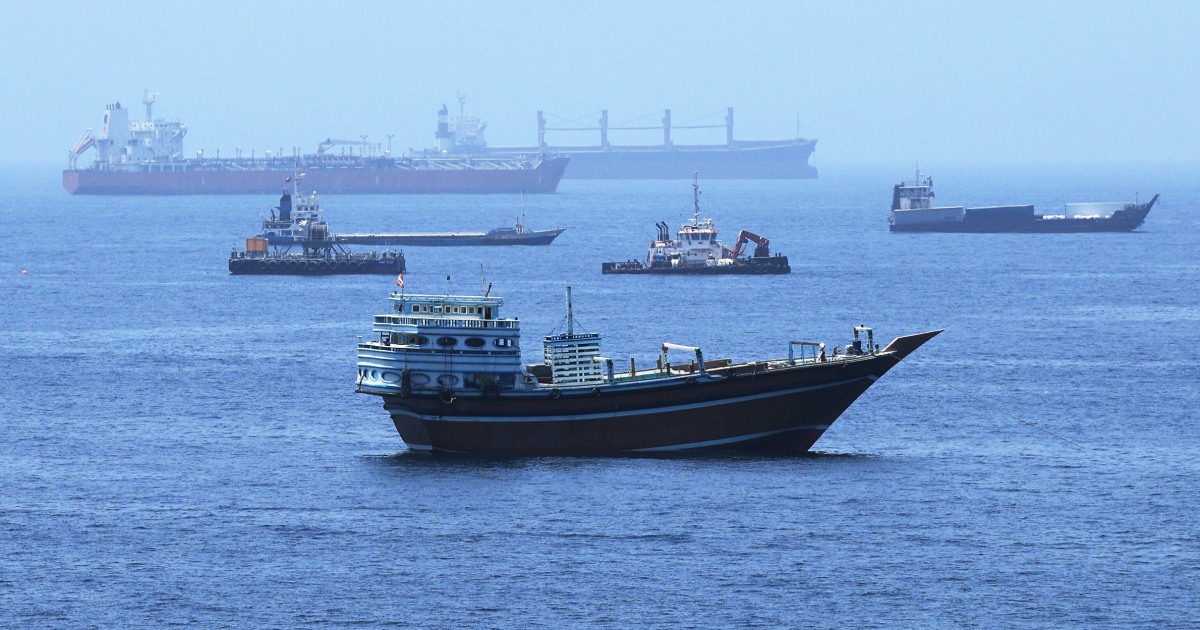
Brent crude oil surged past $100 per barrel on Thursday, July 23, 2026, following Houthi rebel attacks on two Saudi Arabian tankers in the Red Sea. The price spike coincides with a collapsed U.S.-Iran ceasefire and threats from President Donald Trump to destroy Iranian infrastructure in retaliation for shipping attacks.
Global energy markets reacted sharply Thursday as Brent crude futures for July delivery crossed the $100 per barrel mark for the first time since May 26. According to CNBC, the international benchmark rose 6.4% to $100.05 per barrel by 9:15 a.m. ET. U.S. West Texas Intermediate (WTI) crude futures also climbed more than 5% to $91.08 per barrel, reaching their highest level since June 11.
The rally puts Brent crude on track for a monthly gain of approximately 36%—the third-largest monthly jump in a decade—while WTI is positioned for its third-largest monthly rise in 10 years at about 30%, CNBC reported. Since the start of the month, oil prices have risen roughly 35% and are more than 60% higher than they were at the start of the year, according to Nbcnews.
Houthi Tanker Attacks and the Bab el-Mandeb Strait
The immediate catalyst for the surge was a claim by Yemen’s Houthis that they targeted two Saudi Arabian oil tankers using drones and missiles. The militants alleged the vessels were violating a maritime blockade. The United Kingdom’s Maritime Trade Office reported a tanker was struck by an unknown projectile north of the Bab el-Mandeb strait, while the state-run Saudi Press Agency reported the Encelia was set ablaze overnight, Nbcnews.
The UK Maritime Trade Operations further specified on X that a tanker was hit approximately 70 nautical miles southwest of Al Shuqaiq, sparking a fire that the crew fought, though no casualties were reported, according to CNBC.
Market volatility is heightened because the Bab el-Mandeb strait is a critical artery for global energy; about 12% to 15% of global maritime trade, valued at more than $1 trillion, passes through the waterway annually. Nbcnews notes that the Red Sea has served as an alternative to the Strait of Hormuz, where ship crossings fell to single digits this past Tuesday.
Trump’s Infrastructure Threats and Iran’s Response
The maritime strikes followed the collapse of a mid-June memorandum of understanding between the U.S. and Iran. President Donald Trump signaled a shift toward escalation on Wednesday, warning that the U.S. would retaliate against Iranian targets for every vessel attacked in the Strait of Hormuz.
Iran responded via the state-run Tasnim News Agency, warning that it would target regional infrastructure and energy assets if Washington proceeded with these strikes. An unnamed Iranian military source stated: If the Americans target a bridge or a power plant in Iran, Iran will, in turn, strike infrastructure and bridges in the region, including energy facilities where the United States has interests,
as reported by CNBC.
U.S. Funding Disputes and Strategic Uncertainty
The escalation comes amid internal U.S. friction over war funding. Joseph Westphal, former U.S. ambassador to Saudi Arabia, told CNBC that there is no real strategy
and that the Secretary of War has requested greater funding from a reluctant Congress.
“The Secretary of War has been testifying before Congress, requesting greater funding for the war. Congress is very, very anxious about that. They don’t feel that there’s enough of a strategy and a plan to provide these additional funds.”
Joseph Westphal, former U.S. ambassador to Saudi Arabia, via CNBC
Westphal argued that Washington lacks the resources to simultaneously wage war with Iran and protect Red Sea shipping. He warned that escalating gas and commodity prices would trigger a public reaction against the current strategy. Meanwhile, Secretary of State Marco Rubio stated Wednesday that Iran was not being serious
about reaching an agreement, though he maintained the U.S. remains committed to diplomacy,
according to CNBC.
Global Economic Fallout: Inflation and Bond Yields
The surge in energy costs is filtering into broader economic indicators. In the U.S., the national average gas price rose to $4.09 per gallon on Thursday, up from $4.06 on Wednesday, based on AAA data tracked by Nbcnews.

Investors are pricing in persistent inflation, which has pushed bond yields higher. According to Nbcnews, the U.S. 10-year Treasury bond traded at 4.67% on Thursday, its highest level since January 2025. This movement has impacted consumer borrowing, with the average 30-year U.S. mortgage rate rising to 6.77% on Wednesday, the highest since July 2025.
- Treasury Yields: The two-year yield rose four basis points on Wednesday, July 22, while the 30-year yield remained above 5%.
- Federal Reserve: Money markets are currently pricing a 30% chance of a rate increase and a 70% probability of a hold at the next meeting.
- Currency Markets: The yen hit its weakest level since 1986 earlier this week, trading at 163.10 per dollar.
HSBC analyst Kim Fustier noted that the outlook now depends on whether diplomacy can restore predictable shipping flows, as the ceasefire has frayed since July 7-8 due to Iranian attacks and subsequent U.S. retaliatory strikes, according to CNBC.
Keep reading