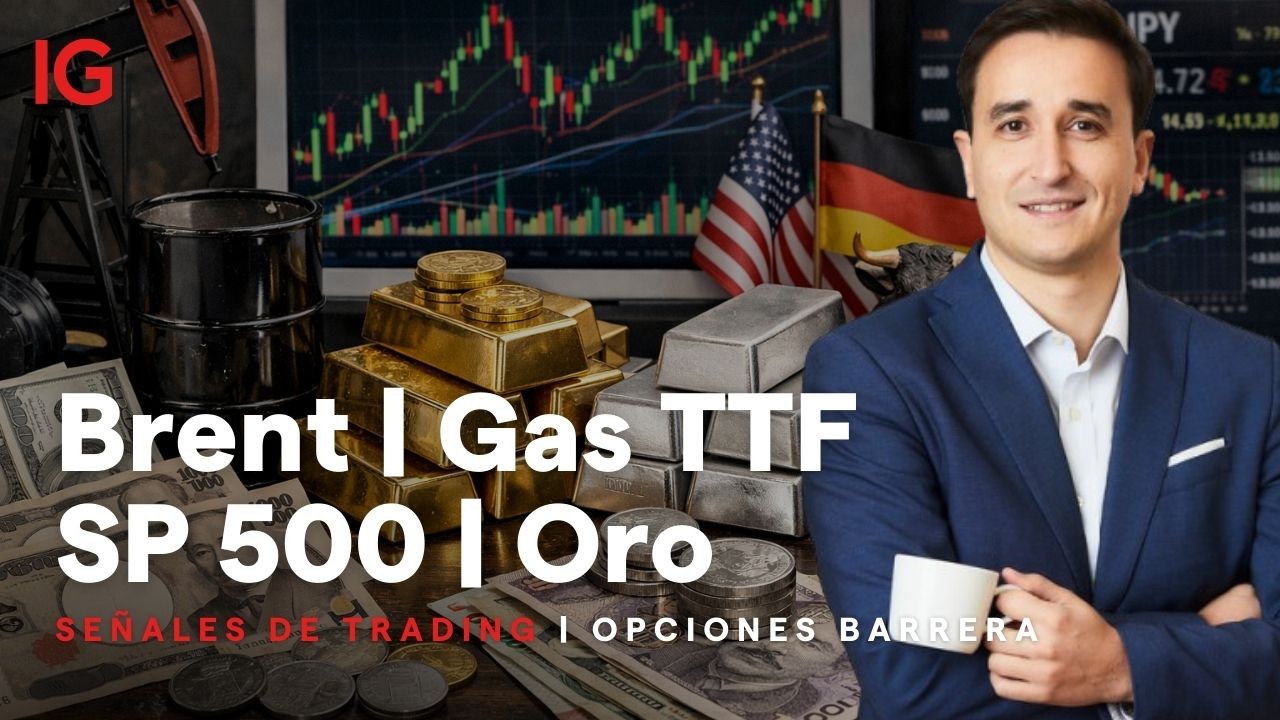
Global markets are navigating a period of heightened uncertainty, with rising energy prices and persistent inflation casting a shadow over economic forecasts. A recent analysis by Sergio Ávila highlights the critical role of Brent crude oil in shaping market dynamics, particularly in Europe, where energy dependence amplifies the impact of price fluctuations. Ávila’s assessment points to a more challenging environment for investors, demanding a more selective and risk-aware approach. The interplay between oil prices, currency valuations, and key indices like the DAX is creating a complex landscape that requires careful monitoring.
The current market fragility, characterized by internal weakness and diminishing sector support, is being significantly exacerbated by the surge in Brent crude prices. While major indices may appear resilient on the surface, Ávila warns that underlying conditions are deteriorating, with fewer assets sustaining the recent rebound. This shift in momentum is particularly concerning for European markets, which are more vulnerable to energy shocks due to their greater reliance on imports. The potential for prolonged high oil and natural gas prices raises fears of persistent inflation and sustained high interest rates, a combination that historically weighs heavily on equity valuations. Understanding these interconnected forces is crucial for investors seeking to navigate the current volatility.
Brent crude oil has emerged as a central driver of market sentiment, influencing everything from inflation expectations to monetary policy decisions. Ávila’s analysis indicates that a breach of the $110 per barrel threshold reinforces the upward trend in crude prices, reigniting concerns about persistent inflation. This isn’t merely an energy price issue; it has cascading effects on financing costs and overall market valuations. The situation is particularly acute in Europe, where the energy crisis poses a greater threat to economic growth than in the United States, which benefits from greater energy independence. The European dependence on energy imports leaves it less equipped to absorb prolonged shocks to commodity prices.
Brent Crude: The Dominant Force in Global Markets
Sergio Ávila’s assessment centers on the pivotal role of Brent crude oil in dictating market direction. The rising price of Brent is not simply a commodity trend; it’s a fundamental factor influencing broader economic conditions. As Ávila explains, surpassing the $110 level strengthens the bullish trend and reactivates fears of sustained inflation. This impacts not only energy costs but also alters expectations regarding central bank policies, increases borrowing expenses, and puts downward pressure on stock valuations. IG International reported on Ávila’s warnings on March 12, 2026.
The implications for Europe are particularly stark. If oil and natural gas prices continue their ascent, the impact on costs, consumption, and corporate margins is likely to be more severe than in the United States. Europe’s greater reliance on energy imports and limited capacity to absorb prolonged commodity price shocks make it especially vulnerable. This vulnerability is compounded by geopolitical factors and the ongoing energy transition, creating a complex and challenging environment for European economies.
Gold and Silver Under Pressure from a Strong Dollar
The traditional safe-haven assets of gold and silver are facing headwinds as the U.S. Dollar strengthens and real interest rates rise. Ávila points to an inverse relationship between the dollar’s performance and the price of precious metals. When the market anticipates higher interest rates for a longer period, the relative attractiveness of gold diminishes, as it doesn’t generate cash flow or coupon payments. This dynamic is further reinforced by technical deterioration in both gold and silver markets, with both metals ceding key support levels while the dollar index improves its technical structure.
This combination complicates the prospect of a near-term rebound for gold and silver, shifting the focus away from precious metals as safe havens and towards the dollar and, to some extent, debt instruments. The strength of the dollar is attracting investors seeking stability in an uncertain environment, further exacerbating the downward pressure on gold and silver prices. The appeal of the dollar as a safe haven is particularly pronounced in the context of persistent inflation and a Federal Reserve perceived as less likely to aggressively cut interest rates.
Dollar Strength and Currency Tensions
The U.S. Dollar is acting as a safe haven in an environment characterized by energy uncertainty and persistent inflation. This strength helps explain the decline in precious metals and the pressure on currency pairs like the EUR/USD. When markets fear sustained inflation and a less dovish Federal Reserve, the dollar tends to gain support. Ávila notes that the dollar’s strength isn’t solely driven by macroeconomic factors; capital flows, such as repatriation to Japan, also play a role, creating temporary ranges or tactical corrections even when the overall structural bias favors the dollar.
The strengthening dollar has broader implications for global trade and financial stability. It can make U.S. Exports more expensive, potentially impacting the trade balance, and can also create challenges for emerging market economies with dollar-denominated debt. Monitoring the dollar’s trajectory and its impact on various asset classes is crucial for investors navigating the current market environment.
DAX and S&P 500: A Tale of Two Markets
The DAX, Germany’s benchmark stock index, appears particularly vulnerable in the current environment. The combination of high energy costs, inflationary pressures, and valuation revisions is disproportionately impacting European equities. Ávila describes a deteriorating technical structure, with a risk of further declines if key support levels are breached. This vulnerability stems from Europe’s greater exposure to the energy crisis and its slower economic growth prospects compared to the United States.
The S&P 500, representing the U.S. Stock market, is proving more resilient, but it’s not immune to the headwinds. The United States benefits from greater energy self-sufficiency, but rising oil prices can still dampen expectations of interest rate cuts and negatively impact sectors sensitive to capital costs. The difference isn’t one of direction, but of intensity; Europe appears more exposed to the negative consequences of high energy prices and persistent inflation. According to Ávila, the European market is facing a more challenging outlook than its U.S. Counterpart.
Natural Gas TTF and Chevron: Winners and Losers in the New Landscape
European natural gas prices, as measured by the TTF benchmark, are adding another layer of pressure on the continent. If gas prices continue to break resistance levels, the problem will escalate beyond oil, creating a broader energy shock with severe implications for inflation and economic growth. This scenario could trigger a recession in Europe and further exacerbate global economic uncertainty.
Conversely, companies like Chevron are poised to benefit from sustained high crude oil prices. The logic is straightforward: elevated oil prices support stronger margins and profits for oil companies. In a market rotating towards energy-related businesses, these companies are likely to continue attracting investor interest. Chevron’s strong performance reflects the broader trend of energy companies outperforming the market in a high-price environment.
Key Takeaways
- Brent Crude Dominance: Brent crude oil is the primary driver of market sentiment, influencing inflation, interest rates, and equity valuations.
- European Vulnerability: Europe is particularly susceptible to the negative impacts of rising energy prices due to its greater dependence on imports.
- Dollar Strength: The U.S. Dollar is acting as a safe haven, putting pressure on precious metals and currency pairs.
- DAX Underperformance: The DAX is facing significant headwinds due to the energy crisis and inflationary pressures.
- Selective Investment Strategy: Investors need to adopt a more selective and risk-aware approach, focusing on asset selection and macroeconomic analysis.
Ávila’s analysis underscores that the market has entered a more complex, less comfortable, and more selective phase. A passive “buy and hold” strategy is no longer sufficient. Effective risk management, macroeconomic understanding, and the selection of assets with relative strength are now paramount. The interplay between Brent crude oil, the dollar, the DAX, gold, and natural gas TTF forms the core of the current market map. As long as this combination persists, the outlook remains delicate for Europe and demanding for global equities.
Looking ahead, market participants will be closely watching developments in the energy sector, central bank policy decisions, and geopolitical events. The next key data release will be the Eurozone inflation figures scheduled for release on April 30, 2026, which will provide further insights into the persistence of inflationary pressures. A recent YouTube analysis by Sergio Ávila provides further context on these market dynamics. We encourage readers to share their perspectives and engage in constructive discussion in the comments section below.
Worth a look