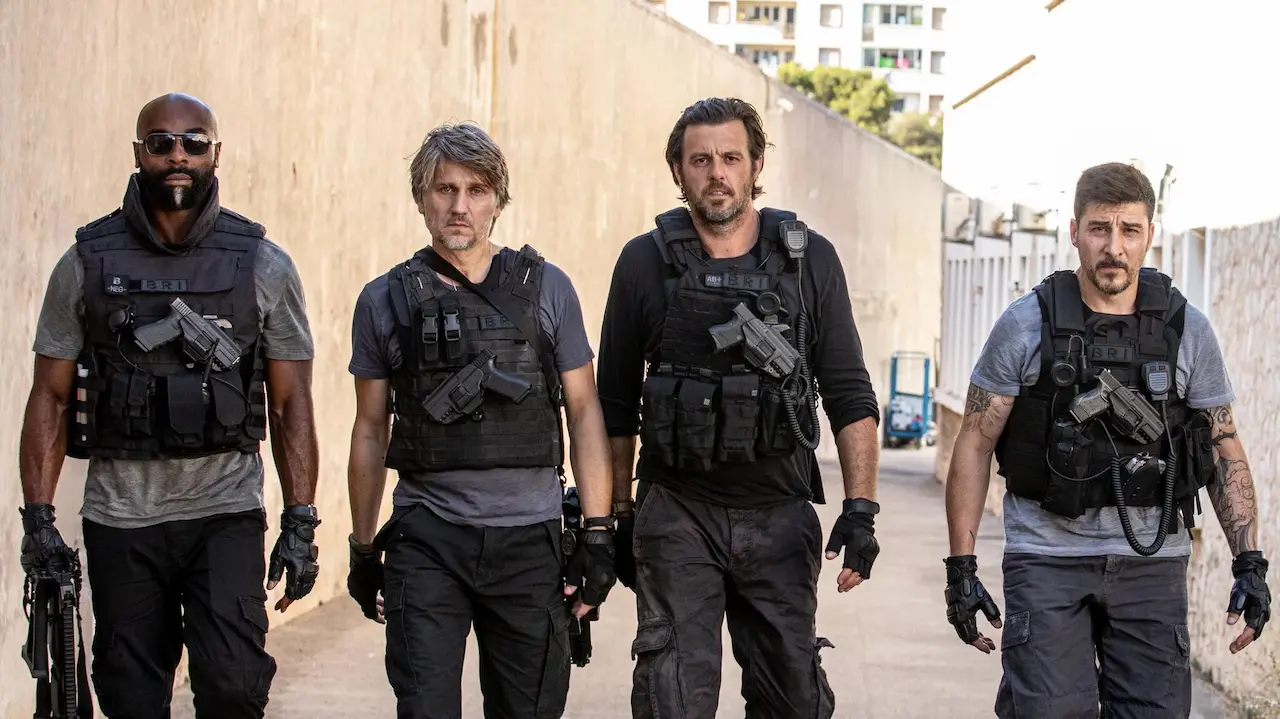
French crime thriller Bronx, internationally released under the title Rogue City on Netflix, has drawn considerable viewer attention for its gritty depiction of Marseille’s corrupt police force and a sprawling gang war. Directed by Olivier Marchal—a former police officer known for helming projects like Overdose—the 2020 film follows a specialized anti-gang unit caught in a web of internal betrayal, political pressure, and escalating criminal violence. The complex narrative culminates in a devastating and ambiguous conclusion that leaves many viewers questioning the fate of the surviving characters and the underlying message of the story.
The plot centers on Richard Vronski, played by Lannick Gautry, a hardened squad leader operating outside standard legal boundaries to protect his team. Throughout the feature, Vronski and his men navigate a dangerous rivalry between two dominant local clans, all while facing intense scrutiny from rival internal affairs investigators and compromised superiors. As alliances fracture and bodies pile up, the boundaries between law enforcement and organized crime blur completely. Understanding the closing scenes requires examining the systemic corruption that dooms the characters long before the final frame rolls.
For international audiences streaming the project on Netflix, the gritty aesthetic and rapid pacing reflect Olivier Marchal’s signature style, which frequently draws from his real-life experiences in French law enforcement. Below is a detailed breakdown of how the narrative unravels, what the concluding moments signify for the characters, and how the director resolves the intense conflicts driving the plot.
The Escalation of Violence and Institutional Betrayal
To understand the ending, viewers must trace how Vronski’s unit becomes isolated. Early in the film, the squad takes matters into their own hands to eliminate a dangerous rival faction, believing they are cutting the head off the snake. However, this unsanctioned operation attracts unwanted attention from higher-ups and rival police divisions seeking to clean house or seize control of Marseille’s lucrative drug routes.
Betrayal comes from within the broader apparatus of the state rather than just the criminal underworld. Political figures and compromised commanders use the anti-gang unit as pawns, ultimately deciding that the squad’s illicit methods make them liabilities. As independent reviews and summaries of the film highlight, Marchal constructs a universe where honesty is systematically punished. The tragic trajectory of Vronski’s team mirrors the fatalistic tone characteristic of French policier cinema, where institutional corruption leaves righteous survival nearly impossible.
Decoding the Ambiguous and Tragic Conclusion
The final sequences of Bronx deliver a series of devastating blows that subvert traditional action-movie resolutions. Rather than securing a triumphant victory or a clean dismantling of the criminal syndicates, the conclusion emphasizes total devastation. Key members of Vronski’s squad meet violent ends, cut down in ambushes orchestrated by their enemies and enabled by the utter failure of institutional protection.
The finale suggests that no one escapes the cycle of corruption in Marseille. Even when individual officers display loyalty to their comrades, the rotten foundation of the system ensures their destruction. Vronski’s final stand underscores the futility of fighting a broken apparatus from within. The film refuses to offer a neat moral cleanup; instead, it portrays a dark reality where the criminal syndicates and corrupt administrators effectively consolidate their power over the city’s ruins.
Olivier Marchal’s Directorial Vision and Real-World Parallels
Director Olivier Marchal frequently infuses his filmography with authenticity drawn from his time working within the French police force. Projects like Overdose share this bleak perspective on modern law enforcement, where tactical operations frequently intersect with political corruption and personal compromise. In Bronx, this approach manifests in the raw, ungllamorous depiction of street-level violence and the heavy psychological toll carried by officers operating in grey moral areas.
Critics and entertainment journalists have noted that Marchal’s resistance to Hollywood-style redemption arcs is intentional. By refusing to let Vronski ride off into the sunset, the director underscores a cynical commentary on modern policing and urban crime syndicates. The grim fate awaiting the squad serves as the ultimate thematic statement: the system consumes everyone eventually, leaving only institutional survival in its wake.
Viewers seeking further analysis of French crime cinema or updates on Olivier Marchal’s subsequent directorial projects can consult entertainment platforms and film databases like IMDb or official distributor announcements on Netflix. Share your own interpretations of the finale in the comments below.
Worth a look