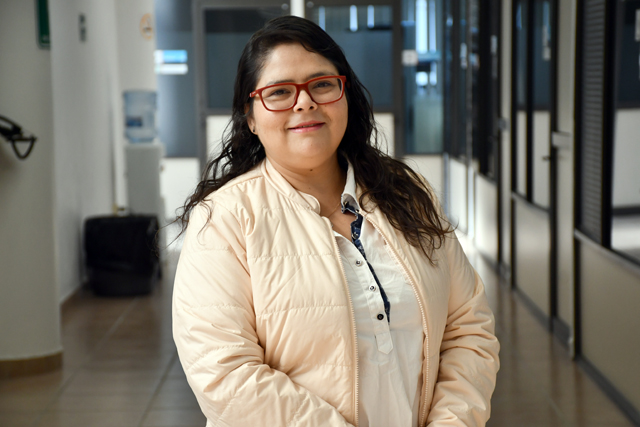
Harnessing Sunlight: Mexican Physicist Pioneers Affordable Solar Energy Solutions
The quest for sustainable and affordable energy sources is a defining challenge of our time. Even as silicon-based solar cells dominate the market, their production costs remain a significant barrier to widespread adoption. Now, a young researcher in Mexico is leading the charge in developing innovative materials that could dramatically lower the price of solar energy, bringing clean power closer to reality for communities worldwide. Dr. Janani Diliegros Godines, a rising star at the Instituto de Física “Ing. Luis Rivera Terrazas” of the Benemérita Universidad Autónoma de Puebla (BUAP), is focused on creating next-generation materials for solar energy, specifically thin-film materials with the potential to revolutionize the industry.
Dr. Diliegros Godines’ work centers on finding alternatives to the expensive techniques currently used to grow the crystalline silicon used in most commercial solar panels. Her research, conducted in collaboration with fellow scientists, aims to develop efficient, innovative, and economically viable materials for solar cells and other optoelectronic and thermoelectric devices. This pursuit isn’t just about scientific advancement; it’s about addressing a critical global need – reducing reliance on fossil fuels and mitigating the impacts of climate change. The urgency of this mission is underscored by the increasing frequency and severity of extreme weather events linked to greenhouse gas emissions, making the development of affordable renewable energy technologies more crucial than ever.
Thin Films and the Future of Solar Power
The core of Dr. Diliegros Godines’ research lies in the realm of thin-film materials. These materials, applied in layers measured in nanometers (one billionth of a meter), offer a promising pathway to lower-cost solar energy production. “A solar cell is formed by several layers or thin films,” Dr. Diliegros Godines explained, highlighting the intricate structure of these devices. While existing silicon-based cells benefit from well-established growth techniques, these methods are often prohibitively expensive. Her team is exploring alternative techniques, such as sol-gel, dip-coating, and spin coating – processes already utilized in other industries – to create these crucial thin films. BUAP Boletín details her work in this area.
The focus isn’t simply on replicating existing technologies, but on optimizing them for solar energy applications. Dr. Diliegros Godines and her team are specifically investigating transparent conductive layers – materials that allow light to pass through while simultaneously conducting electricity. These layers are essential for maximizing the efficiency of solar cells, ensuring that as much sunlight as possible reaches the active layers where it’s converted into electricity. They are also working on optimizing the “active layer,” the component responsible for transforming photons (light particles) into electrons, which generate the electrical current. “What we seek is to optimize these layers and propose growth methods that are not reported, but are simple, novel, efficient and economical,” she stated.
Collaboration and Expertise at BUAP
Dr. Diliegros Godines is not working in isolation. She is a key member of the Physics of Surfaces and Functional Materials academic body at BUAP, collaborating with Dr. Ma. Estela Calixto Rodríguez and Dr. Elías López Cruz. This collaborative environment fosters innovation and allows for a multidisciplinary approach to tackling complex scientific challenges. Dr. Calixto Rodríguez heads the Semiconductor Materials Laboratory for Photovoltaic Applications, further strengthening the research infrastructure available to the team. Alcance Diario highlights the collaborative nature of this research.
Their research extends beyond solar cells to include thermoelectric materials – substances that can generate electricity from heat. This work, conducted in partnership with the Universidad Politécnica de Madrid in Spain, explores another avenue for sustainable energy production. Thermoelectric materials offer the potential to harness waste heat from industrial processes or even body heat, converting it into usable electricity. This dual focus on both photovoltaic and thermoelectric materials demonstrates the breadth and ambition of the research being conducted at BUAP.
Empowering the Next Generation of Scientists
Beyond the scientific breakthroughs, Dr. Diliegros Godines is committed to fostering the next generation of physicists, particularly women in a field historically dominated by men. She currently mentors Angélica Saavedra Santamaría, a graduate student analyzing the optical properties of a transparent conductive oxide, with the goal of simulating device performance. This mentorship is crucial for encouraging more students to pursue careers in materials physics and related fields. “We generate frontier basic science, but we also train new students and future scientists,” Dr. Diliegros Godines emphasized.
The importance of representation in STEM fields cannot be overstated. By providing opportunities and mentorship to aspiring female scientists like Saavedra Santamaría, Dr. Diliegros Godines is helping to break down barriers and create a more inclusive and diverse scientific community. This, in turn, can lead to even greater innovation and progress in the pursuit of sustainable energy solutions. The impact extends beyond the laboratory, inspiring future generations to tackle the world’s most pressing challenges.
The Broader Implications for Climate Action
The potential impact of Dr. Diliegros Godines’ research extends far beyond the walls of BUAP. By developing low-cost alternatives to traditional solar cell materials, she is contributing to a global effort to transition away from fossil fuels and reduce greenhouse gas emissions. The urgency of this transition is underscored by the latest reports from the Intergovernmental Panel on Climate Change (IPCC), which warn of increasingly severe consequences if global warming is not limited to 1.5 degrees Celsius above pre-industrial levels. Desde Puebla emphasizes the importance of this research in the context of climate change.
Affordable solar energy is not just an environmental imperative; it’s also a matter of social and economic justice. Access to clean, reliable energy is essential for economic development, improved health outcomes, and enhanced quality of life. By lowering the cost of solar power, Dr. Diliegros Godines’ work has the potential to empower communities around the world, particularly those in developing countries that are most vulnerable to the impacts of climate change.
The research team’s focus on readily available and cost-effective techniques, like sol-gel and dip-coating, is particularly significant. These methods, already established in various industries, offer a pathway to rapid scalability and widespread adoption. This pragmatic approach, combined with a commitment to scientific excellence, positions Dr. Diliegros Godines and her team as key players in the global transition to a sustainable energy future.
Looking ahead, the team plans to continue refining their materials and techniques, exploring new avenues for innovation in thin-film solar cell technology. Further research will focus on optimizing the performance of each layer within the solar cell, as well as developing novel growth methods that are both efficient and environmentally friendly. The ongoing collaboration with the Universidad Politécnica de Madrid will also play a crucial role in advancing the development of thermoelectric materials.
As Dr. Diliegros Godines and her team continue their groundbreaking work, the promise of affordable, accessible, and sustainable solar energy moves closer to becoming a reality. Their dedication to scientific innovation and commitment to empowering the next generation of scientists offer a beacon of hope in the face of the global climate crisis.
What happens next? The team at BUAP is currently seeking funding to scale up their research and begin pilot production of their new materials. Updates on their progress can be found on the BUAP website. We encourage readers to share this article and join the conversation about the future of sustainable energy.
Keep reading