
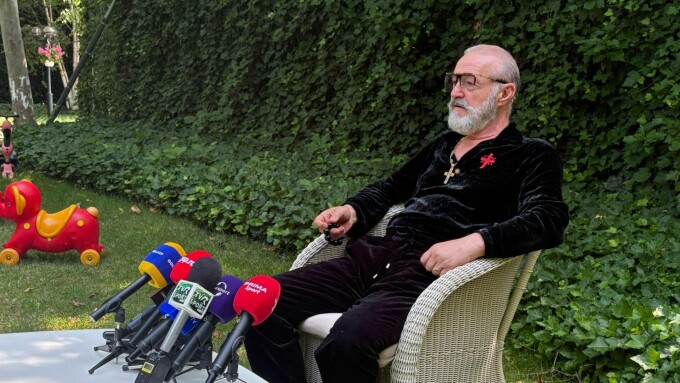
Marian Preda, the rector of the University of Bucharest, has publicly likened the process of selecting a prime minister in Romania to the contentious managerial appointments at the football club FCSB. In a critical assessment of the current political climate, Preda argued that both roles require a level of subservience to a central “patron” that undermines professional autonomy.
The academic administrator’s comments, which have drawn significant attention within Romanian political and sporting circles, suggest that the executive leadership of the country is increasingly constrained by party-driven agendas rather than independent governance. By drawing a parallel to the high-turnover environment at FCSB—a club notoriously managed by owner Gigi Becali—Preda highlights a perceived crisis of institutional independence in the Romanian government.
Institutional Independence and Political Influence
The comparison centers on the concept of “obedience,” a term Preda utilized to describe the professional relationship between top-tier decision-makers and their political benefactors. According to the University of Bucharest, the institution maintains a stance of academic freedom, yet its leadership often engages in public discourse regarding the health of democratic institutions. Preda’s critique suggests that the search for a premier is not merely a search for the most qualified candidate, but rather a search for an individual whose primary qualification is loyalty to the party leader, mirroring the way coaches are allegedly selected by football club owners.
This critique comes at a time when political stability in Romania remains a focal point for international observers. The European Commission’s 2024 Rule of Law Report has previously emphasized the necessity of maintaining checks and balances within member states to ensure that executive powers do not override legislative or judicial oversight. Preda’s intervention serves as a reminder that these concerns extend beyond legal frameworks and into the culture of administrative appointments.
The FCSB Analogy: A Cultural Touchstone
In Romanian sports culture, the term “FCSB coach” has become a colloquial shorthand for a position where the titular leader lacks genuine decision-making authority. Gigi Becali, the owner of FCSB, has frequently been the subject of media scrutiny for his direct involvement in team selections and tactical decisions, often replacing managers who deviate from his vision. By invoking this specific example, Preda taps into a widely understood cultural metaphor to illustrate a complex political problem.

For those unfamiliar with the local sporting landscape, the Romanian Football Federation maintains strict regulations regarding coaching licenses and professional standards. However, these regulations govern technical qualifications rather than the interpersonal dynamics between owners and employees. Preda’s argument posits that while the “legal” qualifications for a prime minister are clear, the “functional” requirements demanded by political patrons create a similar dynamic of restricted agency.
Broader Implications for Governance
The rector’s remarks have sparked a wider debate about the professionalization of the Romanian civil service. Analysts note that when the selection process for high-ranking officials is perceived as being dictated by personal or party loyalty rather than meritocracy, it can lead to a decline in public trust. The Transparency International Corruption Perceptions Index consistently ranks political patronage as a significant barrier to institutional efficiency in various European nations.
Preda, who has served as the rector of one of the country’s most prestigious universities since 2019, has often positioned himself as a critic of political interference in public life. His latest comments reflect a growing trend of academics and civil society leaders using their platforms to challenge the status quo. Whether this comparison will lead to a broader discussion on the reform of political appointment processes remains to be seen, as the current political calendar continues to prioritize coalition stability over structural changes.
Future Developments and Public Discourse
As Romania moves toward upcoming electoral cycles, the focus on the independence of executive and administrative roles is expected to intensify. Observers are keeping a close watch on how political parties handle the selection of key personnel in the coming months. Official updates regarding government appointments and institutional reforms are typically published through the official portal of the Romanian Government, where citizens can track legislative initiatives and policy changes.
The academic community, alongside political analysts, continues to monitor these developments to determine if the discourse around “obedient leadership” will manifest in actual policy shifts or if it will remain a feature of the current political commentary. Readers interested in the intersection of sports culture and political life are encouraged to share their views on how institutional transparency can be improved in both sectors.
As a sports editor with over 13 years of experience covering the intersection of athletics and society, I have observed how sports metaphors often provide the clearest lens for understanding political friction. If you have thoughts on this comparison or wish to discuss the impact of governance on professional sports, please feel free to comment below or share this report with your network.