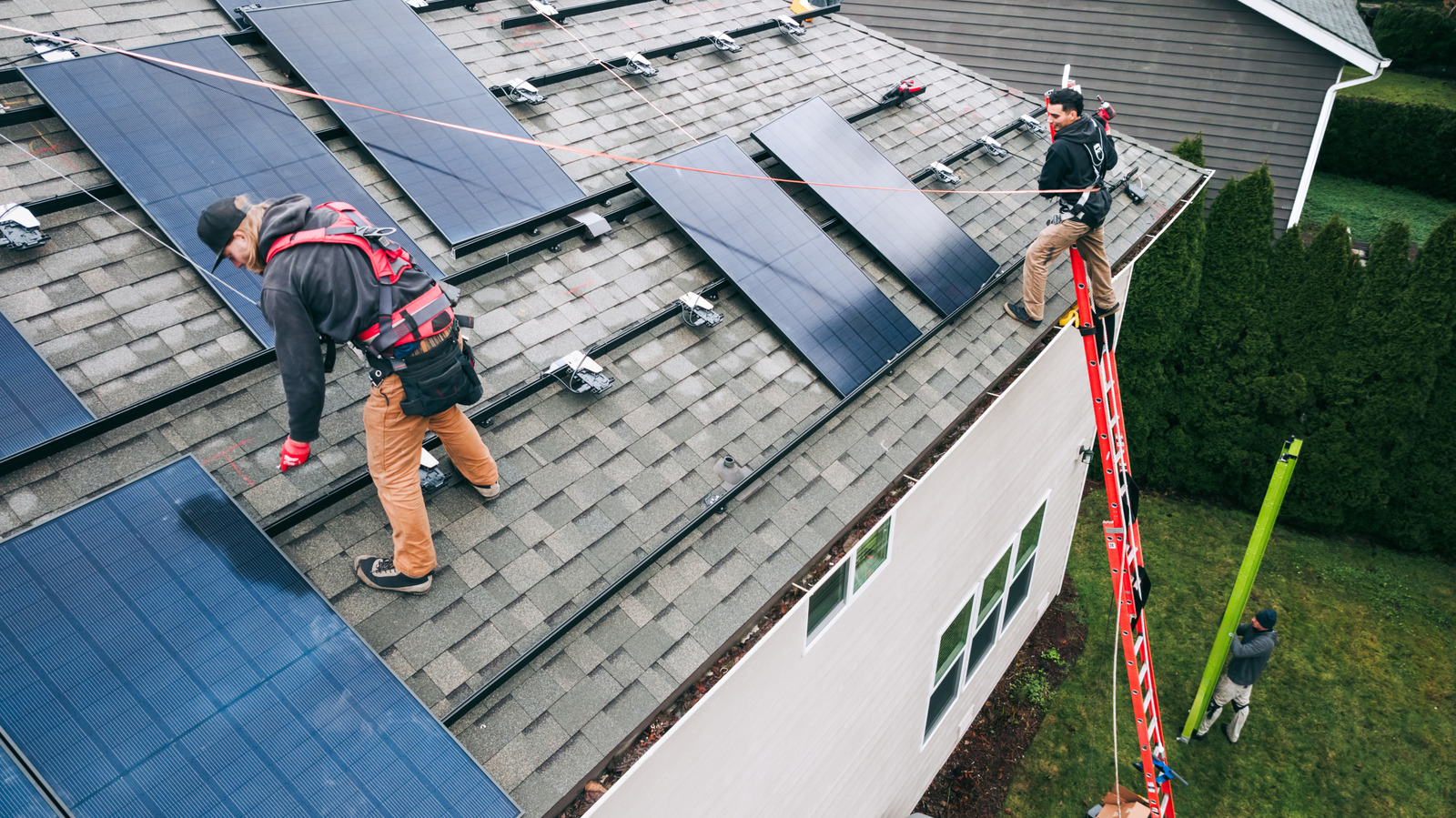
Achieving 100 percent solar power for a residential home requires a careful balance of generation capacity, battery storage, and daily energy management, though cutting ties with the traditional utility grid remains a complex engineering and financial undertaking. According to data from the U.S. Department of Energy, residential solar systems paired with battery storage have grown increasingly capable of covering household loads, yet complete off-grid independence demands rigorous planning for seasonal weather shifts and peak power demands.
For most homeowners, transitioning to total solar independence means moving beyond standard grid-tied photovoltaic arrays. While a standard grid-tied system reduces monthly electricity bills by sending excess power back to the local utility, an off-grid or 100 percent self-sufficient setup must generate, store, and manage every kilowatt-hour consumed on-site. This reality shapes how engineers design modern renewable energy systems for domestic use.
The core challenge of running a house entirely on solar energy lies in the intermittency of sunlight. Generation peaks during midday hours, while household energy consumption often spikes in the early morning and evening when occupants return home, cook, and run appliances. Bridging this temporal gap requires substantial battery storage capacity, typically measured in kilowatt-hours (kWh). Without adequate storage, a home loses power as soon as the sun sets or during extended periods of heavy cloud cover.
Homeowners pursuing total independence usually invest in large-capacity lithium-ion battery banks, such as those produced by Tesla, Enphase, or Generac. According to guidelines from the National Renewable Energy Laboratory (NREL), a properly sized off-grid system must account for multiple days of autonomy—meaning the battery bank can sustain the household through several sunless winter days without relying on a backup generator or the grid.
Financially, achieving complete solar independence carries a significantly higher upfront cost than installing a standard grid-tied system. While standard residential solar arrays often qualify for federal incentives like the Residential Clean Energy Credit under the U.S. Internal Revenue Service tax code, adding multiple high-capacity battery units can push total installation costs well into five figures. Homeowners must weigh these expenses against the elimination of monthly utility bills and protection against rising electricity rates or grid outages.
Energy efficiency also dictates whether a 100 percent solar setup is practical. Homes equipped with high-efficiency heat pumps for heating and cooling, LED lighting, Energy Star-certified appliances, and proper insulation require significantly less generation and storage capacity. Conversely, homes that rely entirely on resistance electric heating or high-draw appliances demand vastly larger arrays and storage systems, making off-grid living economically impractical for many geographic regions.
Geographic location remains one of the most critical factors in determining solar feasibility. Properties situated in regions with high solar irradiance, such as the American Southwest or Southern Europe, receive consistent sunlight throughout the year, simplifying the path to independence. In contrast, homes in northern latitudes experience steep seasonal variations, with short winter days and low sun angles that sharply reduce photovoltaic output precisely when heating loads are highest.
Many homeowners choose a hybrid approach rather than cutting the cord completely. By utilizing grid-tied solar with battery backup, households gain resilience against blackouts while retaining the safety net of the utility grid for prolonged periods of low solar generation. Energy experts note that this configuration avoids the massive oversizing required to guarantee 100 percent reliability during worst-case winter weather scenarios.
For those evaluating a transition to independent solar generation, the first step involves conducting a comprehensive energy audit to track baseline consumption patterns. Official resources, including consumer guides provided by the U.S. Department of Energy and local utility interconnection guidelines, offer frameworks for assessing home energy loads before purchasing hardware. Consulting licensed solar contractors ensures that system designs comply with local building codes and National Electrical Code standards.
As solar panel efficiencies improve and battery chemistries evolve, complete residential energy independence continues to transition from an experimental endeavor into a viable option for prepared homeowners. Share your thoughts or questions on residential solar independence in the comments below.
Keep reading