
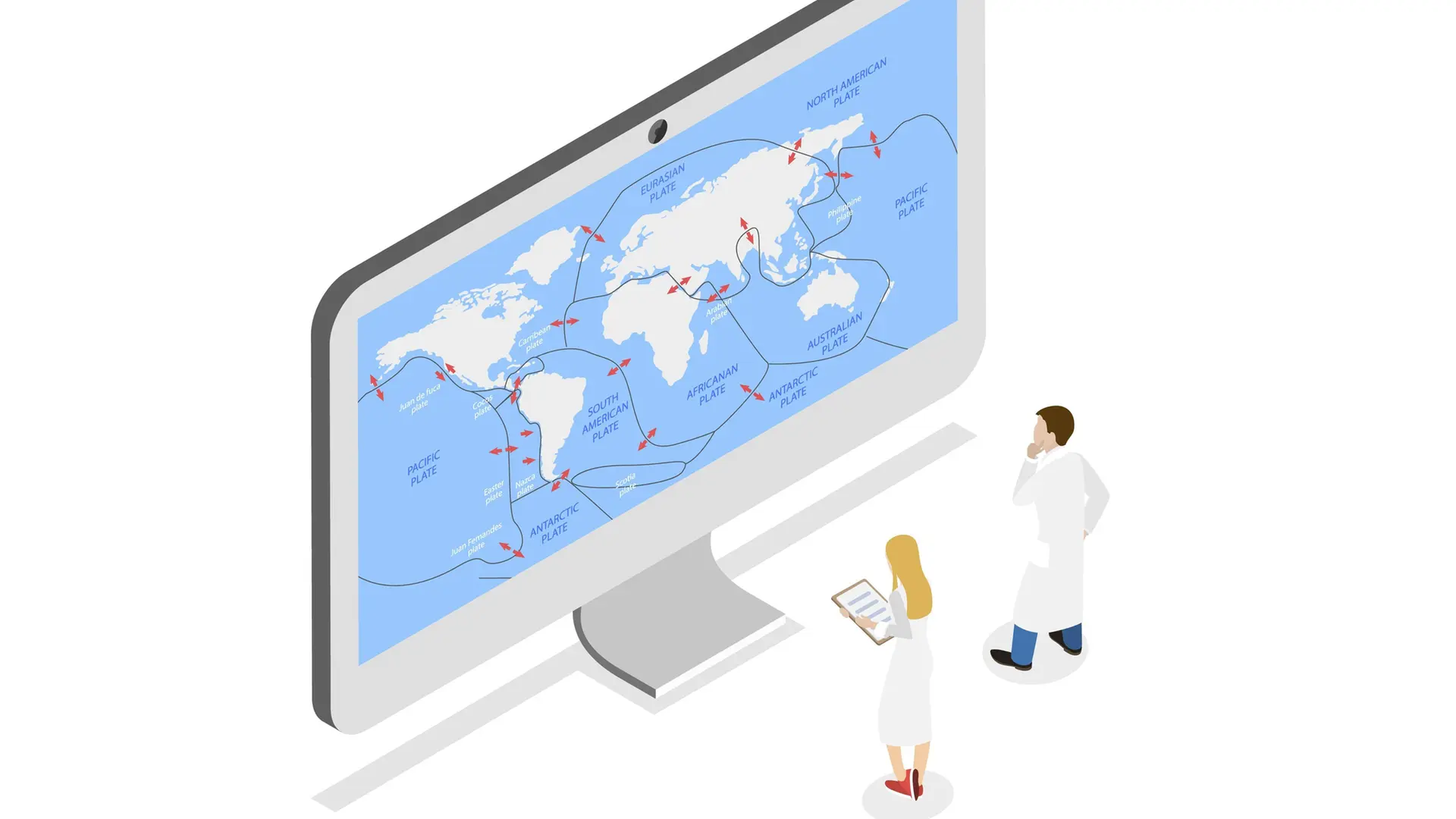
Scientists are exploring new methods to determine if we can predict earthquakes in the future, with recent research focusing on identifying hidden seismicity patterns that precede major seismic events. Researchers at the GFZ German Research Centre for Geosciences are currently utilizing unsupervised machine learning to analyze complex data sets, aiming to uncover precursors that remain invisible to conventional monitoring systems. While the scientific consensus remains that precise earthquake prediction is not yet possible, these computational advancements offer a new lens through which to observe tectonic shifts.
The Role of Machine Learning in Seismology
The traditional approach to seismology relies on identifying foreshocks and monitoring crustal deformation. However, these signals are often too subtle or irregular to serve as reliable early warning indicators. According to research published by the GFZ German Research Centre for Geosciences, unsupervised machine learning algorithms can process vast amounts of raw seismic data to detect patterns that human analysts might overlook. By identifying these latent structures, geophysicists hope to better understand the physical processes occurring in the Earth’s crust before a rupture happens.
Machine learning models differ from traditional statistical models because they do not require pre-labeled data to identify trends. Instead, they cluster data points based on inherent similarities. In the context of tectonic activity, this allows researchers to classify different types of seismic noise and isolate specific “precursor” signatures. The United States Geological Survey (USGS) maintains that while short-term prediction is not currently feasible, such computational research is vital for improving seismic hazard assessments and long-term risk modeling.
Can We Truly Predict Earthquakes?
The distinction between “prediction” and “forecasting” is central to modern geophysics. A prediction would imply the ability to specify the exact time, location, and magnitude of an earthquake. Currently, no such technology exists. Instead, the focus has shifted toward probabilistic forecasting, which estimates the likelihood of an earthquake occurring within a specific region over a set timeframe.
The GFZ research highlights that while machine learning can identify patterns, these patterns do not always manifest before every major earthquake. The crust of the Earth is a highly chaotic system, and tectonic stress release can be influenced by a multitude of variables including fluid pressure, fault geometry, and thermal conditions. Consequently, even with high-level computational tools, the unpredictability of fault behavior remains a significant hurdle for geoscientists.
Technological Limitations and Future Directions
One of the primary challenges in deploying machine learning for seismic analysis is the quality and density of sensor networks. In many parts of the world, seismic monitoring stations are sparse, leading to gaps in data that can distort machine learning outputs. Furthermore, the “black box” nature of some deep learning algorithms presents a challenge for researchers who need to verify the physical mechanisms behind a detected pattern.
To address these issues, the international scientific community is increasingly relying on open-access data repositories and standardized data formats. The International Federation of Digital Seismograph Networks (FDSN) coordinates the global effort to ensure that seismic data is consistent and accessible for researchers worldwide. By integrating global datasets, machine learning models can be trained on a wider variety of tectonic environments, potentially increasing their accuracy across different geological regions.
What Happens Next?
The next phase of this research involves validating these machine learning models against historical seismic records. By “hindcasting”—running the algorithms against data from past earthquakes—scientists can determine if the identified patterns would have successfully signaled a warning in real-world conditions. According to the GFZ, future efforts will prioritize the integration of these models into operational testing environments, though they emphasize that these tools will serve as a supplement to, rather than a replacement for, established seismic monitoring infrastructure.
As research progresses, the focus remains on enhancing public safety through better building codes and emergency preparedness rather than relying on unproven prediction capabilities. Residents in seismically active regions are encouraged to monitor official updates through local geological agencies and adhere to established safety protocols. For those interested in the latest developments in seismic science, the Seismological Society of America provides ongoing updates on peer-reviewed research and technological advancements in the field.
Have you observed recent discussions regarding seismic activity in your region? Share your thoughts or questions in the comments section below.