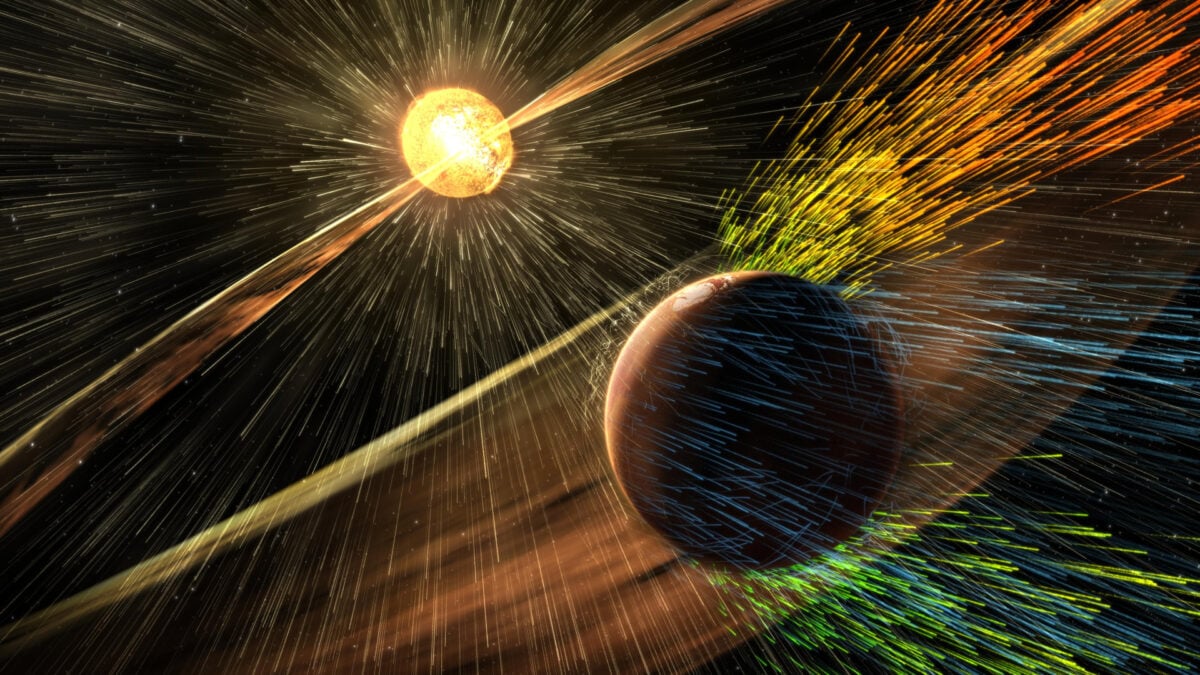
Scientists have identified a recurring pattern in the Sun’s interior magnetic activity that could potentially serve as a predictive indicator for solar storms years before they reach Earth. By analyzing long-term data from the solar cycle, researchers are exploring whether these hidden oscillations—often obscured by the chaotic nature of surface sunspots—can provide a more reliable early warning system for space weather events that threaten global satellite, communication, and power infrastructure.
The Sun operates on an approximately 11-year cycle, a period characterized by fluctuating magnetic activity that dictates the frequency of solar flares and coronal mass ejections. According to the National Aeronautics and Space Administration (NASA), these cycles are driven by the Sun’s internal dynamo, yet the timing and intensity of solar maximums—the peak of the cycle—have historically remained difficult to forecast with precise lead times. The research into “hidden” patterns focuses on the subsurface movement of magnetic fields, which act as precursors to the visible disturbances observed by heliophysics observatories.
The Mechanics of Solar Predictability
Solar storms are triggered when magnetic energy, built up in the Sun’s atmosphere, is suddenly released. While current forecasting models rely heavily on observing active regions on the solar surface, new research suggests that the “memory” of these cycles resides deep within the convective zone. Researchers at institutions such as the University Corporation for Atmospheric Research (UCAR) have noted that by tracking the propagation of magnetic waves moving from the solar interior to the surface, it may be possible to anticipate shifts in solar activity levels well in advance of the appearance of large sunspot clusters.
This approach moves beyond simple sunspot counting. By utilizing helioseismology—the study of sound waves propagating through the Sun—scientists can map the interior structures that precede solar eruptions. According to data published by the National Oceanic and Atmospheric Administration (NOAA), the ability to predict these events with a multi-year lead time would represent a significant improvement over current models, which generally provide accurate warnings only days or hours before a geomagnetic storm impacts the Earth’s magnetosphere.
Why Advanced Warning Matters
The stakes for space weather forecasting are high. A severe geomagnetic storm has the potential to induce currents in power grids, leading to widespread electrical outages, and can disrupt the ionosphere, affecting GPS accuracy and high-frequency radio communications. As noted by the European Space Agency (ESA), the increasing reliance on satellite constellations for global internet and telecommunications makes the modern economy particularly vulnerable to space weather anomalies.
If the identified patterns in the solar cycle prove to be a consistent diagnostic tool, operators of critical infrastructure could theoretically adjust satellite orbits or power load distribution years in advance. This would move space weather management from a reactive posture to a proactive one. However, the scientific community emphasizes that while these patterns are statistically significant, the Sun remains a complex, non-linear system. Variations between individual cycles mean that no single pattern is currently considered a universal law of solar behavior.
Current Limitations and Future Observations
Despite the promise of long-range forecasting, the field faces significant hurdles. Solar cycles are not perfectly periodic; they vary in both duration and strength. According to the Space Weather Prediction Center (SWPC), the current Solar Cycle 25 has exceeded initial predictions in terms of activity, demonstrating that the solar dynamo can behave in ways that defy long-standing models. This unpredictability underscores the necessity for continued, high-resolution monitoring of the solar interior.
Upcoming missions and upgrades to existing observatories, such as the Daniel K. Inouye Solar Telescope, are expected to provide the high-fidelity data required to refine these predictive models. By bridging the gap between subsurface magnetic analysis and surface-level observations, researchers aim to solidify the link between internal oscillations and the space weather that dictates the environment of the inner solar system.
The scientific community anticipates further analysis of the current solar maximum to validate these models. Official updates on solar cycle progression and geomagnetic activity forecasts are provided regularly by the NOAA Space Weather Prediction Center. As the Sun continues through its current cycle, data collected during this period will be instrumental in determining whether these hidden patterns can transition from theoretical research to operational forecasting tools.
We welcome your thoughts on the future of space weather monitoring. Please share this article with your network to help keep the conversation on technological progress moving forward.