
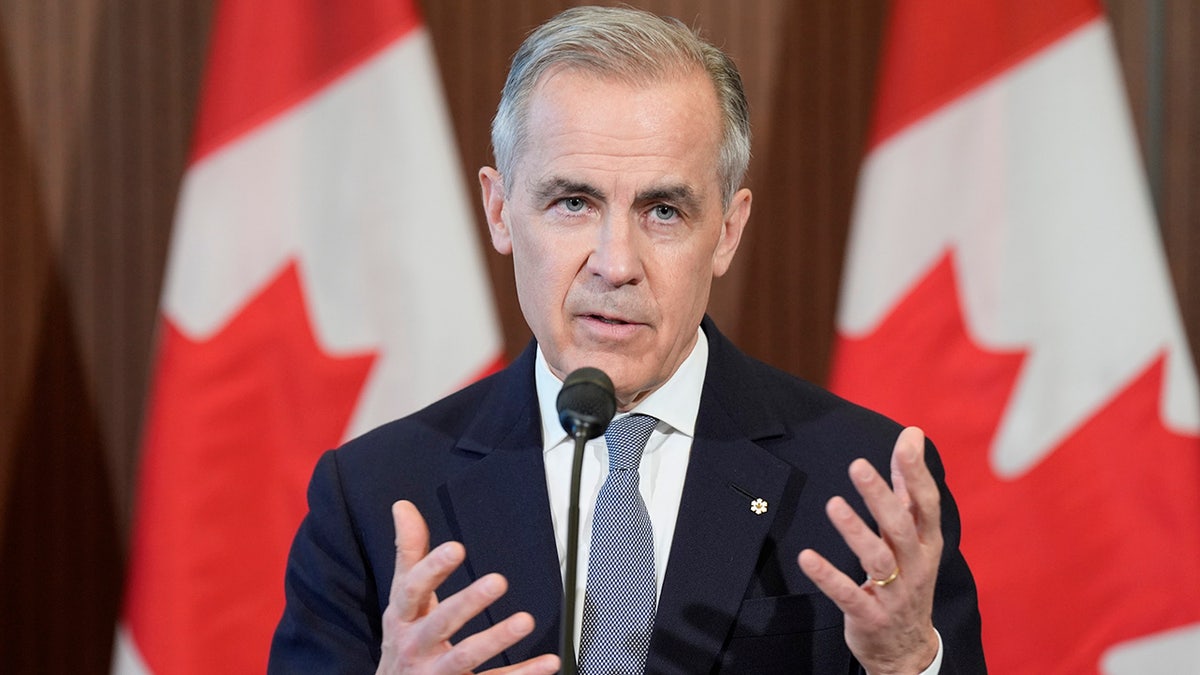
Canadian Prime Minister Mark Carney has stated that the United States does not have the authority to dictate the terms of upcoming trade negotiations, countering reports that the Trump administration is seeking concessions before formal discussions on revising the United States-Mexico-Canada Agreement (USMCA) can begin.
Carney made the remarks on April 22, 2026, in response to media reports citing multiple sources who said the U.S. Is demanding what amounts to an “entry fee” from Canada before agreeing to enter talks on a revised trade deal. The Prime Minister emphasized that trade negotiations must be conducted as a mutual process, not as one party imposing conditions on the other.
“It’s not a case of the United States dictates the terms,” Carney said, according to reports from Canadian public broadcaster CBC. “It’s not a case of (one country) demanding and the other begging. It’s a negotiation.” He reiterated this position in French, underscoring the principle of equality in diplomatic engagement.
The comments come amid heightened sensitivity over trade relations between the two countries, particularly as the 2026 review date for the USMCA approaches. Originally signed during Donald Trump’s first term and praised by him at the time, the agreement has since been dismissed by the former president as “irrelevant,” yet his administration is now seeking to revise it under new conditions.
Former Quebec premier Jean Charest, who has been appointed to Carney’s advisory council on Canada-U.S. Economic relations, echoed similar sentiments, telling Radio-Canada that the U.S. Is seeking concessions before sitting down at the negotiating table. Charest noted that while the U.S. Expects Canada to make concessions, it is not offering any in return.
Carney acknowledged that both countries have trade irritants they wish to address but stressed that Canada will not make concessions simply to secure a seat at the table. “We have some on our side as well,” he said, indicating that reciprocal dialogue is necessary for any meaningful progress.
The Prime Minister too signaled a broader strategic shift, stating that Canada needs to reduce its economic and security reliance on the United States. This reflects a longer-term effort to diversify trade partnerships and strengthen domestic resilience in the face of unpredictable U.S. Policy shifts.
Despite the tension, Carney expressed confidence that the time will come to engage constructively on outstanding issues. “The time will come to really roll up our sleeves,” he remarked, suggesting that while immediate talks may be stalled, future engagement remains possible on equal footing.
As of now, no formal date has been set for the resumption of USMCA revision talks. Both the U.S. Commerce Secretary’s office and the Office of the United States Trade Representative have not responded to requests for comment on the reports of an “entry fee” demand.
Officials in Ottawa continue to monitor the situation closely, with any future developments expected to emerge through official channels or verified diplomatic communications. The next step in the process will depend on whether the U.S. Revises its preconditions for dialogue.
For ongoing updates on Canada-U.S. Trade relations and the status of USMCA negotiations, readers are encouraged to follow official statements from the Prime Minister’s Office and Global Affairs Canada.
If you found this informative, please consider sharing it with others who may be interested in international trade developments. We welcome thoughtful comments and perspectives on how nations can engage in fair and balanced economic partnerships.