
Canada is currently recalibrating its foreign policy to manage a complex strategic balancing act, navigating heightened economic dependencies on the United States while simultaneously seeking to deepen trade and security ties with the European Union. This shift, often described by analysts as a strategy of diversification, follows years of trade volatility and shifting geopolitical priorities in North America. According to the Government of Canada, the Comprehensive Economic and Trade Agreement (CETA) remains a central pillar of this outreach, intended to reduce reliance on the U.S. market, which accounts for roughly 75% of Canadian exports.
The strategic pivot comes as Canadian officials face persistent pressure to navigate the “America First” protectionist trends that have influenced U.S. policy across multiple administrations. While the U.S.-Mexico-Canada Agreement (USMCA) provides a stable framework for North American trade, Ottawa has increasingly looked across the Atlantic to secure supply chains and bolster democratic alliances. This focus on “European proximity” is not merely an economic choice but a calculated diplomatic effort to hedge against potential U.S. policy shifts that could disrupt integrated continental markets.
The Economic Imperative of Diversification
Canada’s push toward Europe is driven by a long-standing desire to mitigate the risks associated with an over-reliance on a single trading partner. Data from Statistics Canada indicates that while trade with the U.S. remains the country’s primary engine, volatility in energy and automotive sectors has prompted Ottawa to prioritize the European market. By leveraging CETA, Canadian firms have gained broader access to EU markets, particularly in sectors like clean energy, critical minerals, and digital services.
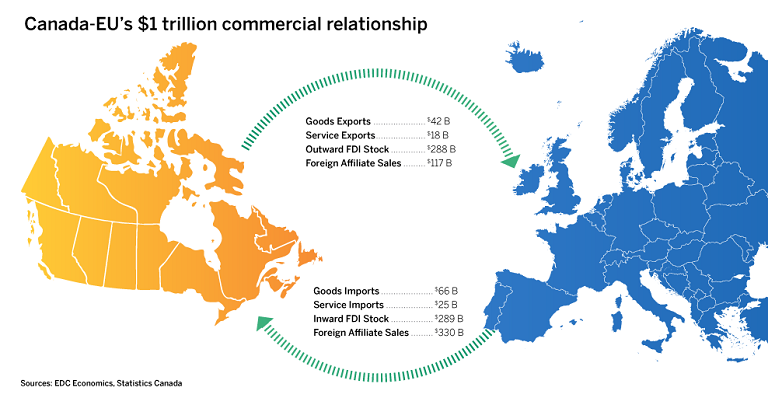
However, the transition is not without friction. Critics note that the regulatory burden of aligning with European standards can be significant for Canadian businesses accustomed to U.S.-centric operations. Furthermore, the Canadian government’s recent alignment with U.S. trade actions—such as the implementation of tariffs on Chinese electric vehicles—demonstrates that despite the rhetoric of “near-Europe” diversification, Canada remains structurally tethered to U.S. economic and security initiatives.
Security and Geopolitical Realignment
Beyond trade, Canada’s foreign policy is increasingly focused on the North Atlantic Treaty Organization (NATO) and its role in European security. Following the Russian invasion of Ukraine, Canada has increased its military presence and support for eastern flank members. This move serves a dual purpose: it reinforces Canada’s commitment to the transatlantic alliance and signals to Washington that Ottawa is a reliable partner in global security, even as it pursues independent trade interests.

According to the Department of National Defence, Canada has committed to significant long-term investments to modernize its military capabilities. This policy update is viewed by international observers as a necessary step to meet NATO’s 2% of GDP spending target, a benchmark that has been a point of contention between Ottawa and Washington for years. By addressing these security requirements, Canada aims to strengthen its standing in the G7 and EU, ensuring it remains an influential voice in the Western bloc.
Challenges in the Strategic Balance
The core challenge for the Canadian government remains the “strategic squeeze” between two major power centers. While the European Union offers a stable, rules-based trading partner, it cannot replace the immediate logistical and economic integration of the North American market. Canada’s geographic reality forces a pragmatic approach, where the country must maintain a “special relationship” with Washington while simultaneously cultivating a “strategic partnership” with Brussels.
This balancing act requires a sophisticated diplomatic touch, especially as the global landscape shifts toward greater protectionism. Whether Canada can successfully carve out a more independent economic niche remains a subject of debate among trade experts. The outcome will likely depend on the success of ongoing negotiations regarding critical minerals and energy exports, where Canada is positioning itself as a secure alternative to adversarial supply chains for both its U.S. and European allies.
Monitoring Future Developments
The effectiveness of this dual-track strategy will be tested during the upcoming G7 ministerial meetings and subsequent EU-Canada high-level dialogues. Official updates regarding trade tariffs, security cooperation, and environmental standards are expected to be published via the Global Affairs Canada news portal in the coming months. Observers should also watch for the next round of reports concerning the review of the USMCA’s performance, which is slated for a major assessment in 2026.
As these negotiations progress, the impact on Canadian industries—ranging from manufacturing to natural resource extraction—will become clearer. Readers interested in the specifics of these trade agreements or the latest government policy updates are encouraged to review the official documentation provided by the Canadian federal government. We invite our readers to share their perspectives on this shift in the comments section below.
Related reading