
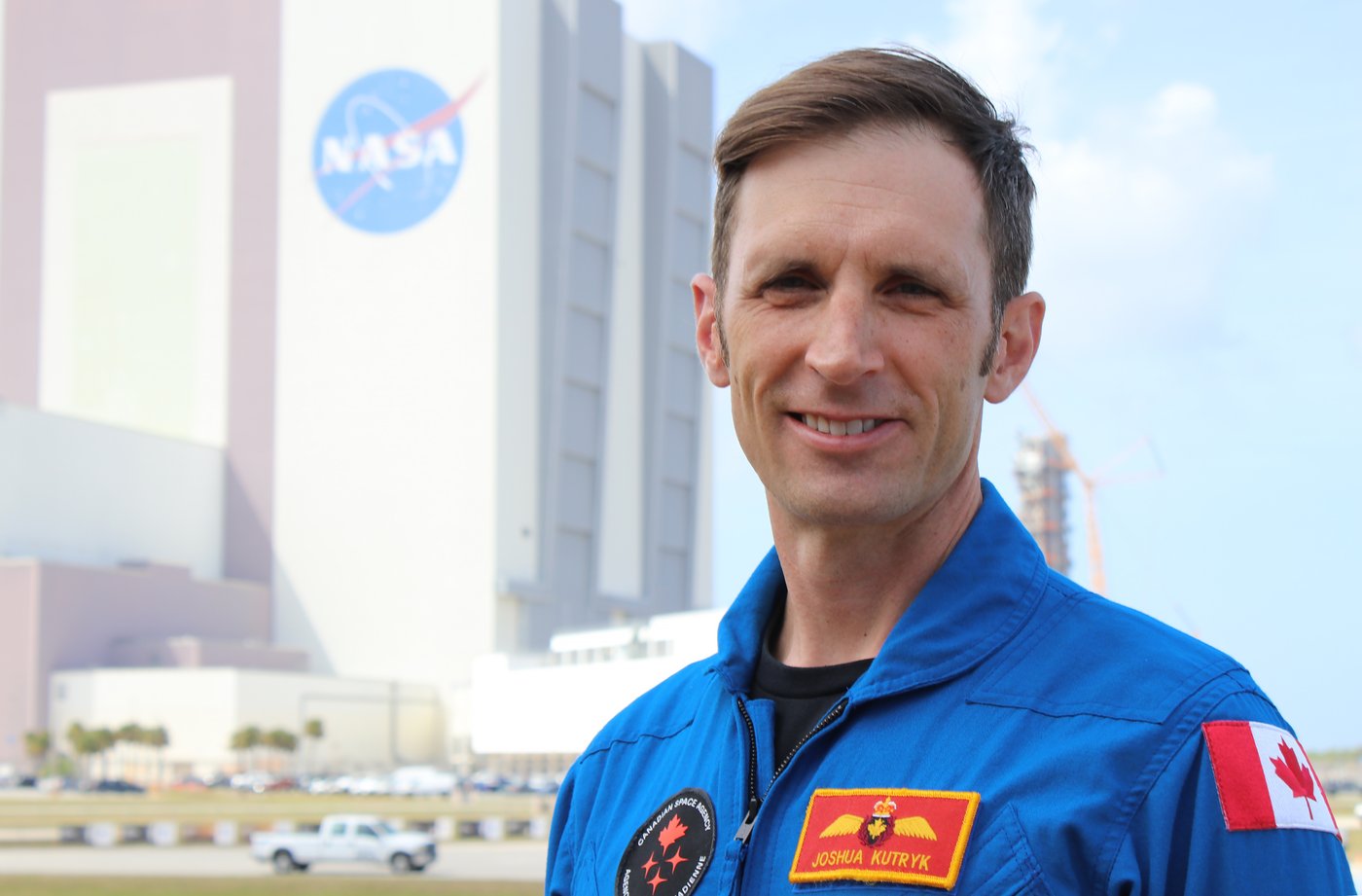
Canadian Space Agency astronaut Joshua Kutryk has been officially assigned to NASA’s SpaceX Crew-13 mission to the International Space Station, marking his first journey into space. The assignment was announced by Canadian government officials in late April 2026, confirming Kutryk’s role as a mission specialist alongside NASA astronauts Jessica Watkins and Luke Delaney, and Roscosmos cosmonaut Sergey Teteryatnikov. This milestone makes Kutryk the fourth Canadian astronaut to undertake a long-duration stay aboard the orbiting laboratory.
The Crew-13 mission is scheduled to launch no earlier than mid-September 2026 from Kennedy Space Center in Florida, using a SpaceX Falcon 9 rocket and Dragon spacecraft. Once aboard the station, the crew will join Expedition 75 and conduct a range of scientific experiments and technology demonstrations aimed at supporting future deep-space exploration, including missions to the Moon and Mars. The flight represents the 13th crew rotation mission under NASA’s Commercial Crew Program with SpaceX.
According to NASA’s official announcement, Jessica Watkins will serve as spacecraft commander and Luke Delaney as pilot for the mission. Watkins, who previously flew on the SpaceX Crew-4 mission in 2022, brings experience as a geologist and former member of the Curiosity rover science team. Kutryk, a colonel in the Canadian Armed Forces and former test pilot, will serve as a mission specialist, contributing his expertise in aerospace engineering and flight operations to the international crew.
The Canadian Space Agency confirmed that Kutryk’s assignment follows years of training and evaluation, highlighting his background in aerospace systems and operational testing. His selection continues Canada’s legacy of contributing skilled personnel to international space partnerships, building on the achievements of previous Canadian astronauts such as Chris Hadfield and Jeremy Hansen. CSA officials noted that Kutryk’s mission will support scientific research benefiting both space exploration and life on Earth.
NASA emphasized that advancing the Crew-13 launch date from its original November target to mid-September increases the frequency of U.S. Crew rotations to the station, enhancing opportunities for ongoing research. The agency stated that the crew will conduct investigations into human physiology, materials science, and Earth observation, with results intended to inform future exploration missions and technological development.
As part of Expedition 75, Kutryk and his crewmates will live and work aboard the station for approximately six months, conducting maintenance tasks, operating robotic systems, and participating in educational outreach activities. Their work will contribute to the station’s role as a unique microgravity laboratory where discoveries are made that cannot be replicated on Earth.
The mission underscores the ongoing international collaboration aboard the International Space Station, involving NASA, the Canadian Space Agency, the European Space Agency, Japan Aerospace Exploration Agency, and Roscosmos. Such partnerships enable shared costs, combined expertise, and broader scientific returns from the orbiting outpost, which has hosted continuous human presence since November 2000.
For updates on the Crew-13 mission timeline, training milestones, and launch preparations, readers can follow official announcements from NASA’s Commercial Crew Program blog and the Canadian Space Agency’s newsroom. Both agencies provide regular updates on crew assignments, flight readiness reviews, and mission milestones as the launch date approaches.
As humanity continues to extend its presence beyond low Earth orbit, missions like Crew-13 represent critical steps in building the experience and knowledge needed for future journeys to the Moon under the Artemis program and eventually to Mars. Each crew member’s contribution helps refine systems, procedures, and scientific understanding essential for long-duration spaceflight.
To learn more about Joshua Kutryk’s background, training, and role in the upcoming mission, visit the Canadian Space Agency’s astronaut biography page. For detailed information about the Crew-13 crew, mission objectives, and launch schedule, consult NASA’s mission overview for SpaceX Crew-13.
What are your thoughts on the growing role of international partnerships in space exploration? Share your perspective in the comments below, and help spread awareness by sharing this article with others interested in the future of human spaceflight.