
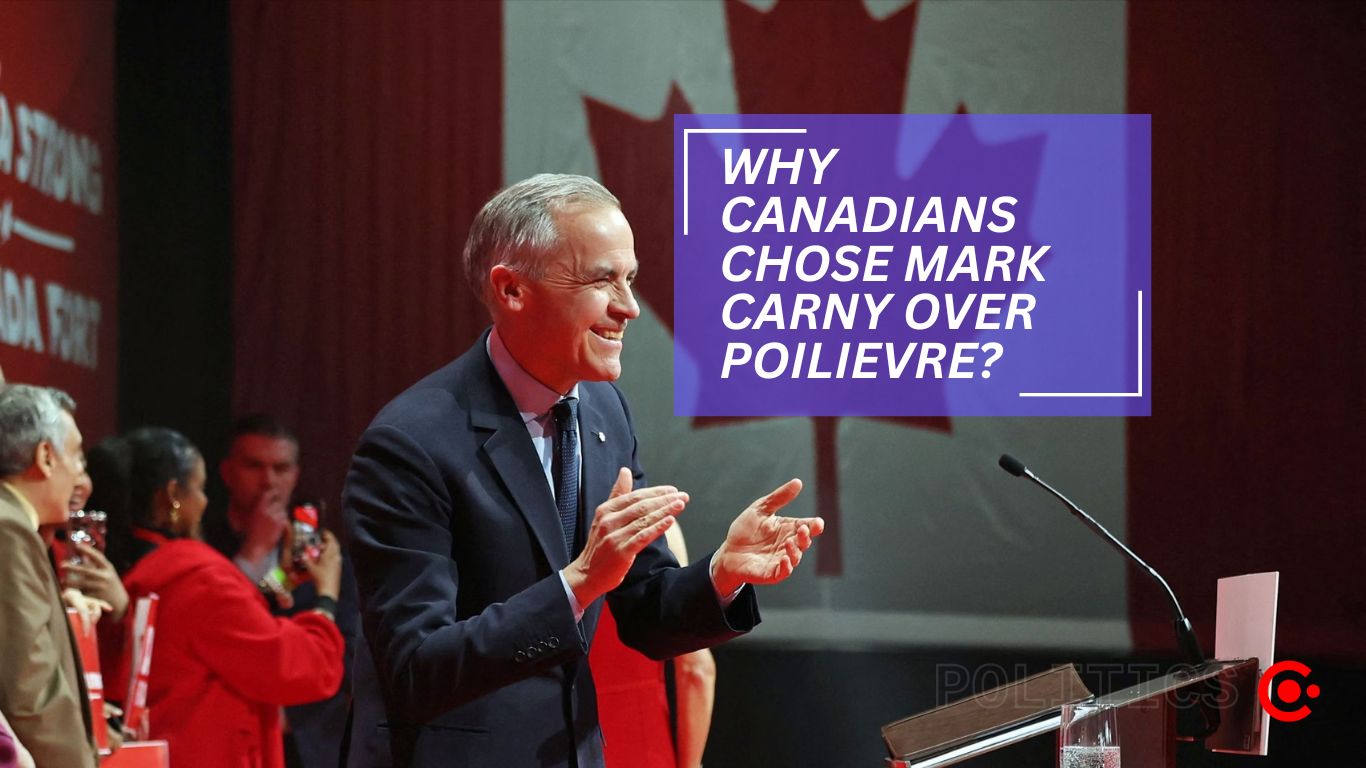
The 2025 Canadian Federal Election: How Mark Carney Navigated a Crisis and Secured Victory
The 2025 Canadian Federal Election was a pivotal moment for the nation, a referendum on its sovereignty, economic stability, and core liberal values. Coming on the heels of Justin Trudeau’s unexpected resignation – fueled by voter fatigue, political controversies, and declining approval ratings – the election presented a stark choice between experience and a fresh face, populism and pragmatic leadership. Ultimately, Canadians chose Mark Carney, a former central banker, to lead them through a period of unprecedented external pressure and internal uncertainty. This analysis delves into the key factors that propelled Carney to victory over Conservative leader Pierre Poilievre,examining the influence of the evolving geopolitical landscape,the critical issue of trust,and the strategic positioning of both campaigns.
The Candidates: A Clash of Political Backgrounds
The election pitted two distinctly different leaders against each other. Mark Carney, a relative newcomer to the political arena, brought a unique and compelling resume. Prior to entering politics,Carney served with distinction as the Governor of the Bank of Canada (2008-2013) and later as the Governor of the Bank of England (2013-2020). His experience wasn’t limited to central banking; he also acted as an advisor to former Prime Minister Justin Trudeau, providing him with valuable insight into the workings of Canadian governance. Carney’s rapid ascent to the Liberal leadership following Trudeau’s January 2025 resignation and subsequent victory in March demonstrated a remarkable ability to connect with voters seeking a steady hand.
In contrast, Pierre Poilievre represented a seasoned political operative. Elected in the 2004 federal election representing Nepean-Carleton (later Carleton), Poilievre had spent two decades building a career within the Conservative Party. He held several key ministerial positions under former Prime Minister Stephen harper, including Minister of Democratic Reform and Minister of Employment and Social Development. Poilievre positioned himself as a populist leader, tapping into anxieties surrounding economic issues and appealing to a base eager for change.
Why Carney Triumphed: A Nation responds to External Threats and Internal Concerns
While the Liberal Party faced headwinds entering the election, a confluence of factors ultimately shifted the momentum in Carney’s favor. The moast significant of these was the escalating rhetoric and aggressive policies emanating from the newly elected U.S. President Donald Trump.sovereignty and Stability in the face of American Aggression
Trump’s election victory was promptly followed by a series of provocative statements and actions that directly threatened Canada’s economic and political independence. Most alarmingly, Trump publicly floated the idea of annexing Canada, declaring it could become the 51st state.This assertion, coupled with the imposition of damaging tariffs on Canadian goods, sparked widespread anxiety and a renewed focus on national sovereignty.
The Liberal campaign,under Carney’s leadership,astutely capitalized on this fear. Carney presented himself as a resolute defender of Canadian interests,willing to stand up to Trump’s bullying tactics and protect the nation’s independence. His background as a seasoned negotiator and his calm, measured demeanor projected an image of strength and stability – precisely what Canadians craved in a time of crisis. He framed the election as a choice between protecting Canada’s future and succumbing to external pressure.
Poilievre, however, struggled to articulate a convincing response to Trump’s threats. His populist rhetoric and perceived alignment with Trump’s political ideology led many Canadians to view him as an unreliable advocate for national interests. The association with Trump, a figure increasingly viewed with skepticism and concern internationally, proved to be a significant liability. Canadians, having observed the consequences of Trump’s policies and broken promises in the United States, where wary of embracing a similar approach.
The Crucial Factor of Trust in Leadership
Beyond the immediate threat posed by the U.S.,the issue of trust played a pivotal role in shaping the election outcome. Despite being a newcomer to electoral politics, Carney quickly established himself as a credible and trustworthy figure. Surveys consistently showed that Canadians were more likely to trust a candidate with a Liberal ideological leaning, notably one who demonstrated a commitment to pragmatic solutions.
Carney’s background as a central banker, known for its emphasis on data-driven decision-making and responsible fiscal management, contributed to this perception. His campaign promises, while enterprising, were grounded in realistic assessments of the challenges facing the country.His “outsider” status, while initially a potential disadvantage, ultimately became an asset, allowing him to present himself as a fresh voice unburdened by the baggage of customary politics.
Poil


![T-Mobile vs AT&T vs Verizon: Best Unlimited Plans [2024]](https://i0.wp.com/media.wired.com/photos/694af41b580097bbe4e87205/191%3A100/w_1280%2Cc_limit/Best%20Unlimited%20Plans%20top%20art%20122025%20SOURCE%20Getty%20Images.jpg?resize=150%2C100&ssl=1 "T-Mobile vs AT&T vs Verizon: Best Unlimited Plans [2024]")