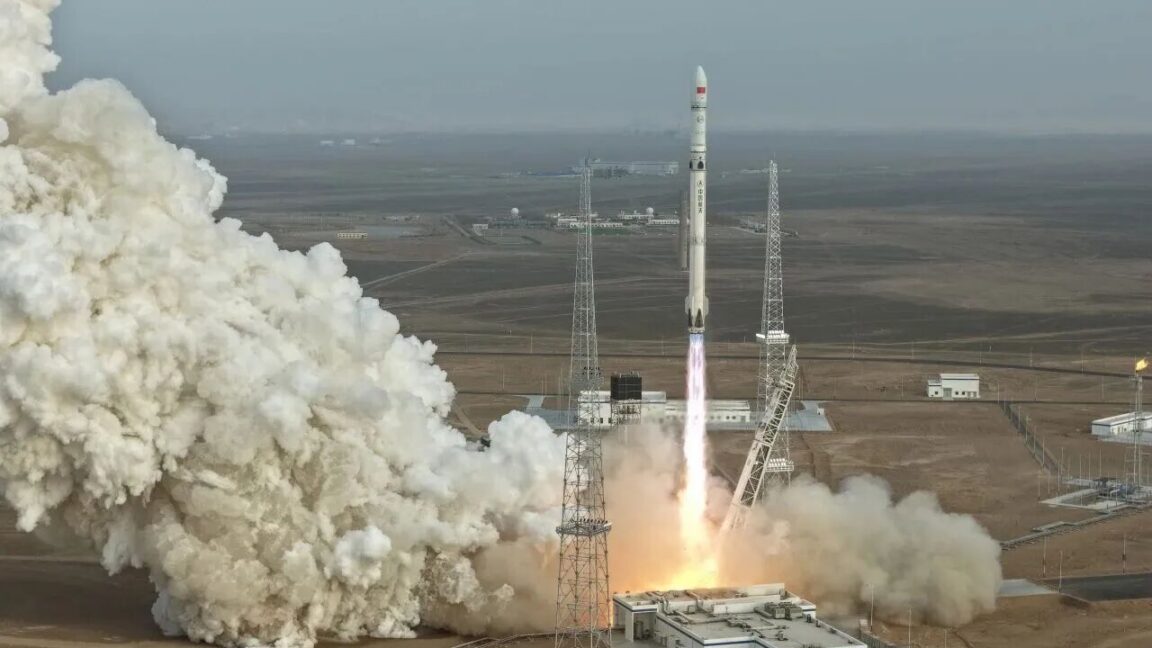
China’s Long March 12A Achieves Orbit on Debut flight, recovery Attempt Falls Short
China continues to make significant strides in reusable rocket technology.The Long March 12A, a new medium-lift launch vehicle, successfully reached low-Earth orbit on its inaugural flight Monday, December 23rd. This achievement marks the second time this month a chinese rocket has demonstrated orbital capability on its first attempt, despite the inherent challenges of reusable launch systems.
A New Contender in Space Access
The Long March 12A, comparable in size to SpaceX’s Falcon 9, launched from the Jiuquan Satellite launch Center at 9:00 pm EST (02:00 UTC Tuesday). This launch represents a key step in China’s ambition to develop a robust and cost-effective space transportation infrastructure.
Less than ten minutes after liftoff, the rocket’s first stage booster re-entered the atmosphere at supersonic speeds. The intended landing site was a prepared location near the Gobi Desert, approximately 200 miles downrange from Jiuquan. Unfortunately, the booster failed to execute a controlled braking burn, resulting in a crash in a remote area.
Despite the unsuccessful recovery, the upper stage of the Long March 12A performed flawlessly, delivering its payload to the “predetermined orbit” as confirmed by the China Aerospace Science and Technology Corporation (CASC).
Learning from the Flight
CASC acknowledged the first stage recovery failure and stated a thorough investigation is underway. “The specific reasons are currently under further analysis and investigation,” the corporation reported.This data is crucial for refining the recovery process and improving the reliability of future launches.
The mission’s primary goal wasn’t just reaching orbit, but gathering critical flight data. CASC emphasized the value of this details,stating it “lays an important foundation for subsequent launches and reliable recovery of the stages.”
Following in the Footsteps of Zhuque-3
The Long March 12A’s experiance mirrors that of the Zhuque-3 rocket, launched earlier this month by the privately-funded LandSpace. The Zhuque-3, also a medium-class rocket, achieved orbit on its first launch but similarly experienced a hard landing during its booster recovery attempt.
while the Zhuque-3 landed closer to its designated zone, the long March 12A’s booster missed by a wider margin. Both events highlight the complexities of controlled rocket landings and the iterative process of perfecting reusable technology.
The Future of Chinese Reusable Rockets
CASC remains optimistic, outlining plans for a thorough review and technical analysis. They are committed to optimizing the recovery plan and advancing reusable technology verification. This dedication signals a long-term investment in reusable launch systems.
“The research and development team will promptly conduct a comprehensive review and technical analysis of this test process, fully investigate the cause of the failure, continuously optimize the recovery plan, and continue to advance reusable technology verification,” CASC stated.
Evergreen Insights: The Rise of Reusable Rockets
The pursuit of reusable rockets is revolutionizing space access. Traditionally, rockets were largely expendable, making space travel incredibly expensive. Reusability promises to dramatically lower launch costs, opening up new possibilities for space exploration, satellite deployment, and even space tourism.
Key benefits of reusable rockets include:
* Reduced Costs: Recovering and reusing rocket components substantially lowers the overall cost per launch.
* Increased Launch Cadence: Reusability enables faster turnaround times between launches.
* Enhanced Reliability: Iterative improvements based on flight data lead to more reliable systems.
* Sustainability: Reducing space debris and minimizing environmental impact.
FAQ: Long March 12A and Reusable Rocket Technology
Q: What is the Long March 12A rocket designed to do?
A: The Long March 12A is a new medium-lift launch vehicle developed by CASC, designed to provide cost-effective and reliable access to low-Earth orbit, with a focus on reusability.
Q: Why is reusable rocket technology important?
A: Reusable rockets significantly reduce the cost of space access, enabling more frequent launches and broader participation in space activities.
Q: What happened during the Long March 12A’s first stage recovery attempt?
A: The first stage booster failed to complete a controlled braking burn, resulting in a crash during its downrange landing attempt.
**Q: How does the Long
Related reading
- Scientists Discover Potential Atmosphere on Super-Earth Exoplanet
- Comedian Lee Su-ji Apologizes After Controversy Over Election Protest Remarks
- Halo: Campaign Evolved Launch: DLSS Support, Lamborghini Collab, and Gameplay Controversies (world-today-news.com)
- Wyndham Clark Misses Cut at 2026 Rocket Classic After Second Straight Exit (time.news)