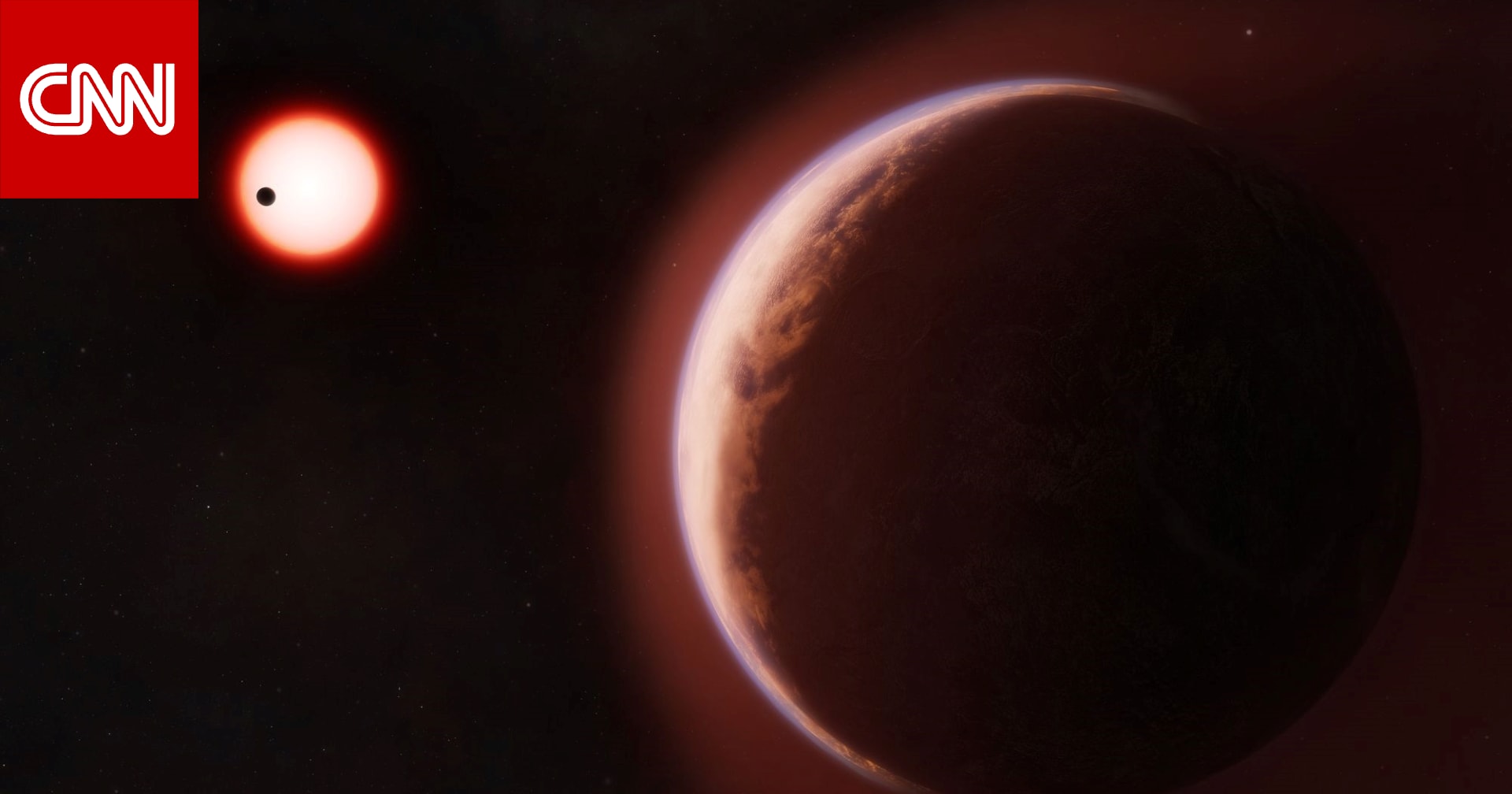
Astronomers have uncovered compelling observational evidence suggesting the presence of an atmosphere on a distant super-Earth exoplanet, marking a significant milestone in the characterization of rocky worlds beyond our solar system. The findings, detailed by research teams utilizing advanced space- and ground-based observatories, offer fresh insights into how planetary bodies larger than Earth retain gaseous envelopes under intense stellar irradiation.
Super-Earths represent a diverse class of planets with masses higher than Earth’s but substantially below those of ice giants like Uranus and Neptune. Because these worlds can vary wildly in composition—ranging from barren rock to volatile-rich mini-Neptunes—detecting an atmosphere serves as a critical diagnostic tool. It helps researchers determine whether a specific planet resembles a heavy, rocky terrestrial world or a gas-dominated dwarf.
Confirming atmospheric signatures on exoplanets of this scale has historically challenged scientists due to the tiny signals planets produce relative to their host stars. However, recent advancements in high-precision spectroscopy, particularly with instruments capable of measuring minute shifts in starlight as a planet passes in front of its host, have opened new avenues for atmospheric characterization.
Observational Methods and Spectroscopic Data
Detecting exoplanet atmospheres typically relies on transmission spectroscopy, a technique that captures starlight filtering through a planet’s outer gaseous layers during a transit. As the light passes through the atmosphere, specific molecules absorb distinct wavelengths, leaving chemical fingerprints that sensitive telescopes can record and analyze.
Researchers examining the super-Earth candidate focused on specific spectral absorption features to deduce the presence of volatile compounds. By comparing observations taken during primary transits with baseline stellar spectra, the science teams isolated signals that point toward a persistent, blanket-like layer rather than a completely bare rock.
Data calibration requires rigorous elimination of stellar activity noise, such as starspots and flares, which can mimic or obscure planetary signals. Advanced data-processing algorithms deployed by the analysis teams enabled researchers to filter out stellar interference, isolating the subtle atmospheric signatures attributed to the exoplanet.
Implications for Planetary Formation and Habitability
The discovery of an atmosphere on a super-Earth provides crucial empirical data for planetary formation models. Theorists grapple with how planets within this mass range manage to hold onto volatile elements like hydrogen, helium, or heavier secondary gases against the stripping force of stellar winds.
While an atmosphere does not automatically signal habitability—especially given that many super-Earths orbit close to their parent stars in environments subject to extreme radiation—detecting gas layers helps map the boundary conditions where planets can retain volatile envelopes. Understanding these retention mechanisms informs broader inquiries into the frequency of Earth-like environments across the galaxy.
Researchers continue to schedule follow-up observations using complementary observation windows to test the stability and composition of the detected envelope. These upcoming campaigns aim to map out molecular abundances more precisely, shedding light on the geological and atmospheric evolution of super-Earths.
As telescope technology advances and observation schedules expand, the astronomical community anticipates further breakthroughs in characterizing small exoplanets. Readers interested in ongoing astronomical discoveries and official observatory schedules can monitor updates through major space agency portals and scientific publication archives.
Related reading