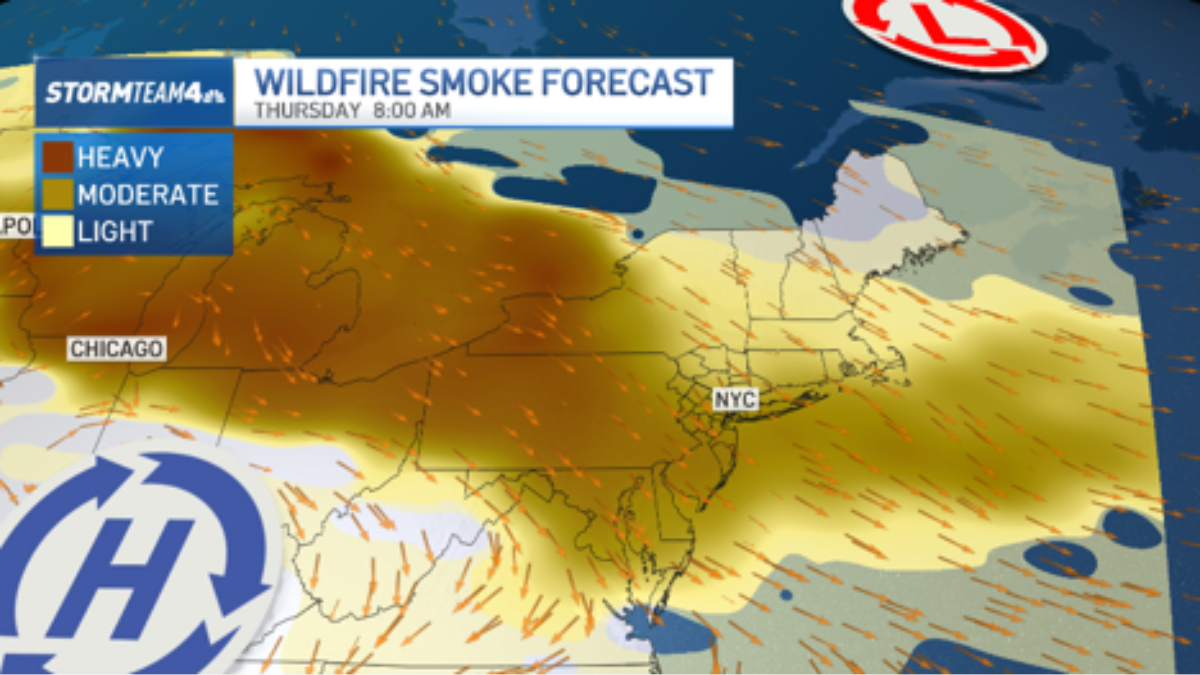
Residents across the New York City metropolitan area and the broader Northeast are bracing for diminished air quality through mid-week as smoke from Canadian wildfires drifts southward.
The influx of smoke originates from active wildfires primarily located in Ontario, Canada. A specific weather pattern—characterized by a high-pressure system positioned over the Central United States interacting with a low-pressure system in Eastern Canada—is actively funneling the smoke across the Great Lakes region and into the Northeast. Atmospheric models suggest that a light haze observed on Tuesday will likely intensify by Wednesday, with conditions expected to remain thick through Thursday.
Atmospheric Dynamics and Air Quality Projections
The impact of this wildfire smoke on urban centers is twofold: it introduces both elevated particulate matter aloft and increased concentrations of ground-level pollutants.
The presence of smoke is coinciding with a high-pressure heat dome, which is bringing temperatures well above seasonal averages to the Northeast. This meteorological synergy—extreme heat combined with poor air quality—is particularly hazardous. Health officials recommend limiting outdoor physical exertion during these peak windows to minimize exposure to both heat and smoke particles.
Public Health Guidance and Safety Measures
For those sensitive to air quality fluctuations, the most effective mitigation strategy is to reduce time spent outdoors while smoke levels remain elevated.
Residents are encouraged to check official municipal alerts and the National Weather Service for updated advisories as the situation evolves.
The next confirmed checkpoint for regional air quality and heat safety will be the issuance of updated daily forecasts from local National Weather Service offices, typically released every six hours.