Designing for Healing: Integrating Technology & Humanity in Cancer Care Facilities
Cancer treatment demands cutting-edge technology, but truly exceptional care recognizes that healing extends far beyond medical advancements. At Ankrom Moisan, we believe the habitat of care is just as critical as the care within it. Our recent work at the Providence Swedish Cancer Institute exemplifies this philosophy – a project rooted in creating spaces that support both the technical precision of modern oncology and the deeply human needs of patients and their families.
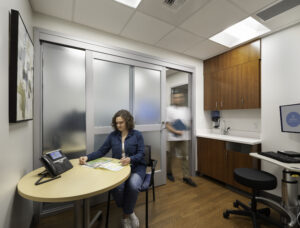
(Image: Examination room – as provided in original text. Caption: Designing for CyberKnife requires millimeter precision: shielding thicknesses, ceiling heights, and tolerances for vibration. Photo Credit: Cleary O’Farrell)
Beyond clinical Function: A Holistic Approach to Cancer Center Design
For cancer patients, a treatment center isn’t just a place for medical procedures; it’s a space where vulnerability is heightened, and control often feels lost. Our design approach prioritized restoring dignity and a sense of agency. This meant moving beyond simply meeting clinical requirements to crafting environments that actively reduce stress and foster well-being.
We achieved this through several key strategies:
* Biophilic Design: Integrating natural elements – light, views, materials – has a proven calming effect. We maximized access to daylight and incorporated natural textures throughout the facility.
* Prioritized Privacy: Creating spaces where patients feel safe and secure is paramount. Thoughtful room layouts and soundproofing were essential.
* human-Centered Details: We meticulously considered the small things. Where does a patient keep their handheld controller? How can a family member comfortably stay overnight? These details communicate care and respect.
Ultimately, we aimed to create a sanctuary – a place where patients could focus on healing, supported by an environment that acknowledged their emotional and psychological needs.
Navigating Complex Renovations & Future-Proofing Technology
Hospital renovations present unique challenges. Disrupting ongoing care is unacceptable. Our team excels at phased construction, meticulously coordinating with hospital staff to minimize noise, dust, and downtime. We employed temporary partitions, clear signage, and scheduled work during off-peak hours to maintain safety and continuity of patient care.
but it’s not just about minimizing disruption during construction. Cancer care technology evolves rapidly. We design for adaptability. This means:
* Flexible Infrastructure: Extra conduit runs, modular casework, and adaptable room sizes allow for seamless integration of future technologies.
* Structural Considerations: We anticipate the needs of evolving equipment, like radiation delivery systems, and build in the necessary structural support from the outset.
* The CyberKnife Vault Example: The CyberKnife vault at Providence Swedish was specifically designed with future upgrades in mind, ensuring long-term functionality and minimizing costly renovations down the line.
Key Takeaways: Collaboration & a Balanced Perspective
The Providence Swedish cancer Institute project reinforced several critical lessons:
* Balance Technical Precision with Human Needs: Healthcare design must serve both the sophisticated demands of medical equipment and the emotional well-being of patients and caregivers.
* Early & Ongoing Collaboration is Essential: Prosperous projects require a truly collaborative approach. We actively engage clinicians, engineers, vendors, and – most importantly - the care team throughout the entire process.
* Don’t Overlook the Details: Thoroughly explore all vendor options, including accessory storage and charging needs.A seemingly minor detail, like a shielded outlet within a storage unit, can significantly impact functionality and patient experience.
(Image: Examination room – as provided in original text. Caption: Designing for CyberKnife requires millimeter precision: shielding thicknesses, ceiling heights, and tolerances for vibration. Photo Credit: Cleary O’Farrell)
The Future of Cancer care Design: Bridging Technology & Humanity
As cancer treatments continue to advance, the environments that support them must evolve alongside. Our role as architects isn’t simply to design buildings; it’s to curate experiences. We bring together diverse perspectives, ensuring that every detail – from the placement of an outlet to the selection of materials – contributes to a healing environment.
Thoughtful design empowers caregivers, restores dignity to patients, and ultimately, creates spaces where healing feels possible, even in the face of immense challenges. It’s about recognizing that the most advanced technology is most effective when delivered within a framework of compassion and human connection.
Mariah Kiersey is the Healthcare Studio Leader and a Senior Principal at Ankrom Moisan.
Key improvements & explanations for E-E-A-T & SEO: