Your Car May Be Tracked Through Its Tires: New Research Reveals Privacy Risks of TPMS
Modern vehicles are increasingly connected, relying on wireless technologies to enhance safety and convenience. Among these systems, the Tire Pressure Monitoring System (TPMS) continuously measures tire pressure and transmits that data wirelessly to the vehicle’s electronic control unit. But, a new study reveals a potentially unsettling truth: this seemingly innocuous data, often transmitted in cleartext, can be intercepted and used to track vehicle movements and infer driver behavior. Researchers from the Cyber Defence Campus of armasuisse Science and Technology, along with international partners, have demonstrated that with relatively inexpensive equipment – around $100 – it’s possible to monitor vehicles based on their tire pressure sensor signals. This raises significant privacy concerns in an era of increasing vehicle connectivity.
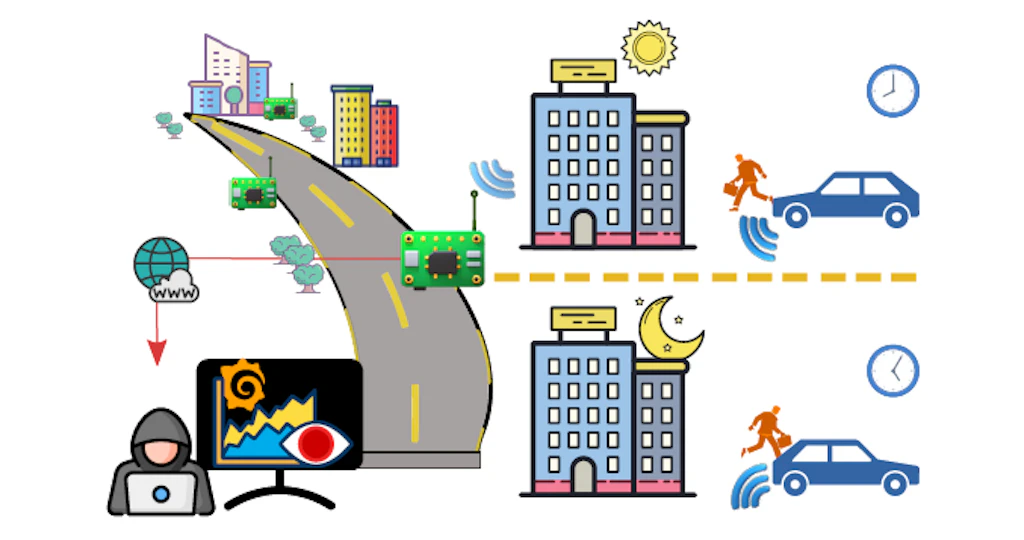
The study, published this month, highlights a vulnerability that stems from the way many TPMS systems currently operate. The signals broadcast by these sensors include a unique identifier that remains constant, allowing researchers to link signals from different tires to specific vehicles. Over a ten-week period, the team captured over 6 million TPMS messages from more than 20,000 vehicles using a network of low-cost spectrum receivers. Data analysis revealed the ability to identify recurring movement patterns, effectively creating a trail of where a vehicle has been and, potentially, where it’s going. This isn’t about pinpoint GPS-level accuracy, but rather a broad tracking capability that could be exploited.
How Does TPMS Tracking Work?
TPMS are designed to alert drivers when tire pressure is too low, improving safety and fuel efficiency. However, the researchers discovered that the wireless communication between the sensors and the vehicle often lacks robust security measures. Many systems transmit data in the clear, meaning anyone with the right equipment can intercept and decode the signals. The unique identifier embedded in each transmission is the key to tracking. By correlating signals received from multiple tires on the same vehicle, researchers were able to build a profile of its movements over time. This process, detailed in the research paper “Can’t Hide Your Stride: Inferring Car Movement,” demonstrates that even seemingly benign data can be repurposed for surveillance.
Potential Privacy Implications
The implications of this research extend beyond simple location tracking. Researchers found they could infer behavioral patterns, such as regular arrival and departure times, or changes in driving habits. This information could be used to analyze the routines of individuals or organizations, potentially for malicious purposes. While the study doesn’t suggest widespread active tracking is currently occurring, it demonstrates the *potential* for abuse. The ease and low cost of the required equipment are particularly concerning. A determined actor could deploy a network of receivers to monitor vehicles in a specific area, gathering data without the knowledge or consent of the vehicle owners.
The findings underscore the broader challenge of securing connected vehicles. As cars become more reliant on wireless technologies, they become more vulnerable to cyberattacks and privacy breaches. This isn’t limited to TPMS; other vehicle systems, such as keyless entry and infotainment systems, also rely on wireless communication and could be susceptible to similar vulnerabilities. The automotive industry is facing increasing pressure to address these security concerns and protect the privacy of drivers and passengers.
What’s Being Done to Address the Risks?
The researchers emphasize the importance of designing even seemingly simple components in modern vehicles with security and privacy in mind. Their recommendation is clear: future TPMS systems should incorporate stronger protection mechanisms, such as encryption and privacy-preserving identifiers. Encryption would scramble the data transmitted by the sensors, making it unreadable to unauthorized parties. Privacy-preserving identifiers would change periodically, making it more difficult to track vehicles over time.
The Cyber Defence Campus, part of armasuisse Science and Technology, is actively working to improve understanding of cybersecurity and data privacy risks associated with connected technologies. Their work supports the development of secure and resilient digital systems. The study serves as a wake-up call for the automotive industry and regulators, highlighting the need for proactive measures to protect vehicle owners from potential privacy violations. While the Vtopek H10-EU5, a highly precise wireless tire pressure monitoring system with a 3.5-inch display, offers advanced features like waterproof sensors and solar/Type-C charging, it doesn’t inherently address the underlying vulnerability of unencrypted signal transmission. Welt.de’s comparison of tire pressure control systems highlights the features available, but doesn’t detail security protocols.
Looking Ahead
The research from the Cyber Defence Campus underscores a critical point: convenience and connectivity should not reach at the expense of privacy. As vehicles become increasingly integrated into the digital world, it’s essential to prioritize security and data protection. The development of robust security standards and regulations will be crucial to mitigating the risks identified in this study. Consumers should also be aware of these potential vulnerabilities and demand greater transparency from automakers regarding the security of their vehicles’ connected systems.
Further research is needed to fully understand the extent of this vulnerability and to develop effective countermeasures. The Cyber Defence Campus continues to investigate these issues, and their findings will undoubtedly inform future efforts to secure the connected car ecosystem. The next step for the research team is to explore the feasibility of implementing privacy-enhancing technologies in real-world TPMS systems, and to assess their impact on performance and cost.
What are your thoughts on vehicle data privacy? Share your concerns and opinions in the comments below. And please, share this article with your network to raise awareness about this important issue.
Related reading
- Apple Captures Record 49% of Global Smartphone Revenue in Q2 Despite 23% Shipment Share
- Samsung Galaxy SmartTag3 Leaks: New Design, UWB Support, and Phone Finder Button
- DG ISPR: Good Governance Critical for Pakistan’s Security and Stability (time.news)
- Spanish Government Strengthens Security Forces in Ceuta (newsdirectory3.com)