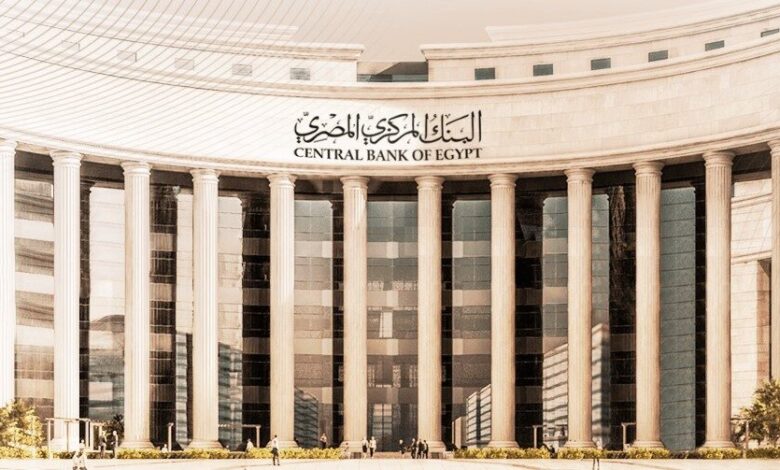
The Monetary Policy Committee (MPC) of the Central Bank of Egypt (CBE) convenes this Thursday for its fourth scheduled meeting of 2026 to determine the future of the nation’s key policy rates. Market analysts and banking experts widely expect the committee to maintain current interest rates for a third consecutive session, prioritizing long-term monetary stability over immediate easing. As of the May 21 meeting, the CBE held the overnight deposit rate at 19% and the overnight lending rate at 20%, while the main operation and discount rates remained at 19.5%.
This decision-making process comes as the Egyptian economy navigates a complex transition from managing acute fiscal pressures toward achieving sustainable monetary stability. While some domestic indicators—such as a contraction in the non-oil private sector Purchasing Managers’ Index (PMI) to 46.0 points in June—suggest a cooling economy that might typically warrant a rate cut, the central bank remains focused on ensuring that recent disinflationary trends are durable and well-anchored before shifting its policy stance.
Inflation Outlook and Monetary Policy Priorities
The Central Bank of Egypt reported that annual core inflation stood at 13.8% in May 2026, consistent with April figures. The committee is expected to release updated inflation data for June on Thursday, which will serve as a critical input for its policy decision. The CBE previously projected that headline inflation would remain elevated throughout the third quarter of 2026, driven by base effects and ongoing supply-side pressures, before aiming to approach its target of 7% (±2%) by the second half of 2027.
Banking expert Shaimaa Wagih emphasized that the current environment requires a comprehensive assessment of economic conditions rather than a reaction to any single indicator. According to Wagih, the central bank’s focus has shifted toward preserving the gains made in foreign exchange market stability and banking sector resilience. She estimates a 70% probability that the CBE will hold rates steady, noting that an early cut could be premature if the downward trend in inflation is not yet firmly established.
Expert Perspectives on Economic Caution
Mohamed Abdel Aal, a prominent banking expert, noted that while the strengthening of the Egyptian pound—now trading below EGP 49 per US dollar—is a positive sign for market confidence, there are compelling reasons for the MPC to remain cautious. Abdel Aal highlighted that global markets have not yet entered a clear easing cycle, and the US Federal Reserve remains sensitive to persistent inflation expectations. Furthermore, the decision by the Commercial International Bank (CIB) to raise its three-year fixed-rate savings certificate to 18% effective July 7 suggests that the banking sector is preparing for a period where interest rates remain elevated.
HC Securities & Investment analyst Heba Mounir also pointed to regional geopolitical tensions as a significant factor influencing the committee’s outlook. Mounir indicated that the ongoing impact of conflict on energy prices and the necessity of maintaining the attractiveness of domestic debt for foreign investors support a “wait-and-see” approach at this week’s meeting. She expects inflation to move broadly sideways following its May slowdown, reinforcing the case for keeping rates unchanged to protect fiscal deficit targets and foreign currency resources.
Market Consensus and Future Policy Signals
A survey of economists conducted by Reuters confirms a strong consensus, with all 13 participants expecting the CBE to maintain the current overnight deposit and lending rates at 19% and 20%, respectively. While some analysts suggested the potential for lowering the reserve requirement ratio as an alternative to an interest rate cut, the prevailing view remains that the central bank is unlikely to move aggressively while external risks related to global interest rates and energy prices persist.
For the Central Bank of Egypt, the primary objective remains the consolidation of monetary stability. The committee is expected to use Thursday’s announcement to signal its assessment of future risks, including the sustainability of recent disinflation and the impact of fiscal adjustment measures. Investors and market participants will be watching closely to see if the MPC identifies the conditions—sustained inflation decline, exchange rate stability, and reduced external volatility—required to commence a gradual easing cycle later in the year.
The Central Bank of Egypt is scheduled to publish its official policy statement following the conclusion of the MPC meeting on Thursday. The public and market analysts can monitor the central bank’s official website for the latest updates and detailed commentary regarding the rationale behind the decision.