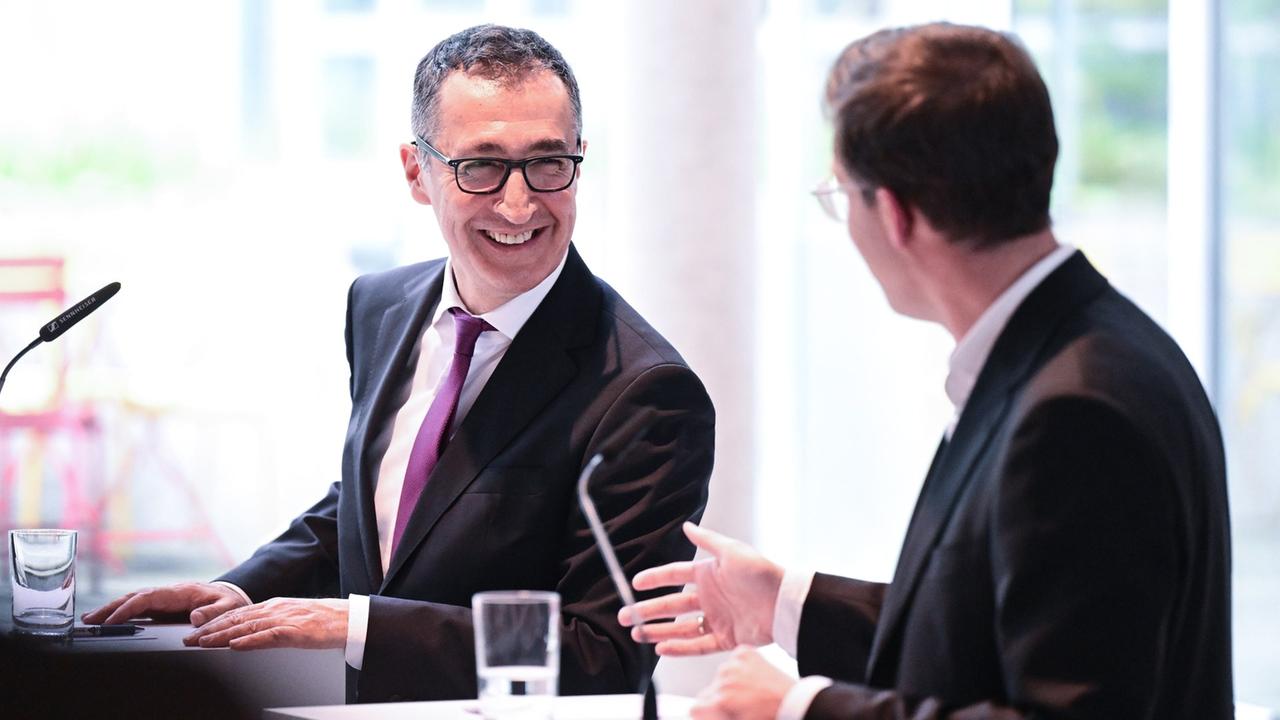
Green and Christian Democratic Union (CDU) negotiators in Baden-Württemberg have accelerated their coalition talks following weeks of preliminary discussions, according to recent reports from regional broadcaster SWR. The shift comes after three weeks of exploratory talks that concluded at the end of March, during which both parties outlined broad areas of agreement on governance, reform priorities, and ministerial distribution.
The pace of negotiations has intensified as the two parties aim to finalize a governing alliance ahead of key internal deadlines. CDU state leader Manuel Hagel has reportedly pushed for swift progress, seeking to present a draft coalition agreement to CDU legislators by early May. This timeline is intended to prevent further revisions to the negotiated framework once it reaches broader party review, with a formal vote on the coalition agreement scheduled for the CDU state party congress on May 9.
Green party leader Cem Özdemir, who is positioned to become the next minister-president of Baden-Württemberg, emphasized during the launch of the formal negotiations that the focus had shifted from establishing a framework to deepening policy specifics. “We have set the framework in the exploratory talks. Now we must go into detail, department by department, to ensure People can govern effectively together for the next five years,” Özdemir told SWR at the outset of the working group sessions.
The negotiations are being conducted through 14 specialized working groups, each assigned to a specific policy area such as education, climate policy, internal security, and economic development. These groups have been given slightly more than one week to develop concrete proposals based on the 48-page exploratory paper agreed upon by Özdemir and Hagel. The compressed timeline reflects pressure from both leaderships to deliver tangible results quickly, with Hagel particularly eager to showcase early wins to his party caucus ahead of the May 9 vote.
Exploratory talks between the Greens and CDU resumed on March 30 after an initial round of talks earlier in the month, marking the first time the two parties had engaged in formal discussions since the state election on March 8. In that election, the Greens emerged as the strongest party with 32.6% of the vote, narrowly edging out the CDU’s 30.2%, according to the final official results released by the State Electoral Office. The outcome necessitated coalition talks, as neither party achieved an outright majority in the 120-seat state parliament.
During their joint press appearance following the resumed talks, both Özdemir and Hagel stressed the importance of building trust and presenting a united front. Özdemir framed the prospective alliance as a “reform coalition” grounded in equality between partners, noting that ministerial appointments must reflect the electoral outcome and the principle of shared governance. Hagel, meanwhile, emphasized that the new government must address pressing concerns such as inflation and global instability, warning against merely repeating past policies. “It must be something sensible,” he said, echoing a sentiment he had expressed previously about the need for substantive, actionable governance.
The urgency in the negotiations is further shaped by internal party timelines. Hagel aims to use the draft coalition agreement as a centerpiece at a meeting of all CDU representatives from Baden-Württemberg in the Bundestag, state parliament, and European Parliament scheduled for early May. By presenting a near-finalized text at that gathering, he hopes to consolidate support within his party before the state congress ratifies the agreement. Özdemir’s election as minister-president is slated to occur four days after the CDU vote, on May 13, assuming the coalition deal is approved.
Observers note that the speed of the talks marks a departure from the cautious tone of the initial exploratory phase, which had been described as a “nerve-wracking process” by participants. Now, with both leaderships signaling a desire to move swiftly, the focus has shifted to translating broad commitments into actionable policy. The working groups are expected to deliver their findings by the end of the week following the launch of the formal negotiations, which began in mid-April.
As Baden-Württemberg prepares for its first green-led government in over a decade, the success of these negotiations will determine not only the policy direction of Germany’s third-most populous state but similarly serve as a potential model for future Green-CDU coalitions at the federal level. The outcome will be closely watched by political analysts across Europe, particularly given the symbolic weight of Özdemir’s potential historic ascent to the minister-presidency.
For ongoing updates on the coalition negotiations in Baden-Württemberg, readers can refer to the official websites of the Baden-Württemberg State Parliament and the State Electoral Office, which publish meeting schedules, agenda items, and finalized agreements as they become available.
What are your thoughts on the evolving political landscape in Baden-Württemberg? Share your perspective in the comments below and spread the conversation by sharing this article with your network.