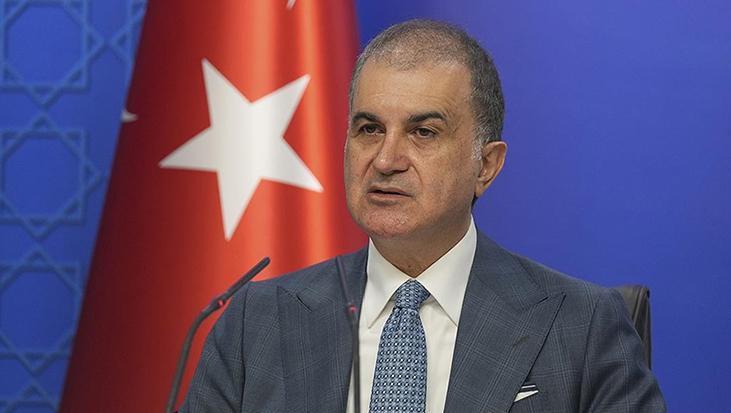
Sofia, Bulgaria – Accusations of escalating human rights violations and potential war crimes are reverberating across the international community as Turkish officials condemn recent actions by Israel in the West Bank. AK Parti Spokesperson Ömer Çelik has characterized Israel’s policies in the occupied territories, including potential annexation of the West Bank and separation of the Gaza Strip, as “spatial genocide,” a stark and forceful condemnation that underscores growing Turkish concern over the deteriorating situation. The remarks reach amid heightened tensions and increasing international scrutiny of Israeli settlement activity and its impact on Palestinian communities.
Çelik’s strong statement, delivered on February 16, 2026, reflects a long-standing Turkish position advocating for a two-state solution and the establishment of an independent Palestinian state based on 1967 borders, with East Jerusalem as its capital. The escalating rhetoric highlights a deepening rift between Ankara and Jerusalem and signals Turkey’s willingness to publicly challenge Israeli policies it deems unjust, and destabilizing. The situation is further complicated by regional dynamics and the ongoing conflict in Gaza, which has fueled anxieties about a wider escalation of violence and a potential humanitarian catastrophe. The Turkish government has consistently voiced its support for Palestinian rights and has been a vocal critic of Israel’s military actions in the region.
The core of Çelik’s criticism centers on the assertion that Israel has no legitimate rights or sovereignty over occupied Palestinian or Arab lands. He further condemned any threat to the sovereignty of Arab states, labeling attempts to annex the West Bank or separate Gaza as acts of “spatial genocide.” This characterization, while strong, reflects a growing concern among international observers regarding the long-term consequences of Israeli policies on the viability of a future Palestinian state. The expansion of Israeli settlements in the West Bank, deemed illegal under international law by most of the international community, is a key point of contention, and is viewed by many as a deliberate attempt to predetermine the outcome of any future negotiations.
Escalating Tensions and the “Spatial Genocide” Accusation
The term “spatial genocide,” as used by Çelik, is a particularly charged accusation. While not a formally recognized legal term, it alludes to the idea that policies aimed at displacing or confining a population within a limited geographic area, effectively denying them their rights and future prospects, can constitute a form of genocide. This concept has gained traction in academic and legal circles in recent years, particularly in relation to the Israeli-Palestinian conflict. NTV reports that Çelik directly linked the recent land registration decision in the West Bank to this accusation, framing it as a deliberate attempt to solidify Israeli control and undermine Palestinian claims to the territory.
The land registration decision referenced by Çelik involves a move by Israel to register land in the West Bank, a move Palestinians and the international community view as a step towards de facto annexation. According to CNN Türk, Çelik stated that this action is “a new stage of the policy of genocide.” He further argued that Israel is expanding its genocidal policies through occupation, expansionism, and unlawful assertions of sovereignty. This rhetoric is likely to further strain relations between Turkey and Israel, which have been fraught with tension for years.
International Reactions and Turkish Diplomacy
Çelik’s condemnation is not isolated. Numerous international actors have expressed concern over the escalating situation in the West Bank and the potential for further violence. The United Nations, the European Union, and various human rights organizations have repeatedly called on Israel to halt settlement activity and respect international law. However, concrete action to address the issue has been limited, and the international community remains divided on how to effectively resolve the conflict. Turkey has consistently positioned itself as a strong advocate for Palestinian rights and has actively sought to mediate between the parties, though with limited success.
The Turkish government, under President Recep Tayyip Erdoğan, has long been a vocal critic of Israeli policies, particularly regarding the Palestinian issue. Erdoğan has repeatedly accused Israel of engaging in state terrorism and has compared its actions to those of Nazi Germany, drawing strong condemnation from Israeli officials. Hurriyet Daily News reports that Erdoğan has repeatedly questioned the boundaries of Israel from the United Nations platform, warning the world about what he perceives as its aggressive and expansionist intentions. This consistent criticism has strained diplomatic relations between Ankara and Jerusalem, but Turkey maintains that its stance is based on principles of justice and international law.
The US Ambassador Controversy
Adding fuel to the fire, Çelik likewise sharply criticized the US Ambassador to Israel for reportedly expressing support for the Netanyahu government’s actions in Gaza, including the killing of children. He described this support as “inhumane and horrific,” and accused the ambassador of advocating for a “Greater Israel” project that aims to seize the land of Arab states. This accusation touches upon a long-held belief among some that certain political factions seek to expand Israeli territory beyond its internationally recognized borders. Çelik argued that the theological and fanatical justifications used to support such claims pose a grave threat to regional stability and international law.
The specific comments attributed to the US Ambassador have not been independently verified by World Today Journal at the time of publication, but the accusation highlights a growing concern among Turkish officials about the perceived bias of US foreign policy towards Israel. Turkey has long called for a more balanced approach from the United States, advocating for a greater emphasis on Palestinian rights and a more robust commitment to a two-state solution. The Turkish government believes that the US has a crucial role to play in de-escalating the conflict and fostering a just and lasting peace.
The Path Forward: A Two-State Solution?
Çelik reiterated Turkey’s unwavering support for the establishment of a sovereign and independent Palestinian state based on the 1967 borders, with East Jerusalem as its capital. He emphasized that this remains the only viable solution to the Israeli-Palestinian conflict. However, the prospects for a two-state solution appear increasingly dim, given the continued expansion of Israeli settlements, the political divisions within the Palestinian leadership, and the lack of meaningful progress in peace negotiations. The current stalemate has led to a growing sense of despair among Palestinians and has fueled a cycle of violence and instability.
Turkey continues to advocate for a renewed international effort to revive the peace process, and has offered to play a mediating role. However, the success of any such effort will depend on the willingness of all parties to engage in solid-faith negotiations and to make difficult compromises. The international community must also exert greater pressure on Israel to halt settlement activity and respect international law. Without a concerted effort to address the root causes of the conflict, the situation is likely to deteriorate further, with potentially catastrophic consequences for the region.
The Turkish government views the struggle against what it terms a “genocidal organization” as a defense of humanity and civilization. President Erdoğan and Turkey, according to Çelik, stand at the forefront of a humanitarian alliance against this perceived threat, taking what they believe is the morally correct position in history. The question that everyone should inquire, Çelik concluded, echoing Erdoğan’s repeated calls, is: “What are the borders of Israel?”
The situation remains highly volatile, and further developments are expected in the coming weeks. The next key event to watch will be the upcoming session of the United Nations Security Council, where the Israeli-Palestinian conflict is expected to be a major topic of discussion. World Today Journal will continue to monitor the situation closely and provide updates as they become available. We encourage readers to share their thoughts and perspectives on this critical issue in the comments section below.