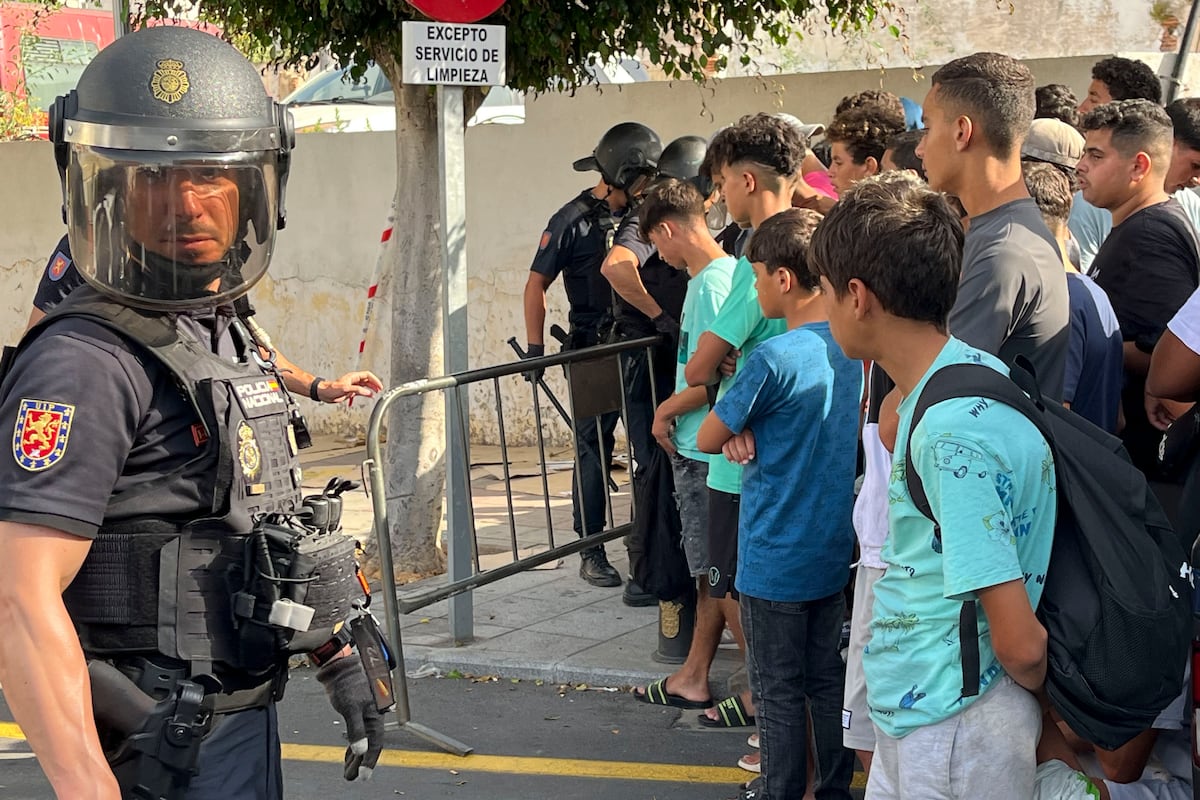
Political tensions surrounding irregular migration in Spain have intensified following sharp criticism from the Partido Popular (PP) directed at Prime Minister Pedro Sánchez’s administration. Opposition figures have accused the government of applying double standards in its foreign and migration policies, drawing a direct contrast between Madrid’s firm posture toward Italy and what they characterize as a passive approach toward Morocco following recent arrivals in Ceuta.
The latest political clash erupted as Spanish political leaders reacted to ongoing migration dynamics affecting the autonomous city of Ceuta. According to reporting from major Spanish news outlets, high-ranking PP officials have publicly demanded that the prime minister interrupt his summer break to address the situation directly within the national parliament, arguing that executive leadership is urgently required to manage pressing border security challenges.
Among the most vocal critics is Elías Bendodo, who publicly urged Prime Minister Sánchez to return from his holiday location. In statements reported by multiple outlets, Bendodo criticized the national executive’s handling of diplomatic relations and border control, contrasting Spain’s interactions with Rome against its diplomatic engagement with Rabat.
The opposition’s stance highlights a growing debate over how Madrid negotiates migration pacts and diplomatic cooperation across the Mediterranean basin. While the Spanish government has occasionally engaged in robust policy discussions with European partners such as Italy regarding migrant arrivals and EU-wide burden-sharing mechanisms, the PP contends that a similar assertiveness is missing when dealing with North African neighbors, particularly Morocco, which plays a pivotal role in managing departures toward Spanish enclaves like Ceuta and Melilla.
Political Demands for Parliamentary Accountability
As parliamentary pressure mounts, members of the conservative opposition have intensified their rhetoric regarding the accountability of the executive branch. Alma Ezcurra joined the chorus of party voices calling for an immediate recall of the government’s top leadership from their seasonal recess.
According to public statements covered by regional and national media, opposition figures argue that the ongoing pressures at the border require active ministerial presence in Madrid. The Partido Popular has framed the prime minister’s continued absence from the capital during active migration events as an affront to legislative oversight and constitutional norms. Party representatives have argued that executive leadership cannot remain detached while border regions manage surges in migrant arrivals.
Diplomatic Nuances and Mediterranean Relations
The friction over Italy and Morocco underscores deeper complexities in Spain’s foreign policy framework.
The PP’s critique focuses on what it perceives as an asymmetrical diplomatic posture—whereby the Spanish executive feels emboldened to debate or challenge European partners while reportedly exercising greater caution in bilateral talks with Moroccan authorities.
Next Steps and Official Updates
As political fallout from the Ceuta arrivals continues to develop, attention turns to whether the national government will accede to opposition demands for an extraordinary parliamentary session or an official ministerial briefing.
Related reading