targeting Chromosomal Instability: A Novel Approach to Preventing Metastasis in Triple-Negative Breast Cancer
Triple-negative breast cancer (TNBC) is an aggressive subtype known for its high rates of recurrence and limited treatment options. A significant driver of this aggressive behavior is metastasis – the spread of cancer cells to distant parts of the body. Now, groundbreaking research from Weill Cornell Medicine sheds light on a critical link between a key epigenetic regulator, EZH2, chromosomal instability, and the metastatic process in TNBC, offering a promising new therapeutic avenue.
The Problem with Chromosomal Chaos
Cancer cells are notorious for their erratic division. Unlike healthy cells where chromosomes – the structures containing our genetic blueprint – are meticulously duplicated and divided,cancer cells often exhibit chromosomal instability. This manifests as an abnormal number of chromosomes, or chromosomes that are structurally jumbled, in daughter cells. While it might seem counterintuitive to further disrupt cell division in already unstable cancer cells, previous attempts to “push them over the edge” have yielded mixed results, sometiems even promoting aggressive disease.
This new research, led by Dr. Rohit Mittal and colleagues, takes a diffrent tack. Instead of exacerbating instability, the focus is on restoring order to cell division, and the key to this lies in understanding the role of EZH2.
EZH2: The Epigenetic Driver of Metastasis
Approximately 5% of cells within a primary TNBC tumor possess a heightened potential to metastasize. These cells are characterized by altered metabolism, increased chromosomal instability, and crucially, changes in their epigenetics. Epigenetics refers to modifications to DNA and its associated proteins that influence gene expression without altering the underlying genetic code.
dr. Mittal’s team identified EZH2,a protein responsible for regulating DNA packaging,as a central player in driving metastasis within these high-risk cells. Cancer cells frequently overproduce EZH2,hijacking its normal function to silence genes essential for proper chromosome segregation during cell division. This leads to a cascade of errors and escalating chromosomal instability.
Analysis of patient data corroborated this finding: higher EZH2 levels in tumor cells were directly correlated with a greater degree of chromosomal alteration. Further laboratory experiments confirmed this link. Inhibiting EZH2 with tazemetostat, an FDA-approved drug for certain cancers, demonstrably reduced chromosomal instability in cell lines. Conversely, artificially increasing EZH2 levels genetically increased errors in cell division.
Crucially, mouse models with elevated EZH2 and resulting chromosomal instability exhibited a significant increase in lung metastases compared to those without EZH2 overexpression, solidifying the direct connection between EZH2, instability, and metastatic spread.
Unraveling the Mechanism: From EZH2 to Faulty Cell Division
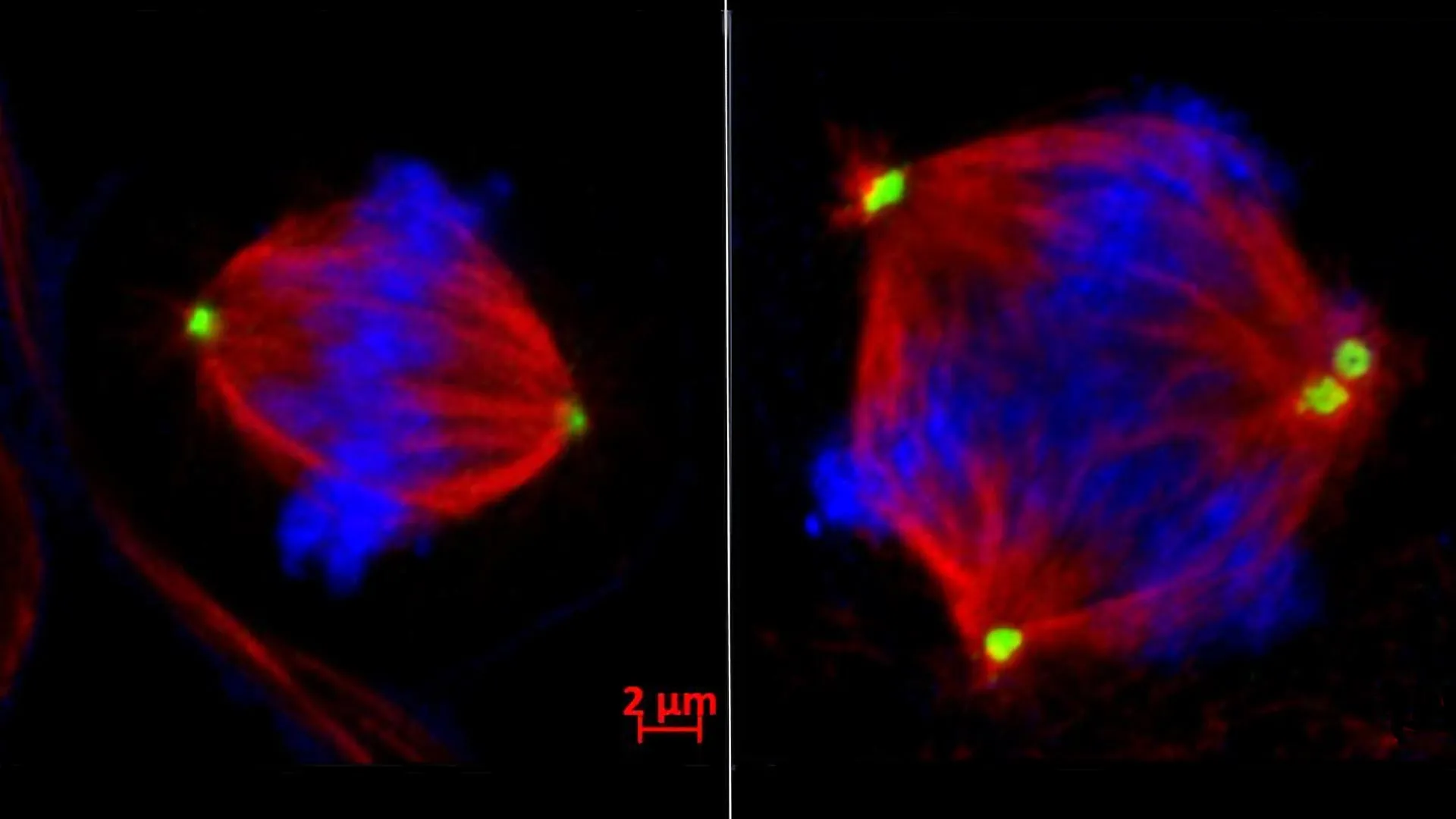
The research team meticulously dissected the molecular pathway by which EZH2 promotes instability. they discovered that EZH2 silences the tankyrase 1 gene, a crucial regulator of the chromosome-separating machinery. This silencing initiates a chain reaction: reduced tankyrase 1 leads to an overabundance of a protein called CPAP. Excessive CPAP, in turn, causes the centrosomes – the structures responsible for pulling chromosomes apart – to multiply uncontrollably. The result? Faulty cell divisions that produce cells with an incorrect number of chromosomes, often dividing into three or more daughter cells.
By inhibiting EZH2, the team successfully restored balance to this pathway, substantially reducing metastasis in preclinical models. “For the first time, we have linked EZH2, which is an epigenetic regulator, with chromosomal instability in a mechanistic fashion,” explains Dr.Shelley Yang Bai,first author of the study.
A New Therapeutic Horizon for TNBC and Beyond
This research positions EZH2 inhibitors as a potentially groundbreaking class of drugs capable of directly suppressing chromosomal instability. “This study provides a promising new approach to treating triple-negative breast cancer by targeting the root cause of metastases,” states dr. Magdalena Plasilova, a surgical oncologist at NewYork-Presbyterian/Weill Cornell Medical Center.”I see firsthand the devastating impact of metastases on patients, and this offers hope for improved outcomes and survival rates.”
While tazemetostat is already approved for other cancers, its potential repurposing for TNBC is actively being explored. Moreover, Dr. Mittal suggests that other drugs with similar or even superior effects may exist. He is currently planning collaborations to initiate safety testing in a clinical trial,paving the way for potential clinical application.
The implications of this research extend beyond TNBC. Chromosomal instability is a hallmark of many cancers, including lung adenocarcinoma. Dr.mittal envisions clinical trials testing EZH2 inhibitors in a broader range of cancers characterized by this instability,offering a potential new