“100 Nights of Hero” – A Visually Stunning, Though Ultimately Underdeveloped, Feminist Fable
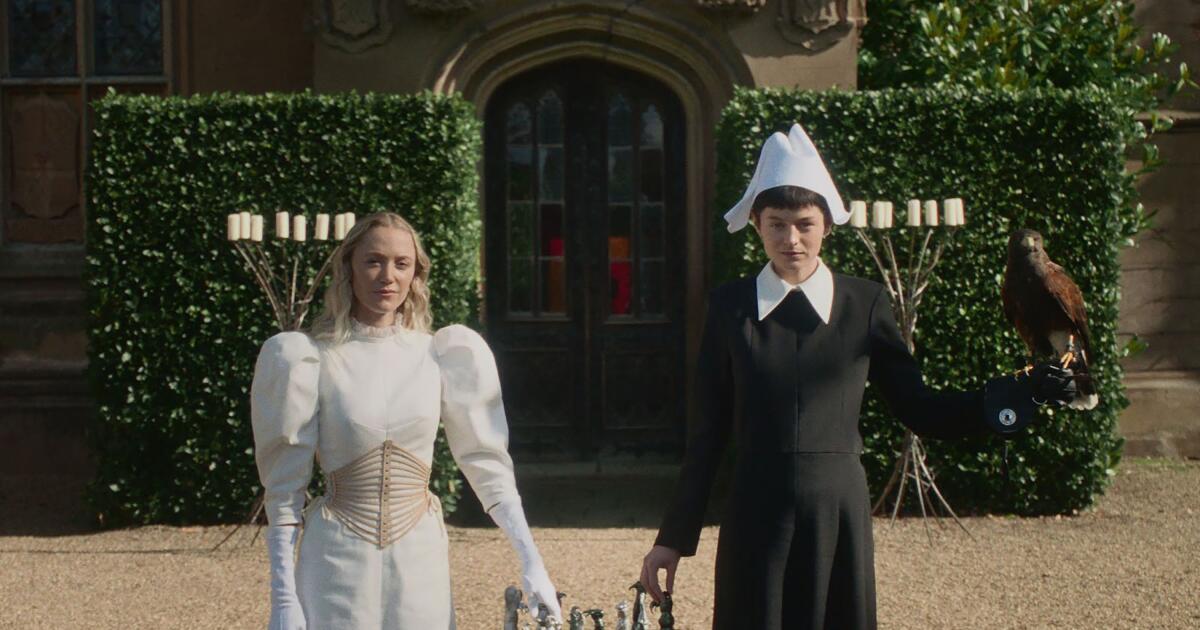
“100 Nights of Hero,” the new film starring Brit Marling and Emma Corrin, arrives with a striking aesthetic and a timely message. It’s a visually rich, modernist fairytale that tackles themes of female agency, societal control, and the power of storytelling. Though, despite strong performances and compelling imagery, the film struggles to fully realize its potential, landing as a somewhat simplistic exploration of complex issues.
A High-Stakes Game of Stories and Survival
The narrative centers on Cherry (Monroe), a newlywed trapped in a bizarre and oppressive arrangement.Her husband, Manfred (Galitzine), a mysterious nobleman who always wears a bird mask, has given her 100 nights to conceive a child. If he succeeds, he inherits a castle. But if Cherry deviates, the consequences are dire – execution.
This instantly establishes a stark power imbalance, a familiar trope in historical and even contemporary narratives surrounding women and reproduction. The film deftly highlights the anxieties surrounding female bodies and the societal pressures to conform to expectations of motherhood.
The power of Untold Stories
Enter Hero (Corrin), Cherry’s resourceful maid, who becomes the film’s true driving force. To distract Manfred and buy Cherry time,Hero begins recounting the tale of three sisters – a story within a story. These sisters find solace and empowerment through the ”sinful” act of reading and writing.
This interwoven narrative isn’t merely a distraction. It reveals Hero as a member of the League of Secret Storytellers, a clandestine network of women preserving and disseminating tales. through these stories, they subtly challenge patriarchal norms and offer a form of resistance. You’ll quickly realize the film itself is a meta-commentary on the power of narrative.
Relevant Themes, Simplified Execution
“100 Nights of Hero” resonates with current conversations. The pressure to “produce an heir” echoes in pro-natalist arguments and the “trad wife” movement. The film’s exploration of controlling women’s bodies and minds feels disturbingly relevant.
However, the film’s approach feels somewhat heavy-handed. It often presents its feminist message in a way that feels geared towards a younger audience, lacking the nuance and complexity the subject matter deserves. It’s feminism for tweens,as one critic noted,and while well-intentioned,it doesn’t fully grapple with the intricacies of these issues.
A Compelling Cast, A Questionable Focus
The performances are a definite strength. Corrin shines as the cunning and steadfast hero,while Galitzine delivers a captivating performance as the enigmatic Manfred. In fact, his portrayal is so compelling that his diminishing presence in the latter half of the film becomes a noticeable drawback.
This is a crucial point.Despite the film’s focus on female liberation, Manfred emerges as the most intriguing and fully realized character. The striking image of him hauling a bloodied stag home underscores a primal, earthy sensuality that ironically overshadows the film’s intended message. If the goal is to showcase female pleasure and agency, making the male character the most appealing figure feels counterintuitive.
Final Thoughts: Gorgeous, But Not Fully Realized
“100 Nights of Hero” is a visually stunning film with a vital message. It’s a thought-provoking exploration of female agency and the power of storytelling. Though, its blunt delivery and uneven character growth prevent it from reaching its full potential.
While the film’s urgency is clear, the execution leaves something to be desired. It’s a promising effort, but ultimately feels like a beautiful fable that could have been far more impactful with a more nuanced approach.
‘100 Nights of Hero’
* Rated: PG-13, for sexual material, some bloody images and language
* Running time: 1 hour, 30 minutes
* Playing: In wide release Friday, Dec. 5
Keep reading