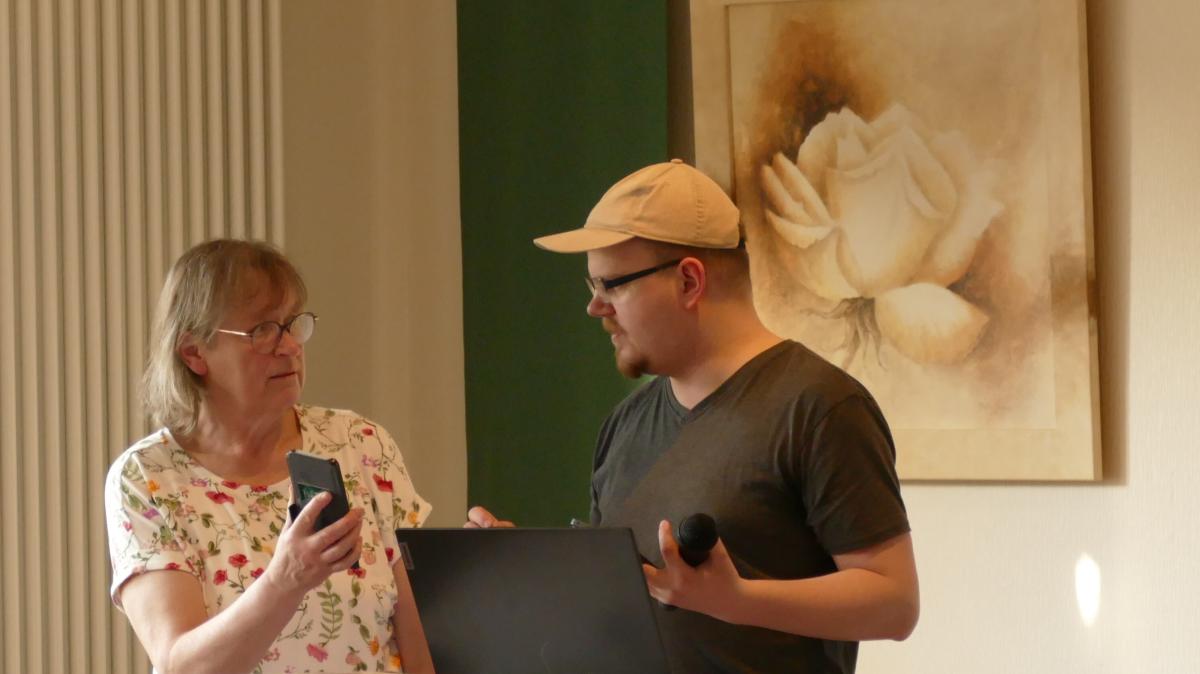
The digital transformation of society often focuses on corporate boardrooms and Silicon Valley startups, but some of the most significant shifts are happening in the heart of rural community organizations. In a move to bridge the gap between traditional volunteerism and modern technology, members of the Landfrauenverein Hasbergen/Hagen a.T.W. Recently gathered to explore how artificial intelligence and digital tools can streamline their community efforts.
The initiative centered on a practical, ninety-minute session designed to demystify the complexities of the digital age. By focusing on AI in volunteer work, the event aimed to provide grassroots organizers with the literacy needed to navigate an increasingly automated world, ensuring that rural associations remain efficient and connected.
The session took place at the Gasthaus „Zum Wiesental“ in Hagen a.T.W., where guest speaker Daniel Gärtling led a discussion on the intersection of digitalization and civic engagement. Gärtling, a 30-year-old resident of Osnabrück who works with the Bund der Deutschen Katholischen Jugend (BDKJ), focused on providing a comprehensible entry point for women who may have felt alienated by the rapid pace of technological change.
Bridging the Digital Divide in Rural Associations
For many community-led organizations, the barrier to adopting new technology is rarely a lack of interest, but rather a lack of accessible, practical guidance. Gärtling’s approach was designed to move beyond theoretical discussions, instead offering a hands-on look at how specific software can solve common administrative headaches faced by volunteers.
The presentation was structured to first introduce the concept of digital tools before diving into a curated selection of applications. By gauging the existing knowledge of the participants, Gärtling was able to tailor the session to the specific needs of the Landfrauen, focusing on utility rather than technical jargon.
A Practical Toolkit for Community Organizing
The core of the presentation focused on a suite of tools that address different aspects of organizational management, from communication and scheduling to content creation. The tools highlighted included:

- ChatGPT: Introduced as a “writing AI,” this tool was presented as a way to assist in drafting correspondence, creating agendas, or brainstorming ideas for community events. OpenAI’s ChatGPT represents a shift in how non-profits can handle time-consuming administrative writing tasks.
- Zoom: Used to facilitate video conferencing, allowing members to coordinate remotely regardless of geographical constraints. Zoom has become a standard for maintaining connectivity in rural associations.
- Doodle: A specialized polling tool designed to simplify the often-difficult process of finding meeting times that work for a large group of volunteers.
- OneDrive: A cloud-based storage solution that allows for the secure sharing and archiving of organizational documents, reducing the reliance on physical paperwork.
Addressing the “Fear Factor” of Artificial Intelligence
As with most introductions to AI, the session sparked a series of critical questions regarding the safety and accessibility of these technologies. The participants’ concerns reflected broader societal anxieties about the adoption of AI in non-professional settings.
The most frequent inquiries focused on three primary areas: the cost of the tools, the complexity of the registration process, and the potential dangers associated with AI. Specifically, participants wanted to know if these services required monthly subscriptions or if there were free versions available for volunteer groups, and whether each tool required a separate, complex account setup.
Gärtling addressed these concerns by providing practical guidance on how to navigate the registration processes and explaining the risks and safeguards associated with AI. This dialogue is a crucial step in establishing “AI literacy,” which is the ability to not only use these tools but to understand their limitations and the ethical implications of their use.
Why AI Literacy Matters for Volunteers
The adoption of AI in volunteer work is not about replacing the human element of community service, but about augmenting it. When a volunteer spends less time struggling with scheduling or drafting emails, they can dedicate more time to the actual mission of their organization—whether that is supporting rural women, preserving local traditions, or organizing community outreach.
providing this education to rural associations prevents a “digital divide” where only urban or corporate entities benefit from the efficiency gains of AI. By empowering groups like the Landfrauenverein Hasbergen/Hagen a.T.W., the community ensures that traditional organizations remain viable and competitive in a digital-first environment.
As digital tools continue to evolve, the next step for many such organizations will likely be the integration of these tools into a cohesive digital strategy. The move from occasional use to systematic adoption marks a significant evolution in how rural civic life is managed.
There are currently no further scheduled sessions announced for this specific group, but the event serves as a blueprint for how other rural associations can integrate technology into their operations.
Do you think AI has a place in traditional community volunteer work, or does it risk removing the personal touch? Share your thoughts in the comments below.