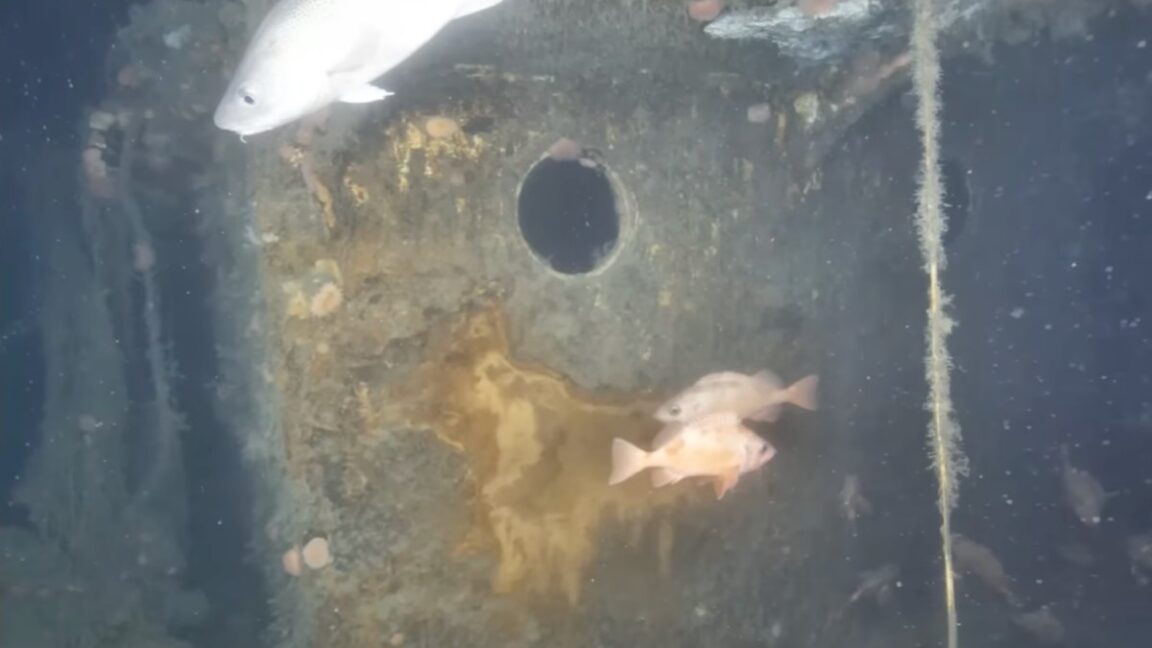
The Royal Canadian Geographic Society (RCGS) has released the first visual documentation of the Quest shipwreck, the final vessel commanded by polar explorer Sir Ernest Shackleton. Located on the seafloor off the coast of Newfoundland and Labrador, the wreck was identified in 2024 by an international team of researchers, ending a decades-long search for the ship that served as the base for Shackleton’s final, unfinished expedition. The imagery provides a clear view of the vessel, which sank in 1962 after striking ice, more than 60 years after it disappeared beneath the waves.
Discovery of the Shackleton Legacy
The identification of the Quest was confirmed by a team led by the Royal Canadian Geographic Society, which conducted the search to locate the historic vessel in the Labrador Sea. According to the Royal Canadian Geographic Society, the ship was found in remarkably good condition given its age and the harsh environment of the North Atlantic. The discovery follows the 2022 location of the Endurance, Shackleton’s most famous ship, which was found in the Antarctic. While the Endurance is celebrated for the survival of its crew after being crushed by sea ice in 1915, the Quest represents the final chapter of the explorer’s career.


Shackleton purchased the 125-foot wooden schooner, originally named Foca I, in 1921. His wife, Emily, renamed the ship Quest before it departed for the Antarctic. The vessel was retrofitted for the voyage with advanced technology of the time, including a wireless telegraphy set, a heated crow’s nest, and a specialized odograph for automated navigation. Despite these preparations, Shackleton suffered a fatal heart attack aboard the ship while anchored off South Georgia in January 1922. The expedition continued under the leadership of Frank Wild, but the ship itself lived on for several decades, eventually serving as a sealing vessel before it sank in 1962 following a collision with ice.
Technological Advancements in Deep-Sea Exploration
The search for the Quest utilized modern subsea imaging technology, reflecting the same spirit of innovation Shackleton prized. The team employed high-resolution side-scan sonar and remotely operated vehicles (ROVs) to map the debris field. As noted in reports from Canadian Geographic, the images released by the RCGS show the ship resting upright on the seabed. The preservation of the hull is attributed to the cold, low-oxygen environment of the deep Atlantic, which limits the biological decay that typically affects wooden shipwrecks.
The archival records of the Quest reveal a vessel designed for extreme conditions. Beyond the navigation equipment, the ship carried a small airplane—intended for aerial reconnaissance—and a sophisticated Lucas deep-sea sounding machine. These tools were at the cutting edge of early 20th-century exploration. Finding the wreck provides historians with a tangible link to the final days of the “Heroic Age of Antarctic Exploration,” a period defined by the efforts of figures like Shackleton, Roald Amundsen, and Robert Falcon Scott.
Historical Context: From Endurance to Quest
The story of the Quest is inextricably linked to the trauma and triumph of the Endurance expedition. Shackleton’s return to the UK after the 1914–1917 Endurance mission occurred amidst the height of World War I. While many of his former crew members joined the war effort, Shackleton was deemed too old for active duty. Facing significant financial debt from his previous voyages, he turned to the lecture circuit to fund his return to the polar regions. His focus shifted from the Antarctic to the Arctic, specifically the Beaufort Sea north of Alaska, before circumstances forced him back to the Southern Ocean.
The National Maritime Museum Cornwall maintains extensive archives on the transition between these two iconic vessels. The Quest was smaller and less robust than the Endurance, yet it carried the weight of Shackleton’s ambition. Its sinking in 1962 marked the end of the vessel’s long operational life, which spanned decades of service in the North Atlantic sealing industry. The recent discovery allows researchers to document the physical state of the ship, providing a post-script to the explorer’s final, truncated journey.
Future Preservation and Research
The RCGS and its partners have emphasized that the site will be treated with the respect due to a significant historical monument. There are currently no plans to raise the vessel, as the current site conditions offer the best chance for its continued preservation. Future research will likely focus on analyzing the sonar data and photographs to better understand the structural integrity of the ship’s remaining features, such as the deckhouse and the crow’s nest.
The discovery of the Quest serves as a reminder of the hazards associated with polar navigation, a theme that has persisted from the early 1900s to the modern era. As mapping technology improves, search teams are increasingly able to locate vessels that were previously lost to history. For enthusiasts and historians, the images offer a rare, intimate look at a ship that defined the final ambitions of one of history’s most persistent explorers. The Royal Canadian Geographic Society is expected to provide further updates on the analysis of the wreck as the data is processed by maritime archaeologists.
Worth a look