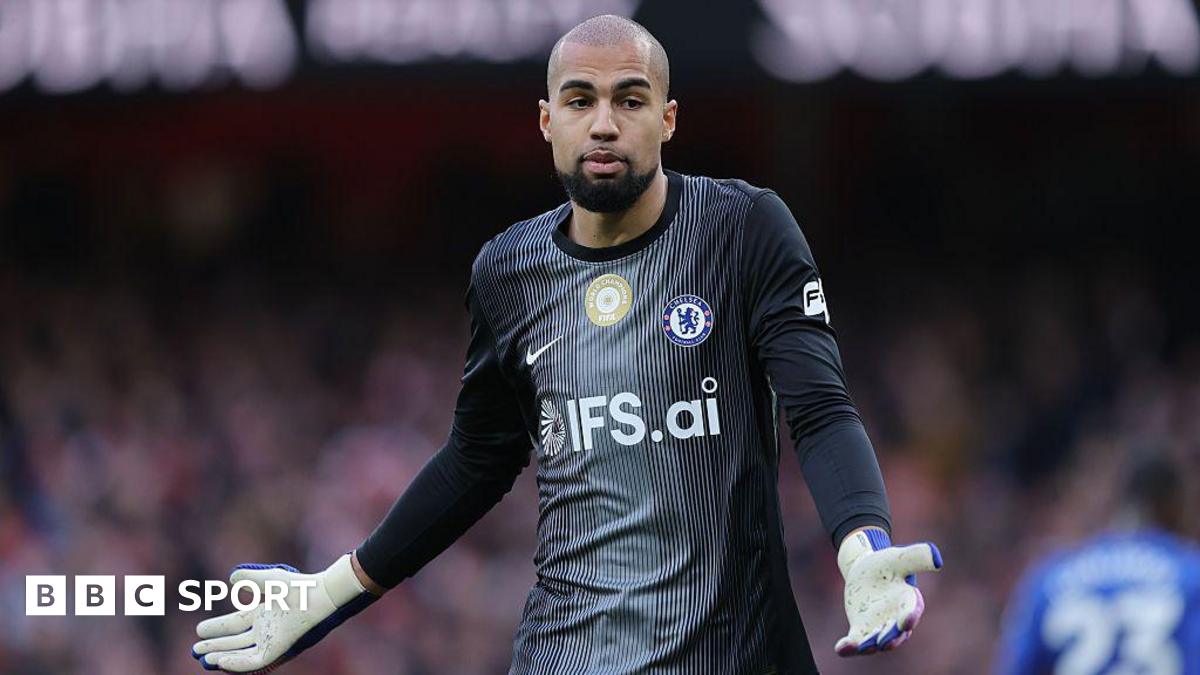
Chelsea Goalkeeper Situation: Rosenior Navigates Competition and Disappointment
The role of goalkeeper at Chelsea is currently a subject of intense scrutiny and open competition, according to head coach Liam Rosenior. Following a recent performance that drew criticism, Spain international Robert Sanchez was benched for Wednesday’s Premier League clash against Aston Villa, with Denmark’s Filip Jorgensen taking his place. Rosenior has emphasized that there is no automatic first-choice goalkeeper at Stamford Bridge and that selection will be based on who he believes gives the team the best chance of success in each individual match. This decision, while understandably disappointing for Sanchez, has been handled with professionalism, according to Rosenior, who praised the Spaniard’s response both on and off the pitch.
The shift in goal comes after Sanchez faced scrutiny for his performance during Chelsea’s 2-1 defeat at Arsenal last Sunday. Concerns were raised regarding his distribution and vulnerabilities during set-pieces, prompting Rosenior to make a change for the trip to Villa Park. Jorgensen, who has been Sanchez’s understudy, seized the opportunity, contributing to a 4-1 victory for the Blues. This win, coupled with Rosenior’s comments, signals a willingness to rotate goalkeepers and maintain a competitive environment within the squad. The situation highlights a modern approach to team management, prioritizing performance and tactical flexibility over traditional hierarchies.
Sanchez’s Reaction and Rosenior’s Approach
Rosenior revealed he had a direct conversation with Sanchez following the decision to drop him, acknowledging the goalkeeper’s disappointment. “I’ve been really honest with Rob,” Rosenior stated, as reported by multiple sources including the BBC and the New York Times. “He was really disappointed not to play, which I expect for every player, whether they’re a goalkeeper or an outfield player.” However, Rosenior was quick to commend Sanchez’s positive reaction, emphasizing his support for Jorgensen during training and in the dressing room. This display of sportsmanship, Rosenior believes, is crucial for building a successful team mentality.
The Chelsea head coach’s philosophy extends beyond individual performances, focusing on the collective spirit of the squad. He believes that a competitive environment, where players are constantly vying for their place, ultimately benefits the team. Rosenior’s approach challenges the conventional notion of a guaranteed starting goalkeeper, instead advocating for a fluid system where selection is determined by form and tactical considerations. This strategy, while potentially unsettling for individual players, aims to maximize the team’s overall performance and adaptability.
Squad Rotation and the Modern Goalkeeping Landscape
Chelsea’s embrace of squad rotation is not limited to the goalkeeping position. Rosenior has indicated a broader strategy of utilizing the entire squad, believing that fresh legs and varied tactical approaches are essential for sustained success. This approach is increasingly common in modern football, where the demands of a grueling season require managers to manage player fatigue and maintain a high level of performance throughout the campaign. The Premier League schedule, with its relentless pace and competitive intensity, necessitates a flexible approach to team selection.
However, the question of continuity in the goalkeeping position remains a point of debate. Traditionally, a settled goalkeeper is seen as vital for building defensive stability and fostering communication with the backline. Rosenior acknowledged this point, stating, “Yes, you need continuity – but you also need to win football matches.” He emphasized that his decisions will be guided by what he believes will give Chelsea the best chance of securing victory in each game, even if it means deviating from established norms. This pragmatic approach reflects a willingness to prioritize results over tradition.
Looking Ahead: Wrexham and the FA Cup
Chelsea’s focus now shifts to the FA Cup fifth round, where they will face Wrexham on Saturday at 17:45 GMT. The match, which will be broadcast live on BBC One and BBC iPlayer, presents another opportunity for Rosenior to assess his goalkeeping options. The decision of whether to recall Sanchez or continue with Jorgensen will be closely watched, as it will provide further insight into Rosenior’s thinking and his long-term plans for the position. The FA Cup offers a different dynamic than the Premier League, potentially influencing Rosenior’s selection criteria.
The upcoming match against Wrexham, a club currently experiencing a remarkable rise through the English football pyramid, is expected to be a challenging encounter. Wrexham’s success is largely attributed to its Hollywood ownership, led by actors Ryan Reynolds and Rob McElhenney, who have invested heavily in the club and its infrastructure.
Huge game for us on Saturday! 💙⚽️@Wrexham_AFC pic.twitter.com/q9q9q9q9q9
— Chelsea FC (@ChelseaFC) March 6, 2026
The match promises to be a captivating spectacle, pitting a Premier League powerhouse against a team with a compelling story and a growing fanbase.
The Evolving Role of the Modern Goalkeeper
The debate surrounding Chelsea’s goalkeeping situation also highlights the evolving demands placed on modern goalkeepers. No longer solely tasked with preventing goals, goalkeepers are now expected to be proficient distributors of the ball, comfortable playing with their feet, and actively involved in building attacks from the back. Sanchez, while possessing strong shot-stopping abilities, has faced criticism for his distribution, a skill that Rosenior clearly values. Jorgensen’s selection may indicate a preference for a goalkeeper who is more adept at initiating play from defense.
This shift in expectations reflects a broader tactical trend in football, where possession-based football and intricate passing patterns are increasingly prevalent. Goalkeepers are now integral components of a team’s attacking strategy, and their ability to contribute to build-up play is often as important as their ability to make saves. The modern goalkeeper must be a complete player, possessing both the traditional skills of shot-stopping and the technical abilities required to thrive in a possession-based system.
The situation at Chelsea underscores the complexities of managing a high-profile football club in the modern era. Rosenior’s willingness to rotate goalkeepers, challenge established norms, and prioritize team performance over individual preferences demonstrates a forward-thinking approach to management. While the decision to bench Sanchez may have been met with some disappointment, it ultimately reflects a commitment to maximizing the team’s potential and fostering a competitive environment. The upcoming FA Cup clash against Wrexham will provide another opportunity for Rosenior to demonstrate his tactical acumen and shape the future of Chelsea’s goalkeeping department.
Chelsea will continue to assess their options in goal as they navigate a busy schedule in both the Premier League and the FA Cup. The next confirmed checkpoint for the team is their Premier League match against Burnley on March 13th, where Rosenior’s goalkeeping selection will once again be a focal point of discussion. Fans and pundits alike will be closely watching to see how the situation unfolds and whether Sanchez can reclaim his place as the team’s number one.
What are your thoughts on Rosenior’s goalkeeping strategy? Share your opinions in the comments below, and don’t forget to share this article with fellow football fans!
Keep reading