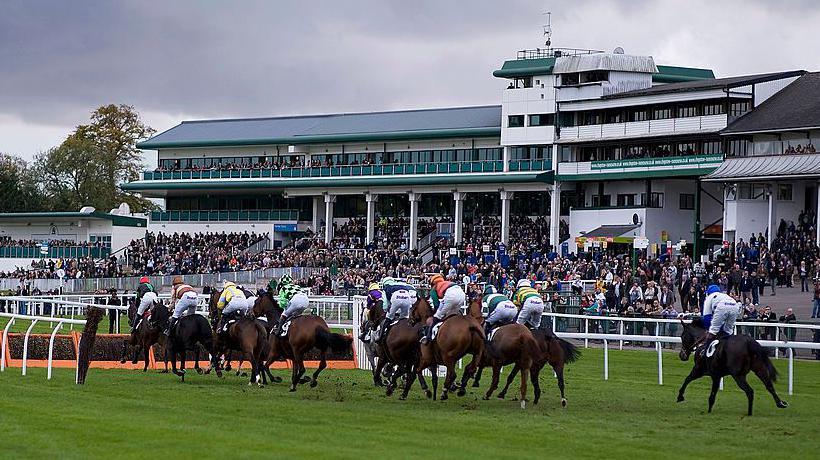
Chepstow Racecourse marks its official centenary this month, celebrating 100 years of horse racing across 370 undulating acres of Monmouthshire parkland. Since opening its doors to roughly 20,000 spectators in August 1926, the south-east Wales venue has evolved from a speculative local project into a cornerstone of British jump and flat racing, hosting royalty, wartime military operations, and the richest race in Wales.
The track’s origins trace back to ten local dignitaries who pooled their resources to acquire the picturesque Piercefield Park estate. Lords Tredegar, Glanely, and Queenborough provided financial backing for the nearly two-mile course, while a leadership team comprising director Hastings Clay, chairman Sir David Hughes Morgan, secretary and manager Captain A.W. Wingate, and R.G. Nichols of the Great Eastern Railway Line oversaw its construction. Lord Harewood’s horse Conca D’Oro captured the inaugural race in August 1926, with the venue’s first jumps meeting following a year later.
Survival was far from guaranteed in the early decades. Financial difficulties nearly shuttered the track within months of its debut, threatening to cut short the ambitious sporting enterprise. Yet the venue persevered, eventually establishing itself as one of the select few British courses to host both flat and jumps action throughout the calendar year.
Wartime Transformations and Global Milestones
World War Two brought a dramatic shift in operations at Chepstow. The racecourse was transformed into an RAF base, housing Wellington bombers and serving military needs until peacetime racing resumed. Over the decades, the grounds expanded their cultural footprint beyond athletics, welcoming major music acts including Tom Jones alongside high-profile visits from members of the British royal family.
On the track, extraordinary athletic feats cemented the venue’s sporting legacy. In October 1933, champion jockey Sir Gordon Richards set an enduring world record at Chepstow. After scoring a victory in Nottingham, Richards arrived in Monmouthshire to ride six winners from six mounts on the opening day, followed by five more victories the next day, completing a sequence of 12 consecutive wins.
Modern riders continue to praise the course’s structural layout. Former Welsh jump jockey Alan Johns noted that riders universally favor the venue for its long straights and sweeping bends. “It’s what we call a big galloping track so it has really long straights, big sweeping bends and generally that means the best horse wins,” Johns said, adding that the course features some of the finest fences in Britain.
Hollywood Fairytales and the Welsh Grand National
Since 1949, the highlight of Chepstow’s racing year has been the Welsh Grand National, traditionally staged during the Christmas festive period. The race has developed into a vital proving ground for elite stayers. Notable victors such as Bindaree, Corbiere, Earth Summit, Rag Trade, and Silver Birch used Chepstow success as a springboard to claim the Aintree and Chepstow double, while horses like Burrough Hill Lad, Cool Ground, Master Oats, and Native River secured Welsh triumphs before capturing the Cheltenham Gold Cup.
Among the most remarkable chapters in the track’s history is the story of Dream Alliance, a steeplechaser raised on an allotment near Blackwood by Janet Vokes and owned by a syndicate of friends who each contributed £10 a week. In 2008, the horse suffered a severe leg tendon injury that typically ends a racing career. Instead of euthanizing the animal, the syndicate funded £20,000 for pioneering stem-cell treatment.
Dream Alliance made a recovery, returning to the track under jockey Tom O’Brien to win the 2009 Welsh Grand National at odds of 20-1. The remarkable grassroots fairytale inspired the 2021 feature film Dream Horse, starring Toni Collette and Damian Lewis.
More recent milestones add to the track’s storied tradition. In the 2025 edition of the Welsh Grand National, Pembrokeshire-trained runner Haiti Couleurs triumphed in front of a passionate home crowd, guided by champion jockey Sean Bowen. Reflecting on the victory, Bowen emphasized the race’s status within the sport, calling it one of the races at the very top of the list to be involved in for any Welsh jockey or person in racing.