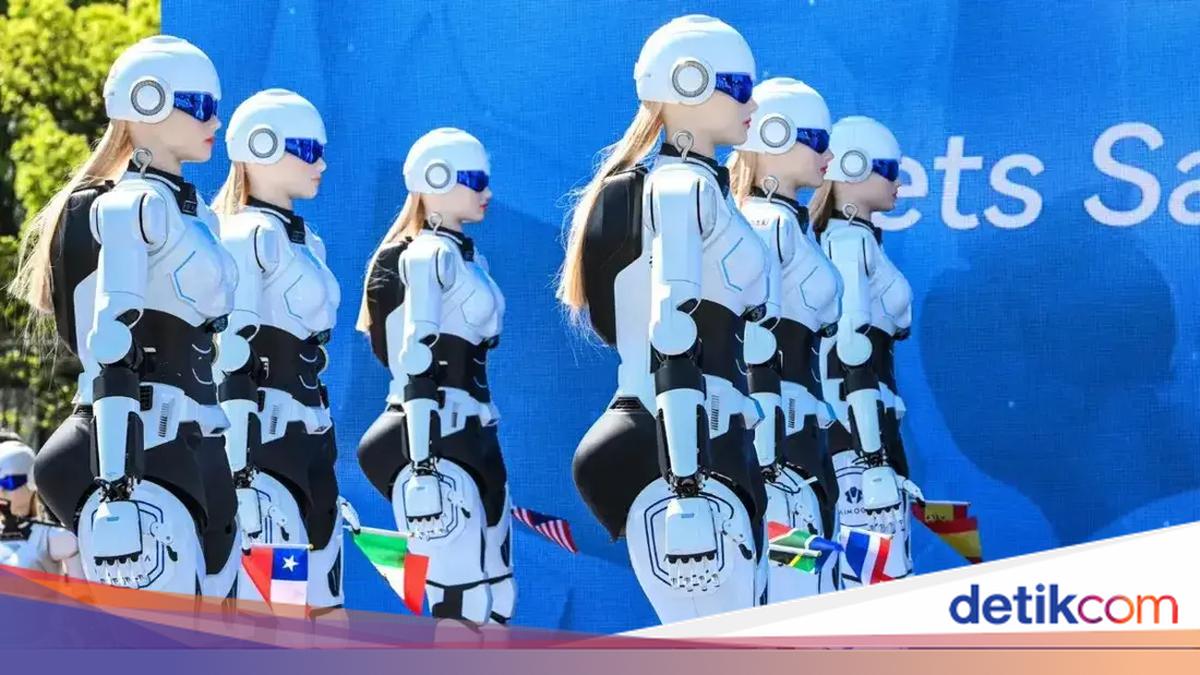
The traditional boundary between the automotive industry and consumer electronics is dissolving, and Chery Group is positioning itself at the center of this convergence. At the Beijing Auto Show 2026, the Chinese automotive giant signaled a profound strategic pivot, suggesting that the robotics industry could eventually surpass the automotive sector in scale and impact.
This ambition is being realized through AiMOGA Robotics, a specialized arm of the group dedicated to “embodied intelligence.” By integrating the same sensors, large language models (LLMs), and autonomous driving algorithms used in its vehicles into humanoid forms, Chery is attempting to transition from a manufacturer of cars to a provider of a comprehensive, three-dimensional intelligent ecosystem.
The company’s approach is not merely conceptual. Chery has already begun the commercialization of its robotics technology, moving from showroom demonstrations to direct-to-consumer sales. This shift represents a high-stakes bet on the future of labor and service, where the “vehicle-robot synergy” creates a seamless loop of mobility and assistance.
The Commercial Debut of the Mornine M1
A pivotal moment in this strategy arrived on April 13, 2026, when Chery’s subsidiary, AiMOGA, officially launched online sales for the Mornine M1
, a full-sized general-purpose humanoid robot. Priced at $41,400, the M1 is designed as a versatile tool for both commercial and high-end residential use according to reporting from Car News China.
The Mornine M1 is equipped with a 0.7 kWh battery, balancing power needs with the weight constraints of a humanoid frame. The robot leverages Chery’s existing technological stack, including the CheryGPT large language model and smart sensors, allowing it to interact naturally with humans and perceive its environment in real-time.
Beyond the M1, the broader AiMOGA family is designed for specific operational roles. In a move to revolutionize the retail experience, Chery has already deployed 220 AiMOGA humanoid robots into its global operations to assist with car sales as reported by Robotics and Automation News. These units are capable of introducing vehicle features, serving beverages, and managing test drive bookings, effectively acting as autonomous brand ambassadors.
Technical Specifications of the AiMOGA Platform
The technical foundation of the AiMOGA robots is rooted in “dual-core intelligence.” By utilizing Deepseek large models, the robots achieve multi-modal environmental perception, which allows them to process visual and auditory data simultaneously to make informed decisions. Key physical capabilities include:
- Dexterous Manipulation: Hands featuring 41 degrees of movement for precise interaction with objects.
- Mobility: A walking speed of up to one meter per second, supported by a five-way sensor matrix for obstacle avoidance.
- Multilingualism: The ability to conduct presentations and interact in at least seven different languages.
Expanding the Ecosystem: From Showrooms to Street Patrols
At the Beijing Auto Show 2026, which ran from April 24 to May 3, Chery expanded the application of its robotics beyond the sales floor. One of the most striking innovations unveiled was the Smart Police Robot
, a specialized AiMOGA unit designed to assist law enforcement in managing traffic violations and enhancing public safety according to Kompas.com.
This deployment demonstrates the company’s intent to embed its “embodied intelligence” into the civic infrastructure of smart cities. By moving the robot from a controlled showroom to the unpredictable environment of a city street, Chery is testing the limits of its end-to-end algorithms and sensor arrays.
Chairman Yin Tongyue outlined this vision during the Chery-AiMOGA Global Release Conference in Wuhu, Anhui, on April 27, 2026. The conference, themed Driven by Scenario, United for Growth
, emphasized that the future of the company lies in the synergy between vehicles and robots. The goal is to create a world where the car is not just a mode of transport, but a mobile hub that interacts with a network of humanoid assistants.
Why This Shift Matters for the Global Economy
The claim that the robotics industry will turn into bigger than the automotive industry
is a bold projection that reflects a broader trend in industrial economics. For decades, the automotive sector has been the gold standard for complex manufacturing and global supply chain management. However, the rise of AI and robotics suggests a shift toward “general-purpose technology” that can be applied to every sector—from healthcare and logistics to home maintenance and security.
For Chery, This represents a diversification strategy designed to hedge against the volatility of the global car market. By developing a proprietary robotics platform, the company is not just selling a product but is building an operating system for physical labor. The integration of “Automotive + Robot” allows Chery to amortize the massive R&D costs of AI development across two distinct but complementary product lines.
The impact on the workforce is a critical point of discussion. The deployment of AiMOGA robots to replace or augment sales staff suggests a move toward the automation of high-touch service roles. While this increases efficiency and ensures consistent brand messaging, it raises questions about the future of entry-level roles in the automotive retail sector.
Comparison: Automotive vs. Robotics Strategy
| Feature | Traditional Automotive Focus | New Robotics Ecosystem |
|---|---|---|
| Core Product | Internal Combustion & EV Vehicles | Humanoid Robots (e.g., Mornine M1) |
| Primary Goal | Mobility and Transportation | Embodied Intelligence & Service |
| Key Tech | Powertrains, Chassis, ADAS | LLMs, Dexterous Actuators, Multi-modal AI |
| Market Reach | Consumer Transport | Civic Infrastructure, Retail, Home Care |
The Path Forward: What Happens Next?
Chery’s transition into a robotics powerhouse is now in the execution phase. With the Mornine M1 already available for online purchase and the deployment of specialized units like the police robot, the company is moving rapidly from prototype to scale. The success of this venture will depend on the reliability of the hardware in real-world scenarios and the ability of the AI to handle the “edge cases” of human interaction.
The next critical milestone for the group will be the broader global rollout of the AiMOGA service network, as the company seeks to integrate these robots into dealerships and public spaces across its international markets. As the “vehicle-robot synergy” evolves, the industry will be watching to see if Chery can truly scale a robotics business to the proportions of a global car manufacturer.
The company’s latest strategic updates and further product releases are expected to be detailed in upcoming quarterly filings and at the next series of international business summits. We invite our readers to share their thoughts in the comments: Do you believe humanoid robots will eventually replace the scale of the automotive industry, or is this an ambitious overreach?