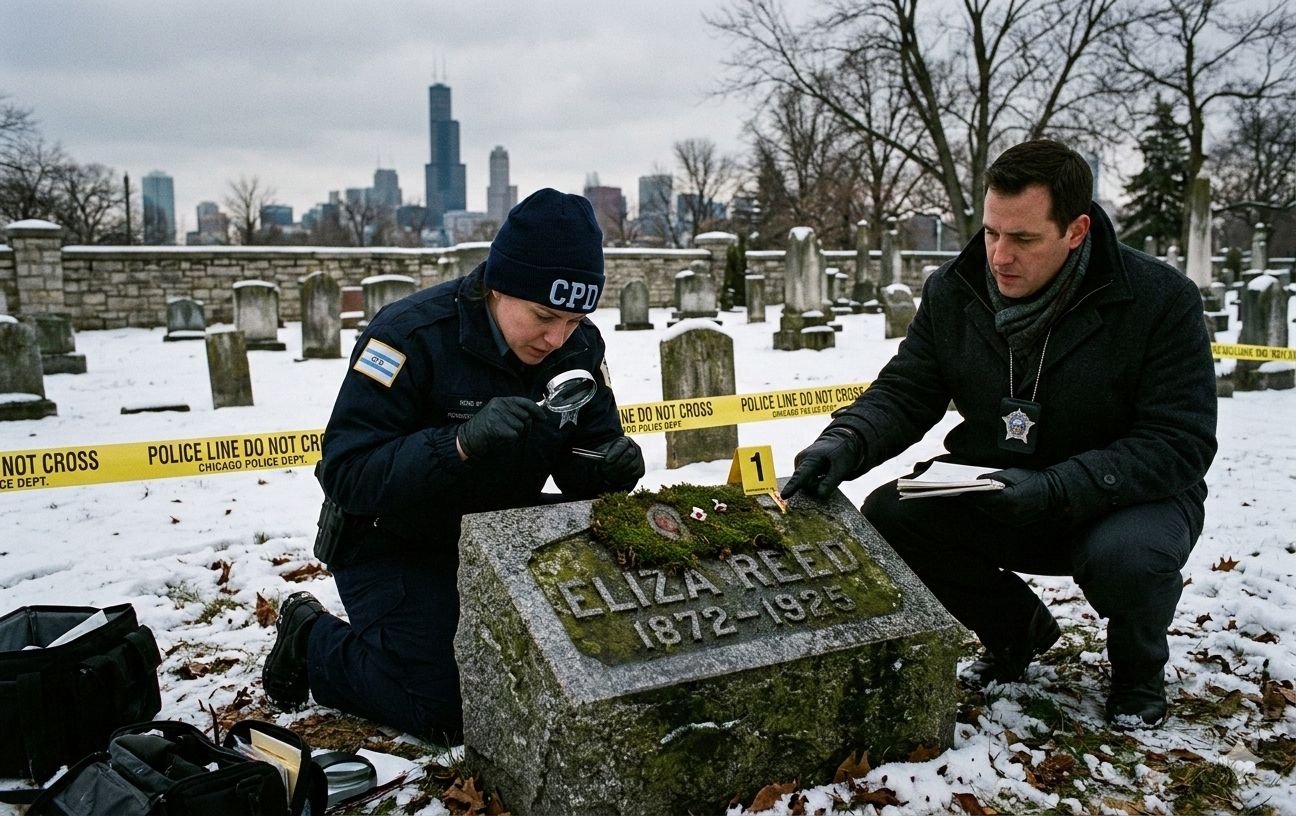
A Fragment of Moss Unearths a Chicago Cemetery Crime
The story of Burr Oak Cemetery in Alsip, Illinois, a suburb southwest of Chicago, is one steeped in history and, tragically, in scandal. Established in 1927, Burr Oak served as a vital final resting place for the African-American community during a period of segregation when many cemeteries were not open to them. Beyond being a burial ground, it became a repository of cultural memory, holding the remains of prominent figures like blues singers Dinah Washington and Willie Dixon, boxing champion Ezzard Charles, and Emmett Till. Yet, in 2009, a disturbing series of crimes came to light, revealing a systematic desecration of graves and a fraudulent resale of burial plots. A seemingly insignificant clue – a fragment of moss – played a pivotal role in unraveling the scheme, leading to investigations and, convictions. Recent research published in Forensic Sciences Research details how botanical evidence helped to expose the wrongdoing, highlighting the surprising intersection of forensic science and cemetery fraud.
The scandal at Burr Oak Cemetery began to unfold when allegations surfaced that employees were exhuming bodies from older graves, relocating the remains to other areas of the cemetery, and then reselling the vacated plots to unsuspecting buyers. This shocking practice, motivated by financial gain, deeply violated the sanctity of the cemetery and caused immense distress to grieving families. The case eventually went to trial in 2015, and a seemingly minor piece of evidence – a small clump of moss – proved crucial in securing convictions. The involvement of moss in the investigation might seem unusual, but as Matt von Konrat, the lead author of the recent study and a botanist at the Field Museum of Chicago, explains, even seemingly insignificant botanical details can provide valuable forensic clues.
The Role of Forensic Botany in the Investigation
Von Konrat, whose expertise lies in the study of mosses, was contacted by investigators seeking assistance in analyzing plant matter found at the scene. The study, published in Forensic Sciences Research, details how the presence of specific moss species on disturbed gravesites provided evidence that the remains had been moved. Mosses, being sensitive to their environment, often grow in distinct patterns and are indicative of specific microclimates and soil conditions. By analyzing the moss found on and around the disturbed graves, Von Konrat and his team were able to demonstrate that the remains had been relocated from their original burial sites. This botanical evidence corroborated other forensic findings and helped to build a compelling case against the perpetrators. The study underscores the growing importance of forensic botany in criminal investigations, demonstrating how even the smallest of organisms can hold vital clues.
A History of Serving the African-American Community
The significance of Burr Oak Cemetery extends beyond the recent scandal. Founded in 1927 by Ellis Stewart, secretary of the Supreme Liberty Life Insurance company, and Earl B. Dickerson, a prominent Chicago lawyer, the cemetery was established to address the discriminatory practices prevalent at the time. Many Chicago-area cemeteries were not open to African-Americans, creating a pressing necessitate for a dedicated burial ground. Stewart and Dickerson secured 40 acres of land near Alsip, Illinois, for $50,000, funded through a combination of loans and public subscriptions, as detailed in historical accounts of the cemetery. The initial establishment faced resistance from the local community, with reports of armed opposition attempting to prevent the first burial, highlighting the racial tensions of the era. Despite these challenges, Burr Oak persevered, becoming a cornerstone of the African-American community in the South Chicago area.
Over the decades, Burr Oak became the final resting place for numerous notable African-Americans, including musicians, athletes, and civil rights activists. The cemetery’s grounds hold the remains of Chicago blues legends Dinah Washington and Willie Dixon, heavyweight boxing champion Ezzard Charles, and Emmett Till, whose brutal murder in Mississippi in 1955 galvanized the Civil Rights Movement. The presence of these prominent figures cemented Burr Oak’s status as a culturally significant landmark and a symbol of pride for the African-American community. The cemetery’s history reflects the struggles and triumphs of a community that faced systemic discrimination but persevered in building its own institutions and preserving its heritage.
The Aftermath and Ongoing Efforts
Following the exposure of the fraudulent activities in 2009, the Illinois Attorney General’s office launched an investigation that led to the arrest and conviction of several individuals involved in the scheme. Carolyn Towns, the former manager of Burr Oak Cemetery, and Keith Neal, a former cemetery worker, were among those charged with disinterment and desecration of human remains, as well as fraud. Towns was sentenced to 12 years in prison, and Neal received an eight-year sentence, according to reports from the time. The scandal prompted a court-appointed trustee, Patricia Brown Holmes, to oversee the cemetery’s operations and implement reforms to prevent future abuses. Holmes has been instrumental in restoring the cemetery’s grounds and ensuring that the remains of those interred are treated with dignity and respect.
The Burr Oak Cemetery Memorial Project was established to honor those buried at the historic cemetery and to raise awareness of its significance. The project includes the construction of a memorial monument and an essay contest for Chicago-area high school students, focusing on the themes of dignity, honor, and respect. The essay contest, as highlighted on the cemetery’s official website, aims to educate students about the complete story of Burr Oak and its importance to the African-American community. Ongoing efforts are focused on maintaining the cemetery’s grounds, identifying and properly marking all gravesites, and preserving its historical legacy for future generations. The cemetery continues to serve as an active burial ground, providing a final resting place for families in the South Chicago area.
The case of Burr Oak Cemetery serves as a stark reminder of the vulnerability of burial grounds to exploitation and the importance of vigilance in protecting the sanctity of these sacred spaces. The use of forensic botany in the investigation demonstrates the power of scientific analysis in uncovering criminal activity, even in the most unexpected of places. The story of Burr Oak is not just about a crime; it’s about the preservation of history, the respect for the deceased, and the enduring legacy of a community that has faced adversity with resilience and determination.
As of March 7, 2026, the Burr Oak Cemetery Trust continues its work to maintain and improve the cemetery grounds. Further updates on the Memorial Project and ongoing restoration efforts can be found on the official Burr Oak Cemetery website: http://www.theburroakcemetery.com/. We encourage readers to share their thoughts and reflections on this important story in the comments below.
Worth a look
- NYC New Second-Home Tax Rollout Sparks Chaos, Exemptions, and Backlash
- Newark Mayor Identifies Dead Detainee Edwin Lopez-Cornejo Amid Center Scrutiny
- Phil Collins Reveals Near-Fatal Organ Failure After Years of Alcohol Abuse (time.news)
- Virginia Tech Study Reveals New Patterns in Storm Surge Behavior (newsdirectory3.com)