
In the evolving landscape of American municipal policy, the Chicago suburb of Evanston has carved out a unique position as a focal point for national discourse on economic justice. As the first city in the United States to implement a government-funded reparations program for Black residents, Evanston continues to navigate the complexities of addressing historical systemic inequities through direct financial intervention. This initiative, which began as a localized effort to rectify decades of housing discrimination, has become a bellwether for how local governments might approach the challenging terrain of restorative justice.
The program, formally known as the Evanston Local Reparations Program, was established following a 2019 resolution by the City Council. It seeks to provide tangible financial support to residents who were subjected to discriminatory housing practices, such as redlining, between 1919, and 1969. By focusing on tangible outcomes—primarily through home improvement grants and mortgage assistance—the city has shifted the conversation from abstract policy to concrete economic support for qualifying families.
As we examine the current status of the program, the project is not merely an academic exercise in social policy, but a functioning municipal mechanism. With the first phase of the program providing $25,000 grants to eligible individuals, the city has already begun the process of distributing funds to those who meet the established criteria, which includes being a descendant of a Black person who lived in Evanston during the specified period or having experienced discriminatory housing practices within the city limits themselves. According to official city data, the initiative is funded in part by a 3% tax on the sale of recreational cannabis, a dedicated revenue stream that underscores the creative fiscal policy required to sustain such long-term commitments.
The Historical Context of Evanston’s Policy
To understand why Evanston became the pioneer of this movement, one must look at the specific history of housing policy in the region. During the mid-20th century, Black residents in many American cities were systematically excluded from the benefits of homeownership through practices like redlining and restrictive covenants. In Evanston, these practices were not merely informal social norms but were often reinforced by municipal ordinances and industry standards that limited where Black families could purchase property and how they could access capital for home improvements.

The City Council’s decision to launch the reparations initiative was rooted in a comprehensive study of these historical wrongs. By acknowledging that the wealth gap in Evanston was, in part, a manufactured result of public policy, the city government took the rare step of accepting institutional responsibility. This acknowledgment is a departure from traditional municipal governance, which rarely engages in the long-term, multi-generational financial remediation of past civil rights violations.
The program is structured to be both targeted and practical. Rather than offering direct cash payments to individuals, the city opted for a restricted-use grant system. This design was intended to ensure that the funds are used to build generational wealth through the stabilization and improvement of residential property. By directing resources specifically toward homeownership, the city aims to counteract the long-term effects of the disinvestment that historically plagued Black neighborhoods in the area.
Implementation and Economic Impact
The mechanics of the Evanston Local Reparations Program involve a rigorous verification process. Applicants must demonstrate their eligibility through historical documentation, a requirement that has necessitated significant administrative coordination. The city has worked closely with community leaders to ensure that the process is accessible, despite the inherent difficulties of documenting residency and discriminatory impacts that occurred over half a century ago.

From an economic policy perspective, the use of a cannabis tax as the primary funding vehicle for the program is notable. In many jurisdictions, tax revenues from legalized cannabis are directed toward general funds or specific public health initiatives. By earmarking these funds for reparations, Evanston has created a self-sustaining cycle where a modern industry contributes directly to the correction of historical economic failures. As reported by the Associated Press, the initial commitment was to distribute $400,000 in the first phase, with the total program goal set at $10 million over the course of a decade.
The impact of this policy extends beyond the individual grant recipients. It has sparked a broader debate among economists and urban planners about the role of local government in addressing systemic inequality. Critics of the program have raised questions about the efficacy of targeting specific racial groups, while proponents argue that such targeted interventions are the only way to address the specific, documented harms caused by state-sanctioned discrimination. This tension remains a central theme in the national dialogue surrounding the program.
Key Takeaways of the Evanston Initiative
- Targeted Remediation: The program focuses specifically on housing discrimination that occurred between 1919 and 1969.
- Grant Structure: Funds are provided as restricted grants for home improvements or mortgage assistance, rather than unrestricted cash.
- Funding Source: The program is primarily funded by a 3% tax on recreational cannabis sales within the city.
- Eligibility Requirements: Recipients must prove they are descendants of Black residents who lived in Evanston during the era of discriminatory housing policies or were victims themselves.
Looking Ahead: The Future of Reparations at the Local Level
As Evanston continues to process applications and distribute funds, the city serves as a living laboratory for the feasibility of local reparations. The challenges are significant: maintaining community support, ensuring the longevity of the funding source, and managing the high expectations of a public watching closely to see if this model can be replicated elsewhere. The City of Evanston’s official website remains the primary resource for residents seeking the most current information regarding application timelines and program updates.
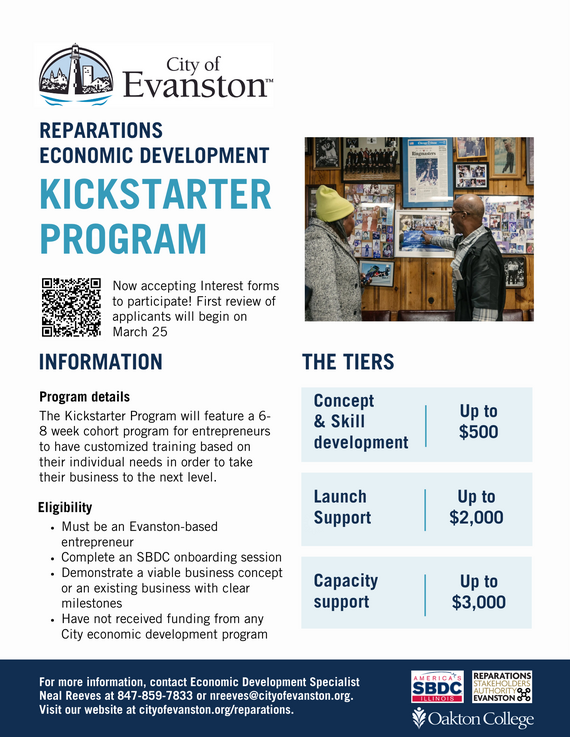
For other municipalities, the Evanston experience highlights the necessity of robust historical research before launching similar initiatives. Without a clear, documented link between past policy and present-day harm, such programs are vulnerable to legal challenges and public skepticism. Evanston’s success in moving from resolution to implementation has been largely attributed to the transparency of its research and its willingness to engage with community stakeholders at every level of the policy design process.
the Evanston initiative is a study in the intersection of local history and modern economic justice. Whether it becomes a standard model for other U.S. Cities or remains a singular, localized experiment will likely depend on the long-term economic outcomes for the families involved. For now, the city remains committed to its stated goal of closing the racial wealth gap through a deliberate, structured, and legally vetted approach to restorative policy.
As the city moves forward with subsequent phases of the program, officials encourage residents to stay informed through regular town hall meetings and official city bulletins. Those interested in the ongoing progress of the initiative should monitor the municipal government’s Equity and Empowerment Commission for the latest filings and schedule of public hearings. We invite our readers to share their perspectives on this evolving policy in the comments section below.
Keep reading