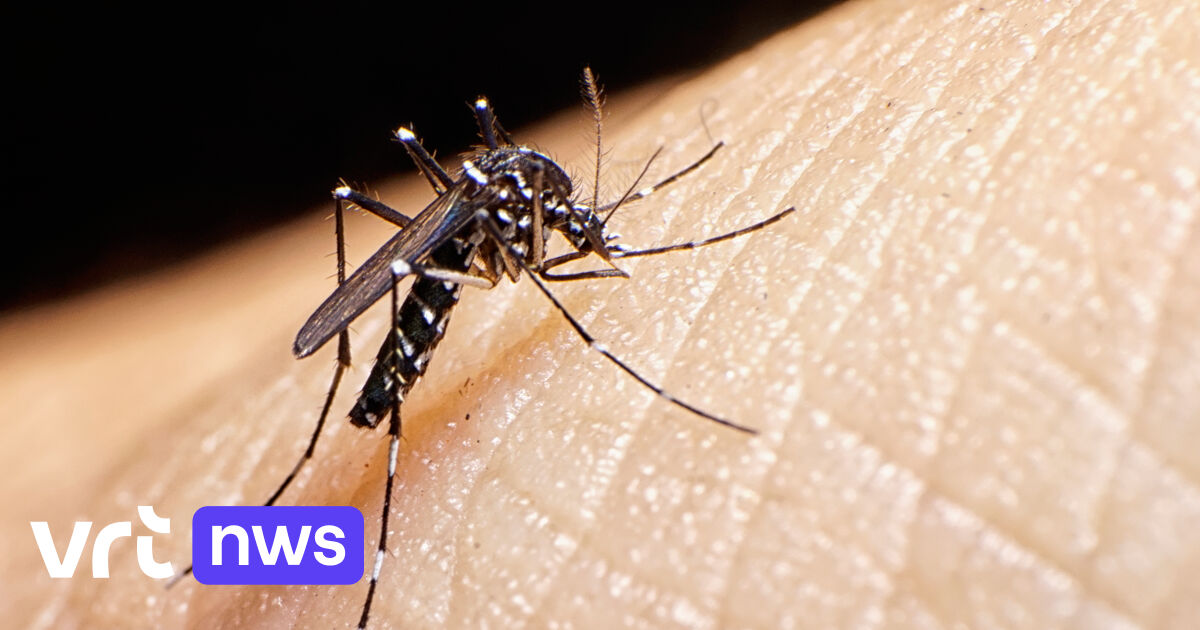
The threat of mosquito-borne diseases is expanding across Europe, with new research suggesting that the chikungunya virus could grow more prevalent in regions like Belgium and Flanders, even at lower summer temperatures than previously thought. This shift raises concerns about public health preparedness and the potential for increased infection rates during warmer months.
Chikungunya fever, characterized by debilitating joint pain, fever, and rash, is typically associated with tropical and subtropical climates. However, the spread of the Aedes albopictus, commonly known as the tiger mosquito, is changing that landscape. This invasive species, originally from Southeast Asia, has established itself in several European countries, including Italy, France, Spain, and increasingly, Belgium and the Netherlands. The mosquito’s ability to transmit viruses like chikungunya, dengue, and Zika is now a significant public health challenge.
Flanders Launches Mosquito Control Campaign
In response to the growing risk, authorities in Flanders, Belgium, have launched a campaign to limit the spread of the tiger mosquito. belganewsagency.eu reports that the initiative aims to educate the public about preventative measures and control mosquito breeding sites. The campaign emphasizes the importance of eliminating standing water – in flower pots, gutters, and even discarded tires – where mosquitoes lay their eggs.
The concern isn’t simply the presence of the mosquito, but its increasing adaptability. Recent scientific studies indicate that the tiger mosquito can transmit the chikungunya virus effectively at temperatures lower than previously assumed. This means that even during milder summers, the risk of local transmission is heightened. The lower temperature threshold for viral replication within the mosquito expands the potential transmission window, making more of Europe vulnerable.
Understanding Chikungunya Fever
Chikungunya fever is caused by the chikungunya virus (CHIKV), a member of the Togaviridae family. The virus is transmitted to humans through the bite of infected mosquitoes. Symptoms typically appear 3-7 days after the bite and include high fever, severe joint pain (often debilitating), muscle pain, headache, rash, and fatigue. Even as the fever usually subsides within a week, joint pain can persist for weeks, months, or even years in some cases. There is currently no specific antiviral treatment for chikungunya fever; management focuses on relieving symptoms, such as pain and fever.
The World Health Organization (WHO) notes that chikungunya is not typically fatal, but the prolonged joint pain can significantly impact quality of life. The WHO provides detailed information on the disease, including prevention strategies and global distribution data. Outbreaks have been reported in Africa, Asia, Europe, and the Americas.
The Expanding Range of the Tiger Mosquito
The Aedes albopictus mosquito is a highly invasive species, capable of adapting to a wide range of environments. Its spread is facilitated by several factors, including climate change, international trade, and travel. The mosquito lays its eggs in small collections of water, both natural and artificial, making urban areas particularly susceptible to infestation. Unlike some other mosquito species, the tiger mosquito is active during the daytime, increasing the likelihood of human-mosquito contact.
The mosquito’s ability to thrive in temperate climates is a relatively recent development. Historically, its range was limited to tropical and subtropical regions. However, warmer temperatures and milder winters have allowed it to establish populations in parts of Europe and North America. The continued expansion of its range poses a growing threat to public health, as it increases the potential for the spread of mosquito-borne diseases.
Public Health Implications and Prevention
The increasing risk of chikungunya transmission in Europe underscores the need for robust public health surveillance and prevention programs. These programs should include:
- Mosquito monitoring: Regular surveillance to track the distribution and abundance of the tiger mosquito.
- Larval control: Targeting mosquito breeding sites to eliminate larvae.
- Public education: Raising awareness about preventative measures, such as eliminating standing water and using mosquito repellent.
- Early detection and diagnosis: Improving diagnostic capabilities to quickly identify and manage cases of chikungunya fever.
- International collaboration: Sharing information and coordinating efforts across borders to control the spread of the mosquito and the virus.
Individuals can also take steps to protect themselves from mosquito bites, including:
- Using insect repellent containing DEET, picaridin, or IR3535.
- Wearing long sleeves and pants when outdoors.
- Using mosquito nets when sleeping.
- Eliminating standing water around homes and gardens.
What Happens Next?
Researchers continue to study the factors influencing the transmission of chikungunya and other mosquito-borne diseases. Ongoing investigations are focused on understanding the virus’s adaptation to lower temperatures and identifying effective control strategies. The European Centre for Disease Prevention and Control (ECDC) regularly publishes risk assessments and guidance on mosquito-borne diseases. The next ECDC risk assessment update is scheduled for release in June 2026, providing a comprehensive overview of the current situation and potential future trends.
The situation demands continued vigilance and proactive measures to protect public health. As the climate continues to change and the tiger mosquito expands its range, the risk of local transmission of chikungunya and other mosquito-borne diseases will likely increase. Effective prevention and control strategies are essential to mitigate this threat and safeguard the health of communities across Europe.
What are your thoughts on the increasing threat of mosquito-borne diseases? Share your comments below, and please share this article with your network to raise awareness.