
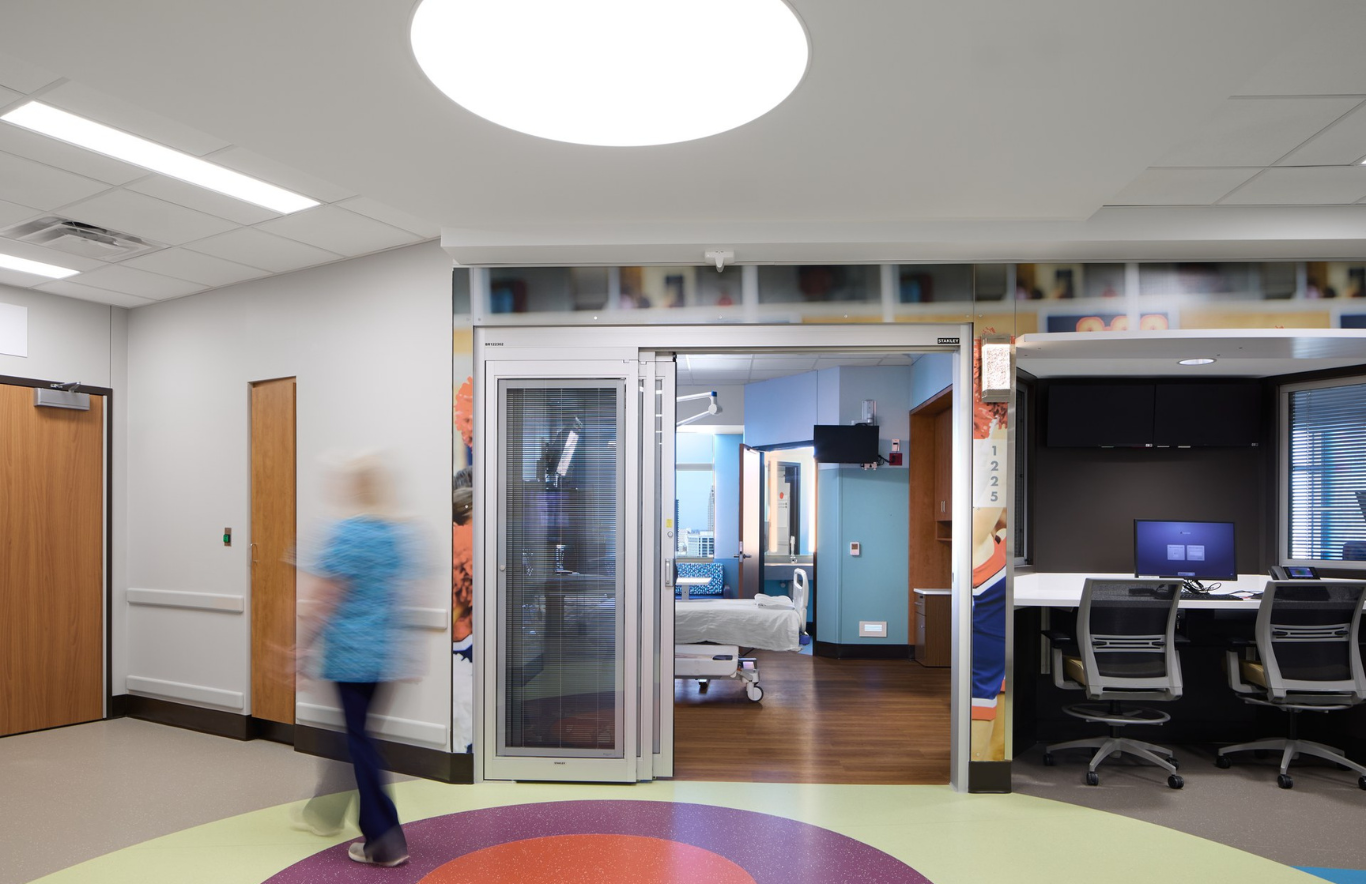
Children’s of Alabama has completed a major expansion of its pediatric intensive care unit, adding 50 modern patient rooms and nearly 49,000 square feet of critical support space on the 12th floor of the Benjamin Russell Hospital for Children in Birmingham. The project, which broke ground in August 2024 and welcomed its first patients at the end of February 2025, was designed to meet rising demand for specialized care whereas maintaining full hospital operations throughout construction. Officials say the new unit integrates the pediatric intensive care unit (PICU) and special care areas into a single, flexible space capable of accommodating both high- and low-acuity patients.
The expansion represents a significant investment in pediatric critical care infrastructure in the southeastern United States. Hospital leadership emphasized that the project was made possible through a combination of institutional planning and community support, including a $3 million contribution from the Quarterbacking Children’s Health Foundation. The work was carried out while the hospital remained fully operational, requiring careful coordination to minimize disruption to patients, families, and staff.
Tom Shufflebarger, President and CEO of Children’s of Alabama, stated that the new unit addresses growing demand for pediatric critical care, particularly for children with complex medical needs. He highlighted the facility’s leading-edge design and technology, which aim to support more efficient care delivery, improved communication among care teams, and a healing environment for patients and their families. These comments were made in an official hospital statement released following the completion of the buildout.
The 12th floor where the expansion occurred was originally constructed as shell space when the hospital opened in 2012, intentionally left unfinished to accommodate future growth. Prior to the renovation, the area was used primarily for storage. This approach allowed Children’s of Alabama to avoid the costs and disruptions associated with demolishing and rebuilding existing structures, instead leveraging pre-planned infrastructure for the expansion.
Hoar Construction served as the primary builder on the project, with Micah Vance, Senior Project Manager at the firm, noting the continued trust placed in their team by the hospital over more than a decade. Vance emphasized that the project reflects a deep partnership rooted in shared commitment to the Birmingham community, referencing Hoar’s involvement in everything from minor renovations to major expansions since the hospital’s opening in 2012.
To ensure safety and continuity of care during construction, the project team coordinated closely with hospital leadership to manage tie-ins to essential systems such as ductwork, medical gas, and water lines. Equipment and materials were moved using hospital elevators, and deliveries were scheduled during off-peak hours to reduce interference with patient movement and daily operations. Andrew Bray, Superintendent on the project for Hoar, stated that keeping patients, families, and staff safe remained the highest priority throughout every phase of the build.
Additional partners in the effort included Poole & Company as the architectural firm, BBG&S Engineering Consultants for mechanical and electrical systems, and SSOE Group for structural and civil engineering support. The multidisciplinary nature of the project involved input from nurses, physicians, respiratory therapists, pharmacists, IT professionals, and facilities staff to ensure the final design met clinical workflow needs.
Addressing Growing Demand for Pediatric Critical Care
The expansion comes at a time when demand for specialized pediatric intensive care services is increasing across the United States. According to data from the American Academy of Pediatrics, hospital admissions for children requiring critical care have risen steadily over the past decade, driven in part by advances in neonatal and pediatric medicine that allow more children with complex congenital conditions to survive infancy and require ongoing intensive support.
Children’s of Alabama is one of the largest pediatric medical centers in the Southeast and serves as a referral hospital for critically ill children from across Alabama and neighboring states. The hospital’s existing PICU had been operating at or near capacity for several years, prompting leadership to initiate plans for expansion well before construction began. By combining the PICU and special care units into a single adaptable space, the new design allows staff to adjust acuity levels based on patient needs without requiring transfers between units.
This flexibility is particularly valuable during surges in patient volume, such as those seen during respiratory illness seasons or public health emergencies. The unit’s layout supports both isolation capabilities for infectious patients and open configurations that promote family-centered care. Features such as decentralized nursing stations, upgraded monitoring systems, and sound-reducing materials were incorporated to enhance both clinical efficiency and patient comfort.
Community Support and Funding
The $3 million gift from the Quarterbacking Children’s Health Foundation played a notable role in supporting the expansion. The foundation, which focuses on improving pediatric health outcomes in Alabama, has partnered with Children’s of Alabama on multiple initiatives over the years, including programs related to childhood obesity, mental health, and access to specialty care in underserved communities.
While the majority of the project’s funding came from the hospital’s capital reserves and operational revenue, philanthropic contributions like this one help cover specialized equipment, family support spaces, and technology upgrades that may not be fully covered through traditional budgeting channels. Hospital officials have not disclosed the total cost of the expansion, but industry benchmarks for similar pediatric ICU projects in urban medical centers typically range from $75 million to over $100 million, depending on size, technology integration, and regional construction costs.
Transparency around healthcare capital expenditures remains limited in many states, including Alabama, where private nonprofit hospitals are not required to disclose detailed project budgets to the public. However, Children’s of Alabama does publish an annual community benefit report that outlines its investments in charity care, medical education, and community health initiatives, which are available through its official website.
Design and Operational Innovations
The new 12th-floor unit incorporates several design innovations aimed at improving both clinical workflows and the patient and family experience. These include larger room sizes to accommodate medical equipment and family sleeping accommodations, centralized charting areas to reduce nursing steps, and enhanced natural lighting through strategically placed windows. Infection control was also a priority, with materials selected for ease of cleaning and airflow systems designed to minimize cross-contamination.
Technology integration includes advanced patient monitoring systems with centralized viewing capabilities, improved nurse call systems, and upgraded IT infrastructure to support electronic health record access at the bedside. The unit also features dedicated spaces for multidisciplinary team consultations, pharmacy services, and respiratory therapy, all located within close proximity to patient rooms to reduce response times.
Family support amenities were expanded as part of the project, including larger lounges, kitchenettes, and sleeping accommodations. Research consistently shows that involving families in pediatric critical care improves outcomes and reduces stress for both patients and caregivers. The hospital’s approach aligns with guidelines from the Society of Critical Care Medicine, which recommends designing ICU spaces that facilitate family presence and participation in care decisions.
Ongoing Commitment to Pediatric Health in Alabama
Children’s of Alabama continues to invest in its infrastructure and services as part of a broader mission to improve child health outcomes across the state. The hospital reports that it provides care to more than half of all hospitalized children in Alabama each year, with a significant portion coming from rural and medically underserved areas. In addition to clinical services, the institution is actively involved in pediatric research, graduate medical education, and advocacy for policies that support children’s health.
Recent public health data from the Alabama Department of Public Health indicates ongoing challenges in areas such as infant mortality, childhood obesity, and access to mental health services—particularly in rural counties. Hospitals like Children’s of Alabama play a critical role in addressing these disparities through specialty care outreach, telemedicine programs, and partnerships with community health centers.
As of now, there are no announced plans for further immediate expansion of the Benjamin Russell Hospital for Children campus. However, hospital leaders have indicated that long-term master planning includes provisions for future growth, building on the flexibility demonstrated by the use of shell space in the original 2012 design. Any future projects would likely undergo similar phases of community engagement, regulatory review, and phased construction to ensure minimal disruption to ongoing operations.
For updates on Children’s of Alabama’s services, community programs, or facility developments, the public can refer to the hospital’s official website and its annual accountability reports. Those interested in supporting pediatric health initiatives in the region may also explore opportunities through verified nonprofit partners such as the Quarterbacking Children’s Health Foundation or the Children’s of Alabama Foundation.