
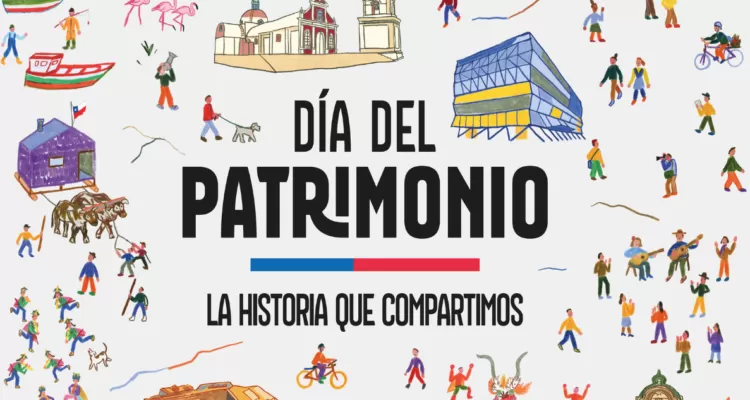
Chile Announces Dates and Opens Registrations for Día del Patrimonio 2026
Chile has officially confirmed the dates for the 2026 edition of Día del Patrimonio 2026 Chile, marking the return of the nation’s most expansive cultural celebration. The event, which transforms the country into an open-air museum, is scheduled to take place from May 22 to May 24, 2026, inviting millions of citizens and international visitors to explore the architectural, historical, and intangible treasures of the region.
Organized by the Ministry of Cultures, Arts, and Heritage in coordination with the National Monuments Council, the celebration serves as a pivotal moment for national reflection and civic engagement. For one weekend each year, hundreds of sites—including government palaces, private residences, libraries, and museums that are typically closed to the general public—open their doors free of charge to foster a deeper connection between the people and their shared history.
This year’s theme, “Memory, identity, and traditions that connect with roots,” emphasizes a holistic approach to heritage. Rather than focusing solely on grand monuments, the 2026 program aims to highlight the “living heritage” of Chile, including the customs, oral traditions, and crafts of diverse communities from the Atacama Desert in the north to the glacial fjords of the south.
Registration Open for Cultural Sites and Community Activities
The Ministry of Cultures has officially opened the registration process for institutions, organizations, and individual citizens who wish to offer their spaces or lead activities during the festival. This call for participation is designed to decentralize the celebration, ensuring that the festival extends beyond the capital of Santiago and reaches the most remote corners of the country.

Eligible participants can register a wide array of offerings, from guided tours of historical archives to workshops on ancestral weaving or performances of traditional music. The government encourages the inclusion of “intangible heritage,” recognizing that the memory of a community is often stored in its practices and stories rather than just its stone walls. All registered activities must be provided free of charge to the public to maintain the event’s core mission of accessibility and inclusion.
To ensure a coordinated experience, the Ministry is utilizing a digital platform where organizers can submit their proposals, which are then vetted and added to the official national calendar. This allows visitors to plan their routes across different cities, maximizing the impact on local tourism and regional economies.
Regional Focus: Valparaíso and Antofagasta Lead the Charge
While the event is national in scope, several regions have already begun aggressive promotion to maximize their local offerings. In the Valparaíso Region, organizers are emphasizing the city’s status as a UNESCO World Heritage site. The focus here is on the intersection of urban architecture and the maritime history that defined the port city’s growth, with a call for local neighborhood associations to open “hidden” courtyards and historic homes that rarely see visitors.

Similarly, in the north, Antofagasta is preparing for the 2026 festivities by launching official regional campaigns to invite citizens to participate. The effort in Antofagasta is centered on the industrial and coastal heritage of the region, highlighting the evolution of the mining industry and the resilience of the northern coastal communities. By integrating these local narratives, the event transforms from a top-down government initiative into a grassroots celebration of regional identity.
The regional approach is critical for the 2026 edition, as the Ministry seeks to bridge the gap between urban centers and rural territories. By empowering local curators and community leaders in places like Viña del Mar and Antofagasta, the festival ensures that the “roots” mentioned in the theme are authentically represented.
The Evolution of Heritage: From Monuments to Plurality
The transition of the event from a singular “Cultural Heritage Day” to the plural “Heritage Day” (Día de los Patrimonios) reflects a significant shift in how the Chilean state and its citizens perceive national identity. This change acknowledges that heritage is not a static collection of objects but a dynamic, pluralistic experience that evolves over time.
This plurality encompasses several layers of identity:
- Architectural Heritage: The preservation of colonial buildings, modernist landmarks, and indigenous structures.
- Intangible Heritage: The recognition of living human treasures, traditional knowledge, and the linguistic diversity of Indigenous peoples.
- Natural Heritage: The integration of protected landscapes and biological reserves into the cultural conversation.
- Collective Memory: The use of historical sites to reflect on the country’s political and social transformations.
By broadening the definition of what constitutes “heritage,” the event fosters social cohesion. It allows citizens from various socio-economic and ethnic backgrounds to see their own history reflected in the national narrative, transforming the act of visiting a museum into an act of reclaiming identity.
Practical Information for Visitors and Organizers
For those planning to attend or organize activities for the May 22–24 weekend, the Ministry of Cultures recommends monitoring official government channels for the final published program. The full itinerary of events is typically released a few weeks before the start date, providing detailed maps and registration requirements for specific high-demand sites.

Visitors are encouraged to use public transportation where possible, as the surge in attendance at historical centers often leads to significant traffic congestion. Many of the most popular sites—such as the presidential palaces or national libraries—may require a digital time-slot reservation to manage crowds and ensure safety.
For institutions looking to register, the application window is currently open. The Ministry emphasizes that no matter how small a site may seem—be it a family-run bakery with a century of history or a small community library—it can contribute to the national tapestry of memory.
The next confirmed checkpoint for the event is the closing of the primary registration window for activity proposals, after which the Ministry will begin the curation process for the official 2026 national map. Further updates on the final list of participating sites will be released via the official Ministry of Cultures portal in the coming weeks.
Do you have a favorite historical site in Chile or a tradition you believe should be recognized? Share your thoughts and suggestions in the comments below.