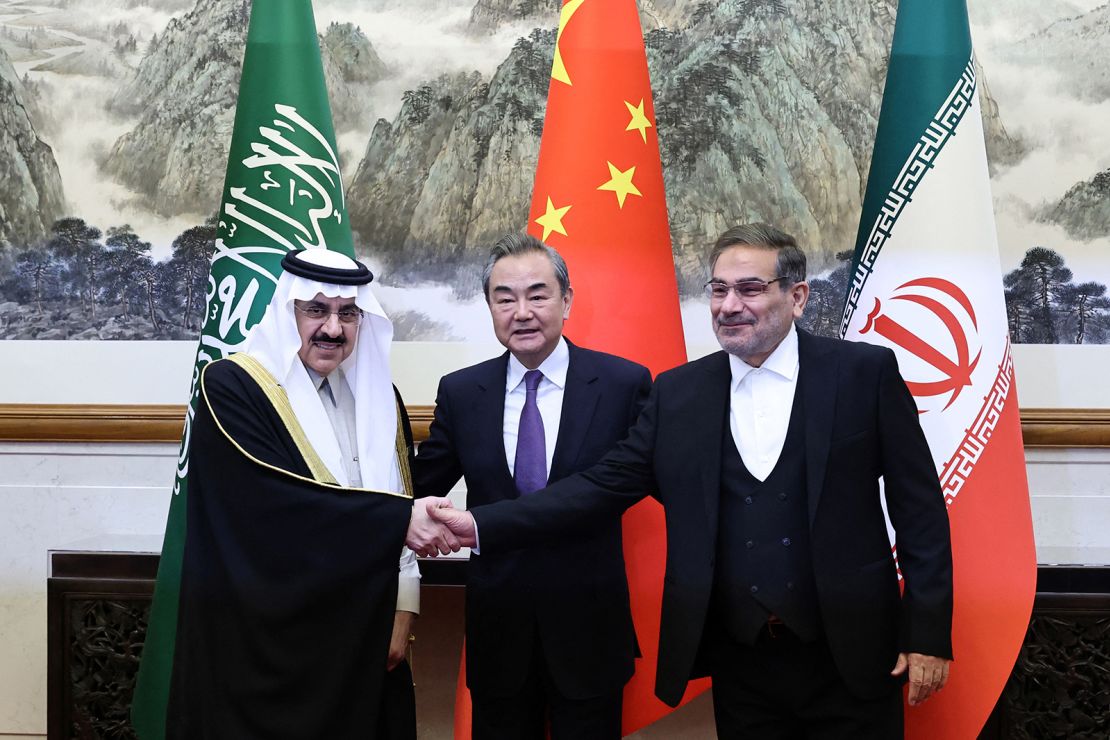
The geopolitical landscape of the Middle East reached a critical inflection point this morning as China attempted to position itself as a peacemaker whereas the United States launched a sweeping military operation to isolate Tehran. In a diplomatic outreach to his Iranian counterpart, China’s head of diplomacy affirmed that Beijing supports the momentum for a ceasefire and peace talks, seeking to stabilize a region currently engulfed in high-stakes maritime conflict.
However, this diplomatic overture arrives at a moment of extreme tension. At 10 a.m. EST today, April 16, 2026, the U.S. Navy began enforcing a comprehensive blockade of all maritime traffic entering and departing Iranian ports, according to reports from 19FortyFive. The move, directed by CENTCOM, is designed to strip Tehran of the revenue it has been generating from the Strait of Hormuz, which Iran has controlled since February 28.
For Beijing, the situation is no longer just about regional diplomacy; it is a direct challenge to its economic interests and its relationship with Washington. While China publicly advocates for peace, its financial fingerprints are deeply embedded in the very system the U.S. Is now attempting to dismantle. The resulting friction places President Xi Jinping in a precarious position as he balances a strategic partnership with Iran against the threat of a direct confrontation with the Trump administration.
The “Yuan Trail”: China’s Financial Stake in the Strait
The U.S. Blockade is not merely a military maneuver against Iran; it is a targeted strike at the financial mechanisms enabling Tehran’s resilience. Central to this is what analysts call the “Yuan Trail.” According to maritime data from Lloyd’s List Intelligence, Chinese-flagged and Chinese-linked vessels have been primary users of Iran’s toll system, with at least two vessels documented paying passage fees in Chinese yuan .

This use of the yuan is a significant detail for global markets. By facilitating trade and toll payments in its own currency, China is not only helping Iran evade U.S. Dollar-denominated sanctions but is also testing the viability of the yuan as a global alternative to the dollar. This financial support has continued throughout “Operation Epic Fury,” the broader military context surrounding the current blockade.
The U.S. Response has been explicit. President Donald Trump has directly named China as a target of his frustrations, stating on Sunday that if China continues its support for Iran, “China’s going to have big problems” . The blockade’s enforcement language is precise: any vessel entering or departing Iranian ports, regardless of its flag or nationality, is subject to interdiction. This means Chinese ships are now in the direct crosshairs of the U.S. Navy.
A Partnership Defined by History and Strategy
To understand why Beijing is so hesitant to distance itself from Tehran, one must look at the deep-rooted nature of China-Iran relations. Their connection is one of the oldest continuous contacts in human history, spanning more than 2,500 years . From the indirect contact between the Achaemenid Empire and the Zhou dynasty in the 6th century BC to the official ties established between the Parthian Empire and the Han dynasty around 200 BC, the two civilizations have a long tradition of exchange.

Historically, Persian merchants were the primary conduits of culture and goods across Central Asia, and the famous Silk Road—which carried Chinese silk to Europe—was largely controlled by Iran . This historical synergy has evolved into a modern strategic alliance. Today, the relationship is characterized by mutual efforts to undermine the U.S.-led global order.
According to a fact sheet from the U.S.-China Economic and Security Review Commission (USCC), China provides Iran with critical support to evade U.S. Sanctions, while Iran supplies China with relatively low-cost oil. Beyond trade, the two nations collaborate within alternative multilateral organizations, including the BRICS bloc and the Shanghai Cooperation Organization (SCO), to create a geopolitical counterbalance to Western influence.
The Strategic Dilemma for Beijing
The current crisis presents Beijing with an “impossible choice.” On one hand, China cannot afford to abandon Iran, which serves as a vital energy supplier and a key partner in its broader strategy to reshape global governance. Defying a U.S. Naval blockade risks a catastrophic escalation in trade and diplomatic relations with the United States.
China’s recent insistence on “ceasefire dynamics” and “peace talks” is a calculated move to maintain its role as a diplomatic heavyweight without immediately conceding to U.S. Naval authority. By calling for peace, Beijing attempts to frame the U.S. Blockade as the primary obstacle to stability, thereby shifting the narrative away from its own financial enablement of Tehran.
However, the economic reality is stark. The U.S. Navy’s willingness to interdict vessels regardless of flag signals that the “shield” of the Chinese flag no longer provides immunity in the Strait of Hormuz. For the global business community, this increases the risk premium for shipping in the region and highlights the fragility of the yuan-based trade alternatives that China has been promoting.
Key Dynamics of the China-Iran-U.S. Triangle
| Stakeholder | Primary Objective | Key Leverage/Tool |
|---|---|---|
| United States | Deny Iranian revenue; pressure China | Naval blockade; CENTCOM interdiction |
| China | Secure oil; promote Yuan; regional stability | Diplomatic mediation; Yuan-based payments |
| Iran | Maintain control of the Strait; evade sanctions | Control of Hormuz (since Feb 28); oil exports |
What Happens Next?
The immediate future of this conflict hinges on how Beijing responds to the interdiction of its vessels. If China chooses to defy the blockade to protect its Iranian partner, it could “detonate” the upcoming Trump-Xi summit, removing a critical diplomatic off-ramp for both superpowers .

The world is now watching to see if China’s calls for peace are merely rhetorical or if Beijing is prepared to pressure Tehran into a ceasefire to avoid a direct naval clash with the United States. As a financial journalist, I view this as a pivotal moment for the global economy; the outcome will determine not only the stability of oil prices but the actual reach of the U.S. Dollar in an increasingly multipolar world.
The next critical checkpoint will be the official response from the Chinese Ministry of Foreign Affairs regarding the interdiction of Chinese-linked ships and the subsequent scheduling of the Trump-Xi summit.
Do you believe China can successfully mediate a peace deal while remaining financially tied to Iran? Share your thoughts in the comments below or share this analysis with your network.
Related reading
- ¿Cuánto cobra un notario por cancelar una hipoteca de Infonavit? Es una de las … – Facebook
- Apple แซง Nvidia ทวงบัลลังก์บริษัทมูลค่าสูงสุดของโลก หลังมูลค่าแตะ 4.88 ล้านล้านดอลลาร์
- Charles Holds Secret Meeting with Harry and Family at Highgrove (time.news)
- UK’s Nationalisation of Chinese Steelmaker Sparks Closely Monitored Response from China’s Foreign Ministry (newsdirectory3.com)