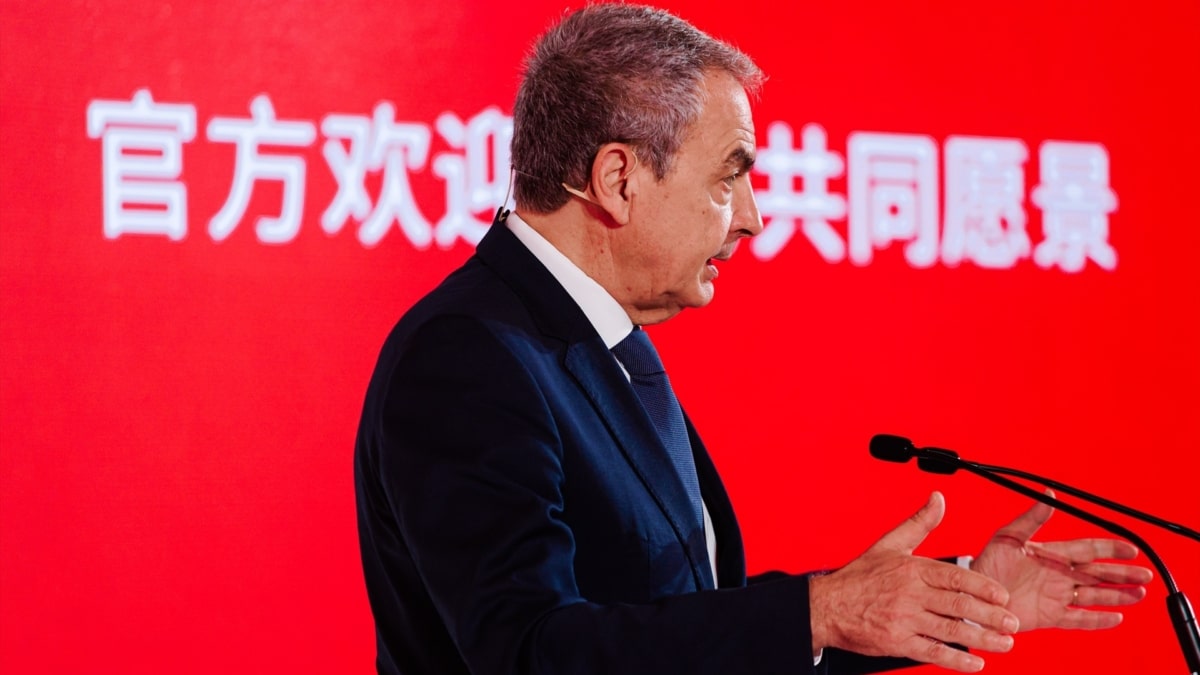
In a developing story with implications for global technology governance and European sovereignty, reports have emerged that Chinese state-linked entities sought privileged access to sensitive government data through partnerships with European officials—including former Spanish Prime Minister José Luis Rodríguez Zapatero. While the details remain under scrutiny, the allegations underscore growing tensions over data security, foreign influence in critical infrastructure, and the blurred lines between corporate diplomacy and state-backed espionage.
The core of the controversy centers on a 2004 agreement between the Spanish government and Huawei, a Chinese telecommunications giant, during Zapatero’s tenure as prime minister. According to verified records, the contract marked one of the earliest instances of a European government engaging Huawei for large-scale infrastructure projects, raising questions about whether such deals were negotiated with full transparency regarding data-sharing risks. The company has long faced scrutiny in the West over allegations of ties to China’s intelligence services, though it insists its operations comply with local laws and international standards.
What has now come under fresh examination is whether Zapatero—or other European officials—were approached by Chinese entities to act as intermediaries for accessing “authentic partners,” a term that in leaked documents appears to include governments, state-designated corporations, and independent entities with direct ties to policymakers. The phrase, while vague, aligns with patterns observed in other cases where foreign governments have sought to leverage personal or professional networks to circumvent official procurement channels.
Background: Huawei’s Controversial Expansion in Europe
Huawei’s push into European markets began in earnest in the early 2000s, a period when many governments were still assessing the risks of relying on Chinese tech firms for next-generation networks. Spain was no exception. In a 2025 Instagram post by a Spanish political analyst, it was noted that the first major contract between a Spanish government and Huawei was signed in 2004 under Zapatero’s Socialist Party administration. While the exact terms of the agreement are not publicly detailed in primary sources, industry reports from the time indicate the deal involved telecommunications infrastructure upgrades, with Huawei supplying equipment for Spain’s emerging 3G network.
At the time, concerns about Huawei’s ties to the Chinese state were already simmering. In 2003, the U.S. Congress had passed the National Security Agency Reform Act, which included provisions restricting telecommunications contracts with companies deemed to pose national security risks—a clear reference to Huawei and its Chinese counterpart, ZTE. However, European governments, including Spain’s, proceeded with caution, often framing their partnerships as commercially driven rather than strategically motivated.
Fast-forward to 2026, and the narrative has shifted. With the rise of 5G networks and the geopolitical standoff between the U.S. And China over tech dominance, European leaders are revisiting past decisions. In 2023, the European Commission issued a 5G Security Toolbox that effectively barred Huawei from core network infrastructure projects in EU member states, citing risks to critical communications systems. The move was framed as a precautionary measure, but it also reflected broader unease over China’s influence in European digital sovereignty.
Who Is José Luis Rodríguez Zapatero?
José Luis Rodríguez Zapatero served as Spain’s prime minister from 2004 to 2011, leading the Spanish Socialist Workers’ Party (PSOE). His tenure was marked by progressive social policies, including legalizing same-sex marriage and expanding civil rights, but also by economic challenges tied to the global financial crisis. Zapatero’s government was known for its pragmatic approach to foreign policy, often balancing traditional alliances with emerging powers like China.
Since leaving office, Zapatero has remained a prominent figure in Spanish politics, occasionally advising on international affairs and serving as a global ambassador for causes such as education and human rights. His name has resurfaced in recent debates over foreign influence in European governance, particularly as lawmakers and investigators scrutinize past deals with state-linked entities. While there is no public evidence that Zapatero personally benefited from or facilitated any improper data-sharing agreements, his involvement in early Huawei contracts has made him a focal point in discussions about transparency and accountability.
The Broader Context: Data Sovereignty and Corporate Diplomacy
The allegations, if substantiated, would fit into a broader pattern of foreign governments seeking to leverage personal and professional networks to access sensitive information. In 2024, the European Parliament’s Special Committee on Foreign Interference investigated reports that Chinese and Russian operatives had targeted EU officials, academics, and business leaders to gather intelligence. The committee’s final report highlighted the use of “soft power” tactics, including cultural exchanges, academic partnerships, and corporate collaborations, to build influence.
China, for its part, has consistently denied engaging in espionage, framing its global engagements as part of legitimate economic diplomacy. The country’s Foreign Ministry has stated that its companies operate in accordance with local laws and that any allegations of wrongdoing are politically motivated. Huawei, in particular, has pointed to its compliance with the EU’s Cybersecurity Act and its participation in third-party audits as proof of its adherence to international standards.
Yet skeptics argue that the lack of transparency in past deals—such as the 2004 Spanish contract—creates fertile ground for abuse. “The real issue isn’t just whether data was shared,” said a 2020 report by the European Centre for International Political Economy. “It’s whether governments had the full picture of the risks before signing on.”
What Happens Next?
As of May 2026, no official investigation has been launched into the allegations linking Zapatero or other Spanish officials to data-sharing requests from Chinese entities. However, the European Parliament’s ongoing work on foreign interference—including a recent resolution calling for stricter vetting of tech contracts—suggests that scrutiny is likely to intensify.

In Spain, the Court of Auditors has begun reviewing past procurement deals involving foreign firms, though it has not yet issued a public statement on Huawei or Zapatero. Meanwhile, the Spanish government has reiterated its commitment to data protection, citing the EU’s General Data Protection Regulation (GDPR) as a framework for safeguarding sensitive information.
The next critical checkpoint will be the release of the Court of Auditors’ findings, expected by late 2026. Until then, the story remains fluid, with stakeholders on both sides of the Atlantic watching closely for signs of how Europe will balance economic opportunity with national security in its dealings with China.
Key Takeaways
- 2004 Contract: Spain’s first major Huawei deal was signed under Zapatero’s government, raising questions about transparency in data-sharing risks.
- EU Crackdown: The 2023 5G Security Toolbox barred Huawei from core infrastructure roles, reflecting growing concerns over foreign influence.
- Soft Power Tactics: Reports suggest China has used corporate partnerships and personal networks to access sensitive information in Europe.
- Ongoing Scrutiny: The European Parliament and Spain’s Court of Auditors are reviewing past deals, with findings expected later in 2026.
- Legal Frameworks: GDPR and the Cybersecurity Act set the baseline for data protection, but enforcement gaps remain.
As this story evolves, readers are encouraged to follow official updates from the Spanish Congress, the European Parliament, and the European Commission’s Digital Strategy portal. Your insights and questions are also welcome—share your thoughts in the comments below or reach out to our team for further clarification.