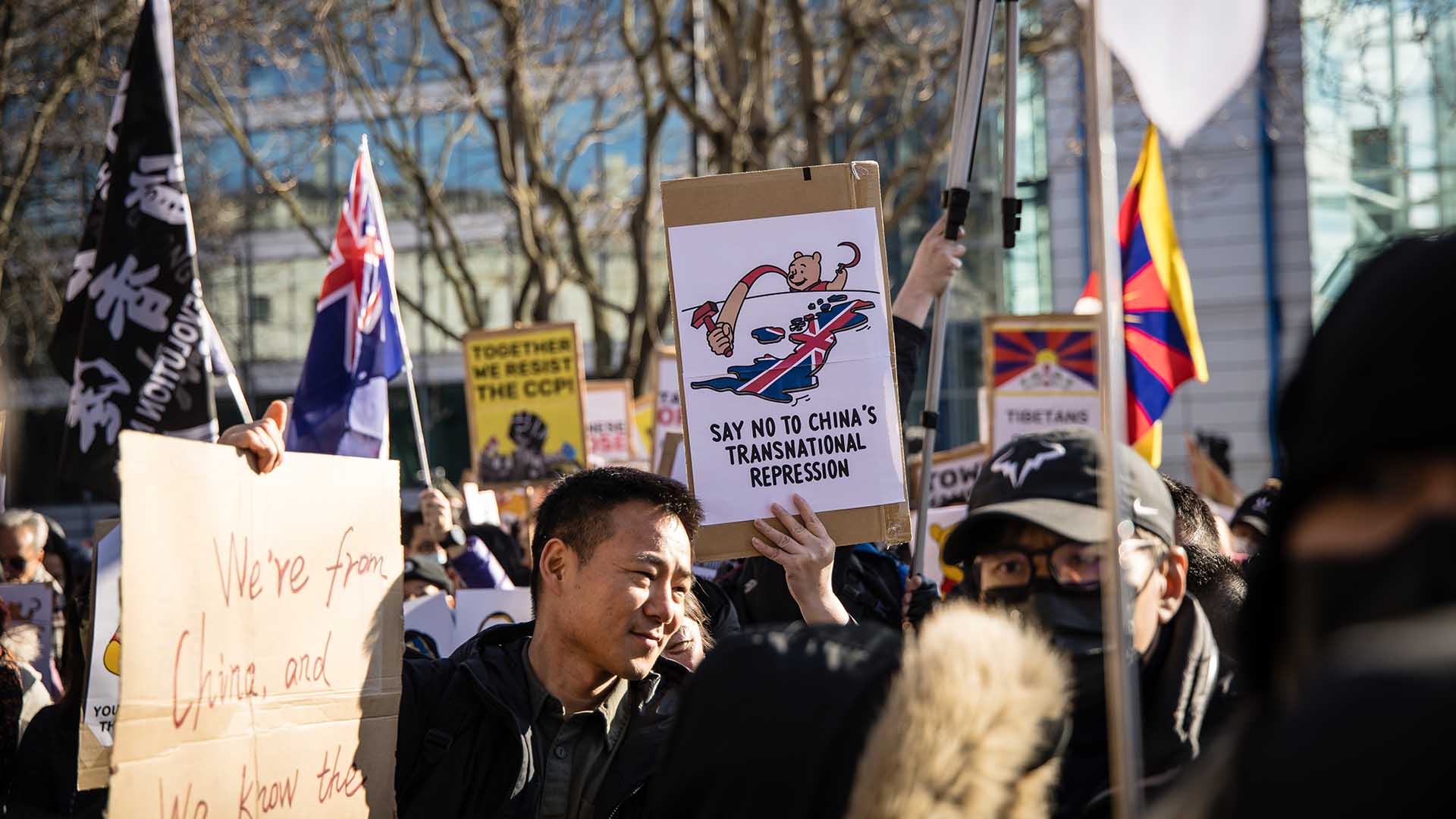
China‘s Expanding Reach: Intimidation and Reprisals Against Dissidents extend Beyond Borders
Recent reports paint a disturbing picture of escalating transnational repression orchestrated by the Chinese government, targeting activists and dissidents living abroad. A new United Nations report, coupled with investigations by the International Consortium of Investigative Journalists (ICIJ), reveals a pattern of intimidation, harassment, and direct threats aimed at silencing critics and chilling free speech within the global Hong Kong and Uyghur diaspora communities. These actions raise serious concerns about the erosion of international norms and the safety of individuals who engage with the UN and other international bodies.
Targeting Activists in the UK: A Campaign of fear
The case of Hong Kong activist Lau, a prominent voice advocating for democracy, exemplifies the increasingly aggressive tactics employed. in March 2025, a deepfake video, “apparently generated by artificial intelligence,” surfaced on social media, falsely portraying Lau making damaging statements. This deliberate disinformation campaign was compounded by a more direct and alarming threat: letters sent to her neighbors in the UK containing her personal information, including her residential address, effectively soliciting “bounty hunters.”
“as an activist, I was very, very careful about my digital footprint… So it was very frightening at first when I learned that they have my address and precisely my neighbors living in the same block as me,” Lau stated, highlighting the refined and deeply unsettling nature of the attacks. This isn’t simply about discrediting her; it’s about creating an environment of fear and vulnerability.
The impact extends beyond Lau herself. She reports a “chilling effect” on other dissidents in the UK, who now fear for the safety of their family members still residing in China. This fear is understandable given the Chinese government’s demonstrated willingness to leverage familial ties as a means of control and coercion. The goal is clear: to silence dissent not just thru direct attacks, but through the threat of repercussions against loved ones.
Hong Kong’s Response and Denials
The Chinese government, through its representatives to the UN, maintains that Hong Kong police operate under strict legal procedures and opposes any external interference in its judicial process.Though, this assertion rings hollow in the face of mounting evidence.
The Hong Kong government issued a statement to ICIJ “strongly condemning any smearing of our work in safeguarding national security,” and claiming that Lau and fellow activist Kwok are “wanted” for activities endangering national security and “colluding with external forces.” This framing conveniently casts legitimate activism as criminal activity, justifying the ongoing harassment. Notably, Hong Kong police acknowledged an ICIJ request for comment but failed to provide a substantive response.
beyond Hong Kong: Uyghur activist Targeted at UNESCO Conference
the intimidation isn’t limited to the Hong Kong diaspora. uyghur linguist and activist Abduweli Ayup,who fled China after being detained for 15 months,experienced harassment at an international language technologies conference co-organized by UNESCO in Paris in February 2025. After voicing concerns about the suppression of the Uyghur language by the Chinese government, Ayup was questioned by unidentified individuals about his family’s whereabouts.
He further alleges that UNESCO initially denied him the opportunity to present his research, only to later claim a miscommunication caused the delay. Ayup ultimately presented during a coffee break, but was later filmed by an unknown individual and followed throughout the remainder of the conference. This incident underscores the reach of chinese influence, even within the ostensibly secure environment of a UN-affiliated event.
UNESCO and the UN response: Acknowledgment and Ongoing Challenges
UNESCO responded to ICIJ inquiries stating that Ayup’s presentation wasn’t canceled, attributing the initial issue to a miscommunication. An internal inquiry reportedly found no evidence of wrongdoing. However, the incident prompted UNESCO to acknowledge the seriousness of the situation and reiterate its commitment to the safety and security of its visitors.
The Office of the United Nations high Commissioner for Human Rights (OHCHR) also affirmed its commitment to protecting individuals who engage with the UN, offering protection advice and support to victims of reprisals. Though, the spokesperson acknowledged that responses to such incidents vary across the UN system and that strengthening internal procedures remains a challenge.
Despite these challenges,the UN continues to advocate for stronger protections and accountability,recognizing the courage of civil society actors who engage with the organization.
The broader Implications and the Need for Robust Protection
These incidents are not isolated events. They represent a deliberate and coordinated effort by the Chinese government to extend its control beyond its borders, silencing dissent and intimidating those who speak out against its policies. This transnational repression poses a meaningful threat to fundamental freedoms and the integrity of international institutions.
The international community must respond with a unified and robust approach, including:
*
Keep reading