
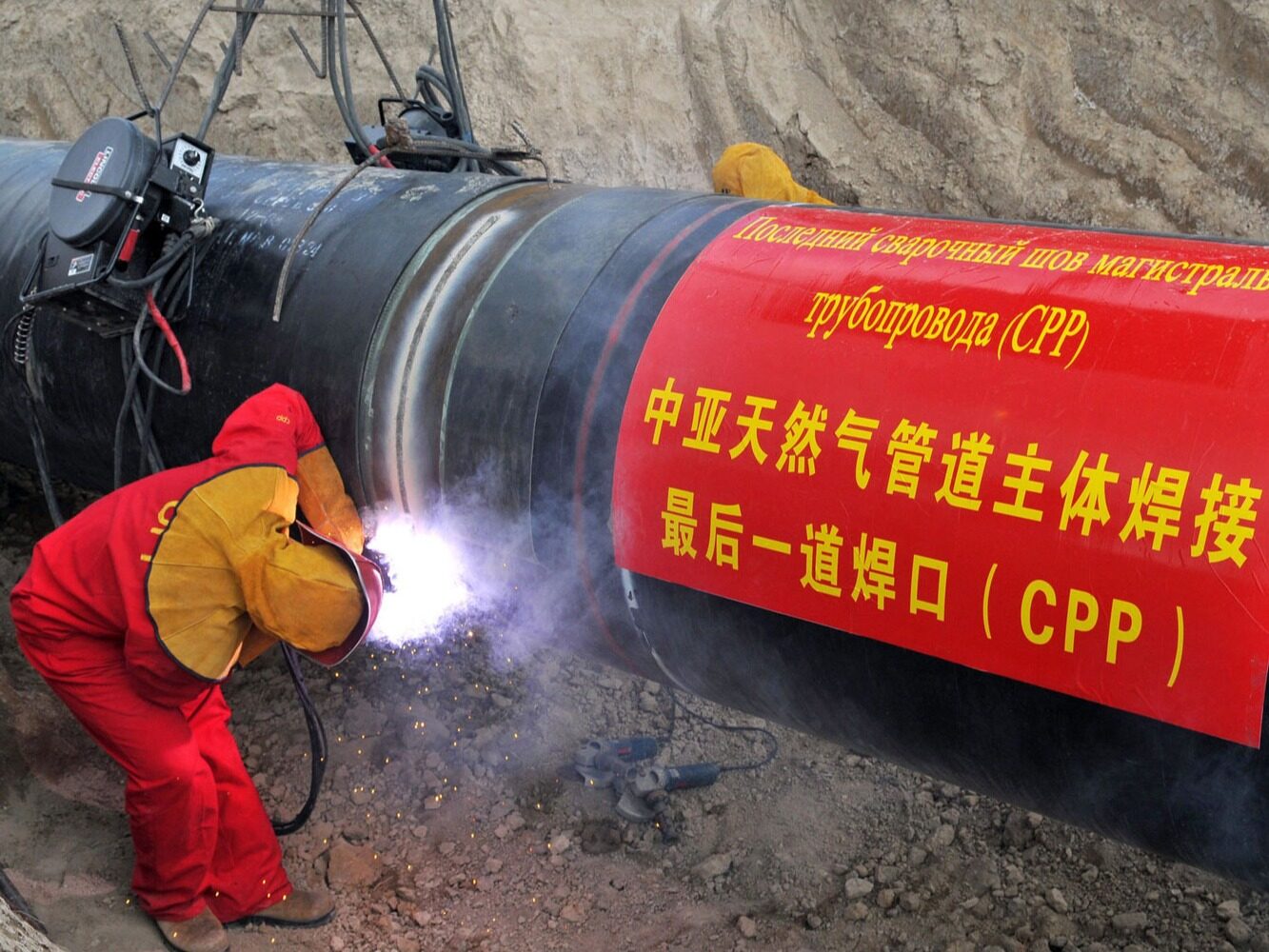
The escalating geopolitical crisis in the Middle East is forcing a fundamental redesign of global energy security, as China accelerates its “de-Middle East” strategy to safeguard its resource pipeline. With the risk of a blockade in the Strait of Hormuz becoming a tangible threat, Beijing is aggressively shifting its energy and logistics axis toward Central Asia, pivoting from a reliance on vulnerable maritime routes to a robust land-based supply chain.
This structural realignment comes as Middle Eastern conflicts disrupt the flow of oil and gas, threatening the stability of the global energy supply chain. For China, the vulnerability of the “chokepoints” in the Persian Gulf has transitioned from a theoretical risk to a strategic imperative, prompting a rapid expansion of cooperation with nations such as Kazakhstan, Kyrgyzstan, and Tajikistan.
The shift is not merely strategic but operational. Recent data indicates that the proportion of road transport in China’s trade with Central Asia has surged to over 50%, a dramatic increase from previous levels where it stood at less than 20% Energy Daily. This pivot toward a “land-based supply chain” reflects a broader effort to decouple energy security from the volatile maritime corridors of the Middle East.
The Hormuz Risk and the Rise of the ‘Middle Corridor’
The Strait of Hormuz, a critical chokepoint for global oil and gas transport, has effectively become paralyzed due to the prolonged conflict in the Middle East. This paralysis has triggered an urgent redesign of energy security strategies across Asia. While Japan and other nations are diversifying their supply lines toward the United States and South America, China is focusing on the “Middle Corridor” strategy to ensure its energy survival.
By transitioning from a maritime-centric structure to a land-based network, China aims to mitigate the risks associated with naval blockades. Central Asia has emerged as the centerpiece of this strategy, with Kazakhstan playing a pivotal role. Kazakhstan’s abundance of uranium and oil, combined with its relative political stability, has positioned it as a core hub for China’s energy security Energy Daily.
This shift also marks a transition in the “Belt and Road Initiative” (BRI), moving away from massive, singular projects toward a more “distributed” model. This decentralized approach allows China to spread its risk across multiple land routes, ensuring that the failure of one corridor does not result in a total energy blackout.
Asia’s LNG Crisis: Forced Demand Adjustment
The impact of the Middle East crisis extends beyond oil, hitting the Liquefied Natural Gas (LNG) market with unprecedented severity. Net LNG imports into Asia have plummeted to their lowest levels in approximately six years, with recent 30-day import volumes dropping below 600,000 tons—a level not seen since June 2020 Energy Daily.
Unlike the pandemic-era dip, this current decline is characterized as a “forced demand adjustment” caused by supply disruptions rather than a lack of demand. Analysts estimate that approximately 20% of the global LNG supply has been removed from the market due to the prolonged conflict. The crisis was exacerbated by the failure of negotiations between the United States and Iran, which intensified tensions and contributed to the paralysis of the Strait of Hormuz.
The supply shock has been further intensified by production halts in Qatar following attacks in the region. The resulting shortages have forced several Asian nations to urgently reorganize their power generation mixes:
- China: LNG imports have decreased by approximately 30% compared to the previous year Energy Daily.
- India: Imports have dropped by approximately 20% Energy Daily.
- Pakistan: Due to a high dependency on Qatari gas, Pakistan has seen its LNG imports drop to “zero” since March Energy Daily.
- South Korea and Japan: Both nations have seen imports drop to their lowest seasonal levels in six years, leading to a reduction in LNG power generation and a temporary increase in coal usage Energy Daily.
Geopolitical Ripple Effects: Defense and Logistics
The conflict in Iran and the broader Middle East is creating secondary effects that reach as far as East Asia. As the United States and its Middle Eastern allies consume offensive and defensive interceptor missiles at an accelerated rate, there are growing concerns regarding the delivery of weaponry to other regions. Reports suggest that Japan and Taiwan may face delays in the delivery of critical armaments as priority shifts to the active conflict zone Reddit/LessCredibleDefence.
This environment further incentivizes China’s pivot. By securing land-based energy corridors through Central Asia, China not only protects its energy supply but also reduces its vulnerability to U.S.-led maritime influence in the Persian Gulf. The strategic shift toward Kazakhstan and other Central Asian neighbors represents a long-term bet on continental stability over maritime volatility.
Key Takeaways: The Energy Pivot
| Metric/Region | Previous State | Current Status (2026) |
|---|---|---|
| China-Central Asia Road Transport | Under 20% | Over 50% Energy Daily |
| Asia LNG Net Imports | Stable (Post-Pandemic) | 6-year low (<600k tons/30 days) Energy Daily |
| Global LNG Supply Loss | N/A | Approx. 20% market exit Energy Daily |
| China LNG Imports | Baseline | 30% decrease YoY Energy Daily |
As the Middle East crisis continues to destabilize the traditional energy map, the global community is watching the “Middle Corridor” closely. The ability of China to successfully transition its energy axis to Central Asia will likely determine its economic resilience in the face of ongoing maritime instability.
The next critical indicator for global markets will be the potential restoration of production in Qatar or a breakthrough in U.S.-Iran diplomatic channels, which could alleviate the pressure on the Strait of Hormuz. We will continue to monitor official energy import data and diplomatic filings for updates on these supply chains.
Do you believe the shift to land-based energy corridors is a sustainable solution for global energy security? Share your thoughts in the comments below or share this analysis with your network.