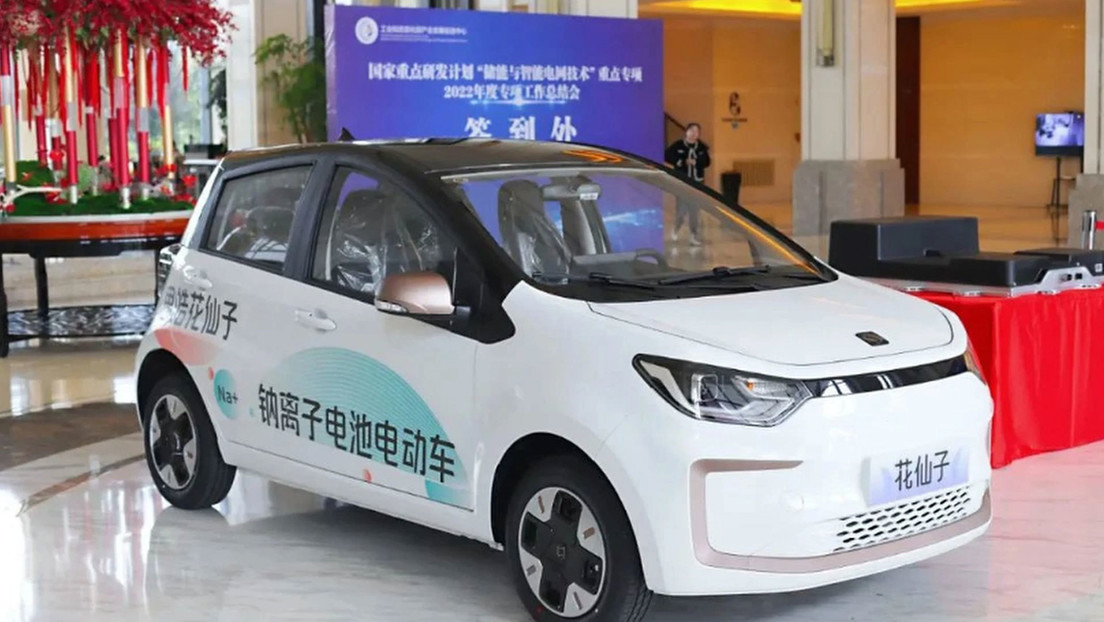
China has emerged as a leader in the development of sodium-ion battery technology for electric vehicles (EVs), with manufacturers actively testing units capable of reaching a 400-kilometer range on a single charge. As the global automotive industry seeks alternatives to lithium-ion dependencies, sodium-ion technology has moved from theoretical research to commercial pilot programs, promising lower production costs and improved performance in extreme temperatures.
The transition toward sodium-ion batteries represents a strategic shift for the global energy storage sector. Unlike traditional lithium-ion batteries, which rely on the increasingly expensive and geographically concentrated mining of lithium, sodium-ion batteries utilize abundant and affordable salt-based materials. This shift is designed to stabilize supply chains and reduce the total cost of ownership for electric vehicle consumers, according to industry analysis provided by Contemporary Amperex Technology Co. Limited (CATL).
The Technological Advantage of Sodium-Ion
Sodium-ion technology offers distinct advantages, particularly regarding thermal stability and cold-weather performance. While lithium-ion batteries often experience significant capacity loss in sub-zero temperatures, sodium-ion cells have demonstrated an ability to retain over 90% of their charge capacity at temperatures as low as -20°C. This makes the technology a viable candidate for markets in Northern Europe, Canada, and parts of Asia, as reported by Reuters.
Beyond weather resilience, the cost-benefit analysis is compelling. Sodium-ion battery packs are projected to be significantly cheaper to manufacture than current Lithium Iron Phosphate (LFP) batteries, which are the industry standard for budget-friendly EVs. By eliminating the need for cobalt and nickel, manufacturers can mitigate the price volatility associated with those commodities. Financial disclosures from major battery developers indicate that once production reaches the gigawatt-hour (GWh) scale, the price per kilowatt-hour could drop by roughly 30% compared to existing LFP solutions, according to data cited by Bloomberg.
Commercial Deployment and Timeline
Despite the rapid progress in lab settings, mass-market integration remains subject to long-term reliability testing. While prototype vehicles—some achieving ranges of 400 kilometers—are currently being piloted, industry leaders caution against an immediate full-scale rollout. Wu Zuyu, a senior executive at CATL, has noted that while the technology is technically ready, the maturation of the supply chain and consumer vehicle integration will likely require a five-year horizon to reach widespread adoption, as highlighted in reports by Electrive.
Automakers are already aligning their product roadmaps with this timeline. European manufacturers, including the Renault Group, have publicly expressed interest in sodium-ion technology as a pillar of their future entry-level EV strategies. By integrating these batteries into smaller, urban-focused vehicles, manufacturers aim to lower the entry price for electric mobility, bridging the affordability gap that currently prevents many consumers from transitioning away from internal combustion engines.
Challenges in the Global Battery Market
The primary challenge for sodium-ion batteries remains energy density. Currently, sodium-ion cells struggle to match the high energy density of premium lithium-ion batteries found in long-range luxury electric vehicles. Consequently, the initial commercial application of this technology will likely be restricted to micro-EVs, short-range commuter vehicles, and grid-scale energy storage systems.
Grid-scale storage is already seeing the first wave of commercial application. CATL recently introduced its “TENER” system, the first mass-producible sodium-ion energy storage solution designed to operate at the GWh scale. This development is essential for stabilizing power grids that rely heavily on intermittent renewable energy sources, such as wind and solar, as described in official company updates provided by CATL’s corporate communications.
Next Steps for EV Adoption
The next major checkpoint for this technology will be the first large-scale fleet deployments, expected to occur within the 2025–2026 fiscal cycle. These pilot programs will provide the data necessary for safety regulators to certify sodium-ion packs for broader consumer use in diverse climates. As manufacturers continue to refine the electrolyte composition and anode structures, the industry anticipates a clearer roadmap for the next generation of affordable EVs.
For investors and consumers, the focus remains on the upcoming annual results from the major battery producers, which are expected to detail the scalability of their sodium-ion production lines. We encourage readers to share their thoughts on the transition to sodium-ion technology in the comments section below.