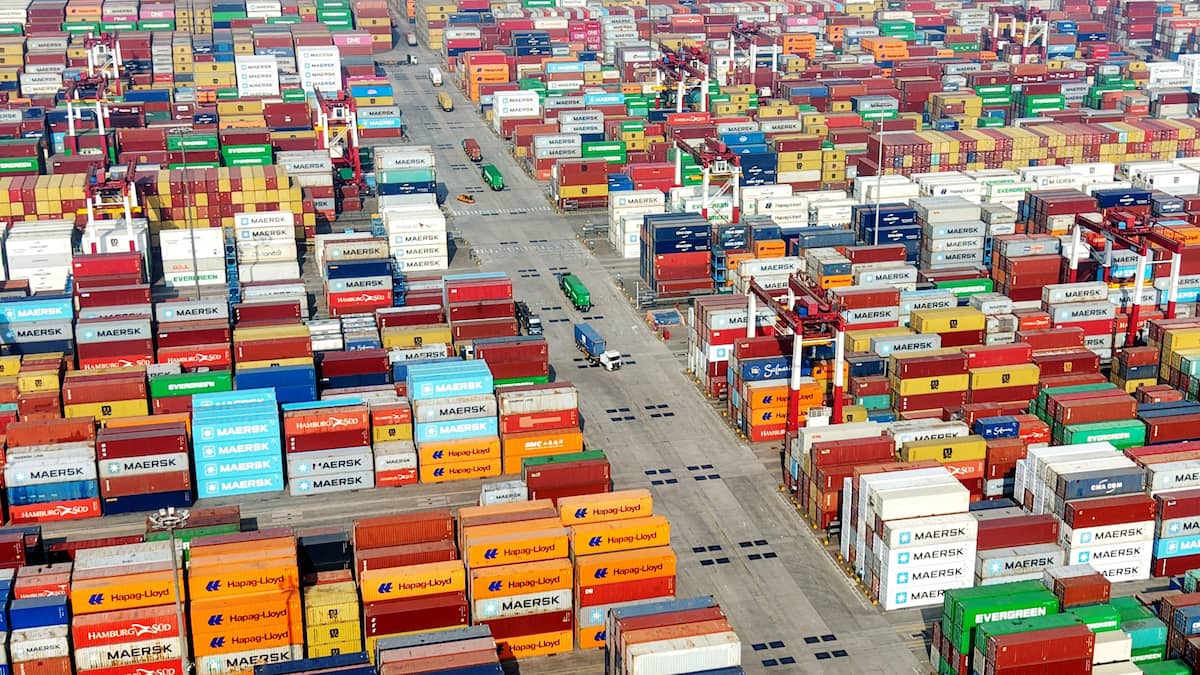
London, UK – The global trade landscape is once again shifting as Beijing calls for the immediate removal of unilateral tariffs imposed by the United States, following a recent Supreme Court ruling that curtailed the Trump administration’s ability to enact such measures without Congressional approval. The decision, delivered on February 21, 2026, has prompted a flurry of reactions from both sides, with China urging Washington to dismantle trade barriers and the US exploring alternative avenues to maintain import restrictions. This development arrives as preparations continue for a planned visit by former President Donald Trump to China at the end of March, a trip that now takes place against a backdrop of heightened trade tensions and legal challenges.
The Supreme Court’s ruling centers on the legality of tariffs imposed under Section 232 of the Trade Expansion Act of 1962, which allows the President to impose tariffs on imports deemed a threat to national security. The court found that the “emergency economic” justification used by the Trump administration to bypass Congressional oversight did not meet the legal threshold. This decision impacts a significant portion of the tariffs enacted during the previous administration, particularly those targeting steel and aluminum imports. The ruling doesn’t invalidate all tariffs, but it significantly limits the executive branch’s power to impose them unilaterally, potentially reshaping the future of US trade policy. The core of the dispute revolves around the balance of power between the executive and legislative branches regarding trade regulation, a debate with far-reaching implications for international commerce.
In response to the court’s decision, the Trump administration, through the Office of the United States Trade Representative, has announced a new 15% global tariff, set to take effect on February 24, 2026, for a period of 150 days, with certain sectoral exemptions. This move, described by some as a workaround to the Supreme Court’s ruling, has drawn sharp criticism from Beijing. The Chinese Ministry of Commerce issued a statement on Monday, February 23, 2026, expressing its assessment of the ruling and reiterating its call for the US to abolish all unilateral tariffs. The Ministry further warned that China would resolutely defend its interests and closely monitor the situation as the US considers alternative measures, such as trade investigations, to maintain import restrictions. This stance underscores China’s commitment to protecting its economic interests in the face of ongoing trade disputes.
China’s Response and Concerns
The Chinese Ministry of Commerce’s statement emphasized that the reciprocal tariffs, those imposed on fentanyl and other unilateral measures enacted by the US violate both international economic and trade rules and US domestic law, serving no beneficial purpose for either party. As reported by the Council on Foreign Relations, this reflects a long-standing Chinese position advocating for a rules-based international trading system. The Ministry reiterated its official mantra: “Cooperation between China and the United States benefits both sides, confrontation harms both sides.” This sentiment highlights China’s desire for a stable and mutually beneficial economic relationship with the US, despite ongoing disagreements.
A significant portion of the tariffs imposed by the Trump administration were justified by concerns over China’s role in the trafficking of fentanyl, a potent opioid responsible for a growing number of overdose deaths in the United States. While the US maintains that China is a primary source of fentanyl precursors, Beijing consistently denies these allegations and has taken steps to regulate the production and export of related chemicals. This issue remains a contentious point in the US-China trade relationship, with both sides accusing the other of insufficient action. The complexities surrounding fentanyl underscore the broader challenges in addressing global drug trafficking and the necessitate for international cooperation.
The Upcoming Trump Visit and Potential for Negotiation
The planned visit by Donald Trump to China from March 31 to April 2, 2026, adds another layer of complexity to the situation. While the White House has framed the trip as an opportunity to “supervise the agreement” reached between Trump and Chinese President Xi Jinping in October 2025 – a temporary truce in the trade war – many observers anticipate potential for further negotiations and even renewed tensions. As CNBC reports, the outcome of this visit could significantly influence the future of US-China trade relations.
Jamieson Greer, the US Trade Representative, has indicated that existing trade agreements with China, the European Union, and other countries are expected to remain in place. But, the recent Supreme Court ruling and the subsequent imposition of new tariffs by the Trump administration cast doubt on the long-term stability of these agreements. The potential for further escalation remains high, particularly if negotiations between Trump and Xi Jinping fail to yield substantial progress. The fragility of the October truce underscores the inherent volatility of the US-China trade relationship.
Impact on Global Markets
The ongoing trade dispute between the US and China has far-reaching implications for global markets. Tariffs increase the cost of goods, disrupt supply chains, and create uncertainty for businesses. This can lead to slower economic growth, reduced investment, and higher prices for consumers. The recent Supreme Court ruling and the US’s response have exacerbated these concerns, prompting investors to reassess their positions and brace for potential market volatility. The interconnected nature of the global economy means that any significant disruption to US-China trade will inevitably have ripple effects worldwide.
the dispute extends beyond tariffs to encompass broader issues such as intellectual property rights, technology transfer, and cybersecurity. These issues are particularly sensitive for both countries, and resolving them will require sustained dialogue and a willingness to compromise. The upcoming Trump visit presents an opportunity to address these concerns, but the potential for miscalculation and escalation remains significant. The stakes are high, and the outcome of these negotiations will have a profound impact on the future of the global trading system.
Key Takeaways
- The US Supreme Court has limited the President’s ability to impose tariffs unilaterally, requiring Congressional approval for such measures.
- China is calling for the complete removal of US tariffs, arguing they violate international trade rules.
- Donald Trump is scheduled to visit China at the end of March, with trade negotiations expected to be a key focus.
- The ongoing trade dispute between the US and China continues to create uncertainty for global markets.
- The issue of fentanyl and its precursors remains a contentious point in the US-China relationship.
As the situation continues to evolve, businesses and investors will need to closely monitor developments and adjust their strategies accordingly. The next key checkpoint will be the outcome of Donald Trump’s visit to China and the subsequent response from both governments. The world will be watching closely to notice whether this trip marks a turning point in the US-China trade relationship or a further escalation of tensions.
Do you think the US and China can reach a lasting trade agreement? Share your thoughts in the comments below and share this article with your network.
Worth a look
- Who Pays for Climate Disasters? Funding the Cost of Global Catastrophes
- DeepSeek AI: China’s New Model 100x Cheaper Than Claude Fable 5
- China’s AI Sector Challenges US Rivals With High-Performance Models (archyworldys.com)
- BP Q2 Profit Hits $5.7 Billion Amid Trump Criticism of Big Oil Windfalls (time.news)