
The successful docking of the Shenzhou-23 spacecraft with the Tiangong space station on May 25, 2026, marks more than just a routine expansion of China’s orbital presence. For the China National Space Administration (CNSA), this mission represents a critical pivot from short-term orbital stays toward the sustained, long-duration human presence required to conquer the next frontier: the lunar surface.
As the international community watches the developments unfolding in Low Earth Orbit (LEO), the implications of this mission extend far beyond the technical achievement of docking. China is signaling a clear intention to master the physiological, psychological, and technological challenges of living in space for extended periods—a prerequisite for its ambitious goal of landing taikonauts on the moon by 2030.
The current mission trajectory suggests that Beijing is no longer content with merely visiting space. We see preparing to inhabit it. By testing the limits of human endurance through year-long missions, the CNSA is building the foundational expertise necessary to transition from Earth-centric orbits to the more hostile environment of cislunar space.
The Endurance Test: Why One Year Matters
The decision to experiment with year-long missions for taikonauts is a calculated move to address the “biological barrier” of deep-space exploration. While short-term missions allow for scientific research and station maintenance, they do not provide sufficient data on the long-term degradation of the human body in microgravity.
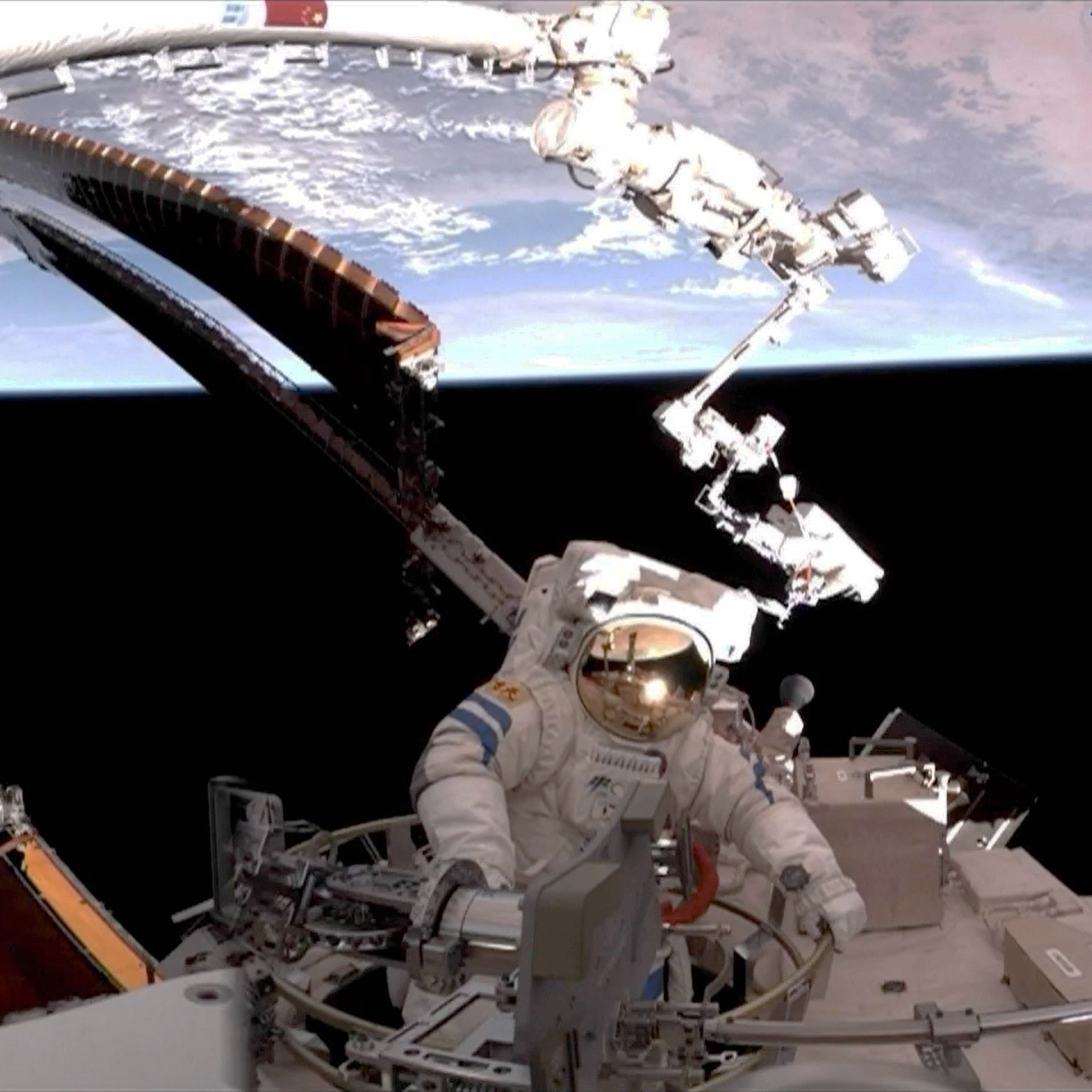
To reach the moon and potentially establish a base, astronauts must survive months, if not years, of continuous exposure to space. This mission serves as a living laboratory for several critical areas of study:

- Physiological Adaptation: Long-duration flight is known to cause significant bone density loss and muscle atrophy. Researchers are monitoring how the body compensates for the lack of gravitational loading and whether current exercise protocols are sufficient to mitigate these effects.
- Spaceflight-Associated Neuro-ocular Syndrome (SANS): One of the most pressing concerns for long-term spaceflight is the change in ocular pressure and shape that can affect vision. Extended stays on Tiangong allow scientists to study the progression of SANS in a controlled environment.
- Radiation Shielding: While the Earth’s magnetic field provides some protection in LEO, the cumulative effects of cosmic radiation over a year are a vital metric for planning missions to the lunar south pole.
- Psychological Resilience: The isolation and confinement of a space station can take a significant toll on mental health. Testing the social dynamics and cognitive performance of a crew over 365 days is essential for the high-stakes environment of a lunar landing.
By pushing the boundaries of habitation, China is essentially stress-testing its life-support systems. A closed-loop Environmental Control and Life Support System (ECLSS) must be nearly perfect to sustain a crew for a year without frequent resupply, a capability that will be non-negotiable for any permanent lunar outpost.
The Roadmap to 2030: From Tiangong to the Moon
The connection between the current Shenzhou-23 mission and the 2030 lunar landing target is direct and strategic. The Tiangong space station is not merely a scientific outpost; it is a functional prototype for lunar habitation. Every successful long-duration mission provides the data necessary to refine the hardware and human protocols that will be used in the upcoming lunar programs.
China’s lunar strategy is characterized by a stepwise approach: orbital reconnaissance, robotic landings, and eventually, crewed missions. The expertise gained in managing a year-long crewed mission in LEO will directly inform the development of the lunar landers and the pressurized habitats intended for the Moon’s surface.
The CNSA’s timeline is aggressive but structured. Following the successful mastery of long-duration stays, the next phase will involve more complex maneuvers, including lunar orbit rendezvous and the deployment of automated lunar base components. The transition from the “orbital era” to the “lunar era” depends entirely on the successes and failures of the current generation of taikonauts.
A New Era of the Space Race
The intensification of China’s space program has reframed the global geopolitical landscape. For decades, the space race was defined by the Cold War competition between the United States and the Soviet Union. Today, we are witnessing a multipolar era where space capability is a primary metric of national prestige and technological sovereignty.
The competition is most visible in the contrast between China’s program and NASA’s Artemis program. While the United States seeks to build international coalitions through the Artemis Accords, China is pursuing a more centralized, state-driven model of exploration. This divergence in approach—one based on large-scale international cooperation and the other on rapid, independent technological leaps—is creating two distinct ecosystems of space law, standards, and infrastructure.
This competition is not just about “planting flags.” It is about the control of strategic resources, such as lunar water ice, and the establishment of the first permanent presence on another celestial body. The ability to sustain life in space for a year is a clear indicator of which nation will lead the commercial and scientific exploitation of the lunar economy.
Comparison: Current Space Exploration Objectives
| Feature | China (CNSA) Focus | USA (NASA/Artemis) Focus |
|---|---|---|
| Primary Station | Tiangong (Modular LEO Station) | Gateway (Lunar Orbit Station) |
| Lunar Goal | Crewed landing by 2030 | Crewed landing via Artemis program |
| Mission Philosophy | Rapid, centralized state development | International coalition & private partnerships |
| Key Test Metric | Long-duration LEO habitation | Deep space transit and lunar orbit stability |
What Happens Next?
As the Shenzhou-23 crew begins their tenure aboard the Tiangong space station, the focus will shift to the real-time data coming back to Earth. The scientific community will be looking for specific milestones in life-support efficiency and crew health metrics that will determine the feasibility of the next phase of the lunar program.
The next major checkpoint for the CNSA will be the scheduled evaluations of the station’s expanded scientific modules and the subsequent launch cycles of the Shenzhou series, which will continue to rotate crews and build the cumulative expertise required for the 2030 deadline. The world will be watching to see if China’s “long-stay” strategy successfully bridges the gap between Earth’s orbit and the lunar surface.
How do you view the escalating space race? Is the push for lunar habitation a necessary leap for humanity, or a distraction from terrestrial challenges? Share your thoughts in the comments below and share this article with your network.
Related reading