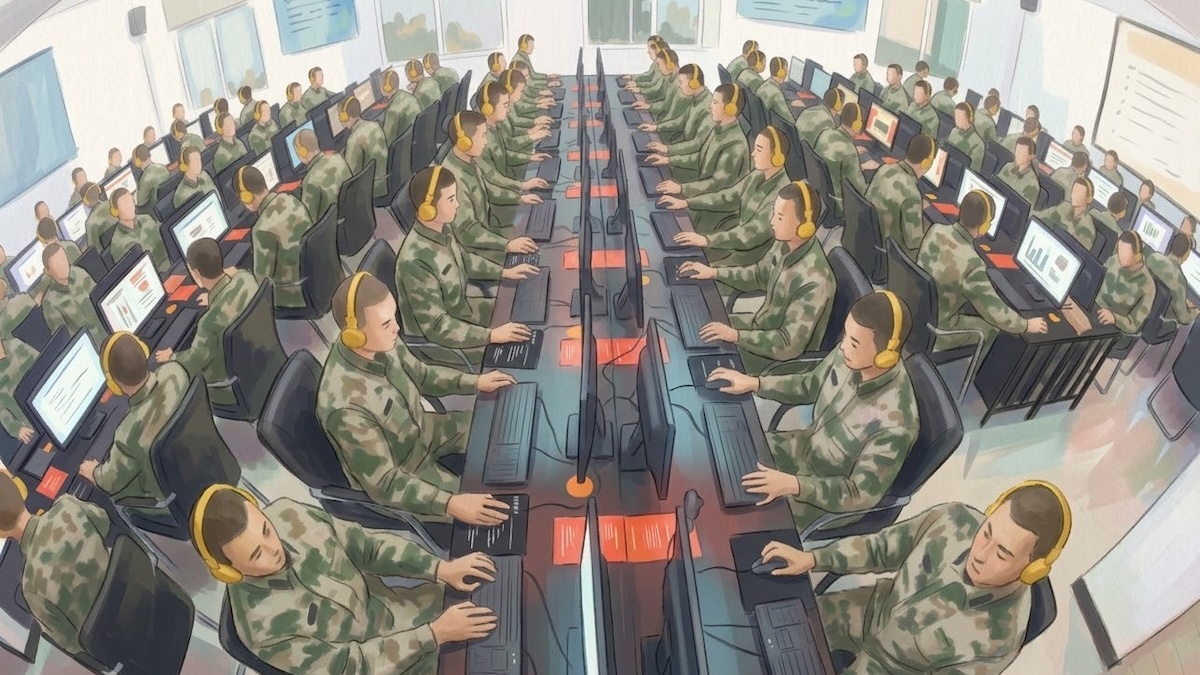
The specter of conflict over Taiwan looms large in geopolitical calculations, and increasingly, China’s approach to a potential confrontation extends beyond traditional military domains. A key element of this strategy, as analysts have observed, is a growing focus on what’s known as cognitive warfare – efforts to influence the perceptions and decision-making of adversaries, and even their own population. But how has China’s thinking on this evolved, and where does it stand in its pursuit of capabilities to shape the cognitive landscape of a potential conflict?
In 2022, Koichiro Takagi explored China’s early plans for leveraging artificial intelligence in cognitive operations. Now, four years later, the landscape of AI has shifted dramatically, becoming more sophisticated and integrated into military planning. China’s leadership has consistently emphasized “intelligentized warfare,” placing AI at the core of its military modernization efforts. This isn’t simply about developing more advanced weaponry; it’s about fundamentally altering how warfare is conceived and waged, with a significant emphasis on influencing the human element. The question isn’t necessarily about “mind control,” but rather about compressing decision-making timelines and seizing the initiative by manipulating information and perceptions.
The Evolution of Chinese Thinking on Cognitive Operations
China’s interest in cognitive operations isn’t new, but the integration of AI represents a significant escalation. Initially, the focus appeared to be on more ambitious, even theoretical, concepts like directly manipulating the thinking of senior decision-makers. However, recent analysis of publications in PLA Daily, a key mouthpiece for the People’s Liberation Army, suggests a shift in emphasis. While discussion of AI’s potential in the cognitive domain remains widespread, practical applications are taking precedence. These include enhancing situational awareness, improving decision support systems, and developing unmanned weapons systems – all of which contribute to a more comprehensive and integrated approach to warfare.
This pragmatic shift doesn’t mean China has abandoned its interest in more sophisticated cognitive techniques. Rather, it suggests a recognition that building a foundation of practical AI capabilities is essential before attempting more ambitious operations. As Takagi’s analysis indicates, the focus is increasingly on “mass persuasion” – shaping public opinion and weakening the social cohesion of potential adversaries, particularly Taiwan. This is evidenced by reports from Taiwan’s National Security Bureau, which documented a sharp increase in Chinese disinformation campaigns, bot activity, and influence operations in 2025. These efforts are designed to sow discord and undermine resistance in the event of a military confrontation.
AI and the PLA: Experimentation and Integration
The United States and Taiwan have both acknowledged the PLA’s ongoing experimentation with AI-enabled capabilities. This includes not only the development of sophisticated disinformation tools but also the use of AI to analyze vast amounts of data, identify vulnerabilities in adversary systems, and optimize military strategies. Colonel Koichiro Takagi, Chief of the Defense Policy Section J5 at the Japan Joint Staff, has noted the PLA’s broad adoption of AI across multiple military functions. This includes information processing, decision support, and the deployment of unmanned systems. The PLA’s focus on integrating AI into its existing infrastructure suggests a long-term commitment to leveraging this technology for military advantage.
However, the extent to which China is *overestimating* the potential of AI remains a subject of debate. While the PLA is clearly investing heavily in AI research and development, the practical challenges of deploying these technologies in a real-world conflict are significant. AI systems are vulnerable to hacking, jamming, and deception, and their performance can be unpredictable in complex and dynamic environments. The ethical implications of using AI in warfare, particularly in the context of cognitive operations, are considerable.
Comparing Approaches: China and the United States
The Chinese approach to cognitive operations differs significantly from that of the United States. While the U.S. Military is also exploring the use of AI in information warfare, the emphasis is often on defensive measures, such as countering disinformation and protecting critical infrastructure. China, appears to be more willing to actively employ offensive cognitive tactics, including the spread of propaganda and the manipulation of public opinion. This difference reflects fundamental differences in political systems and strategic cultures.
the organizational structure surrounding AI development differs markedly. In the U.S., the AI industry is largely driven by the private sector, with a focus on commercial applications and market share. China, however, has a more centralized and regimented approach, with the government playing a leading role in directing AI research and development. As Hudson Institute scholar Arthur Herman points out, anything developed in AI by private Chinese companies automatically becomes the property of the People’s Liberation Army. This centralized control allows China to rapidly translate AI innovations into military capabilities.
The Rise of Disinformation and Influence Operations
The increasing sophistication of AI-powered disinformation tools poses a significant threat to democratic societies. These tools can be used to create realistic fake videos and audio recordings, generate convincing fake news articles, and amplify existing social divisions. The use of AI-powered bots to spread disinformation on social media platforms is particularly concerning, as these bots can operate at scale and are tough to detect. China’s reported increase in disinformation activities targeting Taiwan underscores the potential for these tools to be used in a geopolitical context.
The recent announcement by China regarding the mass production of humanoid robots by 2025 also raises concerns. These robots, largely driven by AI, could potentially be used for a variety of purposes, including surveillance, propaganda dissemination, and even direct intervention in social and political processes. While the full extent of their capabilities remains to be seen, their development highlights China’s ambition to become a leader in AI-powered robotics.
Looking Ahead: The Future of Cognitive Warfare
As AI technology continues to advance, the potential for cognitive warfare will only increase. China’s ongoing investment in AI and its willingness to experiment with new tactics suggest that it will remain at the forefront of this evolving domain. The challenge for the United States and its allies is to develop effective strategies for countering Chinese cognitive operations, protecting critical infrastructure, and safeguarding democratic values.
The development of robust defenses against disinformation, the promotion of media literacy, and the strengthening of international cooperation are all essential steps in this effort. The ethical implications of AI-powered warfare and to establish clear guidelines for its responsible use. The next key development to watch will be the PLA’s implementation of its latest five-year modernization plan, expected to be unveiled in late 2026, which will likely provide further insight into its priorities and capabilities in the cognitive domain.
The evolving landscape of cognitive warfare demands constant vigilance and adaptation. As China continues to refine its strategies and capabilities, the international community must work together to ensure that this powerful technology is used responsibly and does not undermine global security and stability.
What are your thoughts on China’s approach to cognitive warfare? Share your insights and perspectives in the comments below.
Related reading