
Diplomatic tensions in the Pacific have reached a critical juncture following a high-profile visit to Beijing by U.S. President Donald Trump. In the wake of the visit, the government of Taiwan has found itself in a delicate position, forced to balance its desire for sovereignty with the realities of its security relationship with Washington, specifically regarding Taiwan independence US arms sales and military commitments.
The friction intensified after President Trump issued a stern warning to Taipei, urging the island to avoid any formal declaration of independence. This warning, delivered in a televised interview, has prompted a swift and firm rebuttal from the Taiwanese government, which reaffirmed its status as a sovereign entity while reminding the United States of its long-standing obligations to provide military support.
The current standoff highlights the precarious “strategic ambiguity” that has defined U.S.-Taiwan relations for decades—a policy that provides robust military capabilities to the island to deter aggression, without granting full diplomatic recognition that would trigger a direct confrontation with the People’s Republic of China.
Trump’s Warning: ‘Lower the Temperature’
The catalyst for the current diplomatic spat was an interview with Fox News, recorded shortly before President Trump departed Beijing. During the interview, which followed meetings with Chinese President Xi Jinping, Trump expressed a clear reluctance to be drawn into a military conflict over the island’s political status.
Addressing the possibility of Taiwan declaring independence, President Trump stated, “I don’t want someone to declare independence and, you know, we’re then supposed to go 15,000 kilometers to fight a war.” He urged both Taipei and Beijing to “lower the temperature,” signaling a preference for stability over the active pursuit of Taiwanese sovereignty.
This rhetoric marks a significant moment in the administration’s approach to the region, emphasizing the logistical and political costs of a potential war in the Pacific. By framing the conflict in terms of distance and effort, the U.S. President appeared to signal a limit to the level of risk Washington is willing to assume to protect a formal declaration of independence.
Taiwan’s Assertion of Sovereignty
The response from Taipei was immediate and resolute. The Taiwanese Ministry of Foreign Affairs issued a statement rejecting the notion that the island is subordinate to the mainland, asserting that Taiwan is already a functional, independent state.

“Taiwan is a democratic, sovereign and independent nation, which is not subordinate to the People’s Republic of China,” the ministry declared. In its response, the government emphasized that its status is a matter of fact rather than a future proclamation, effectively countering the U.S. President’s warning against a “declaration” of independence by arguing that such independence already exists.
Despite the tension caused by Trump’s comments, the Ministry of Foreign Affairs maintained a diplomatic tone toward Washington, stating its belief that the overall U.S. Policy toward Taiwan remains “unchanged.” This suggests that Taipei is attempting to separate the rhetoric of the U.S. President from the institutional commitments of the U.S. Department of State and the Pentagon.
The Critical Link: Arms Sales and Military Support
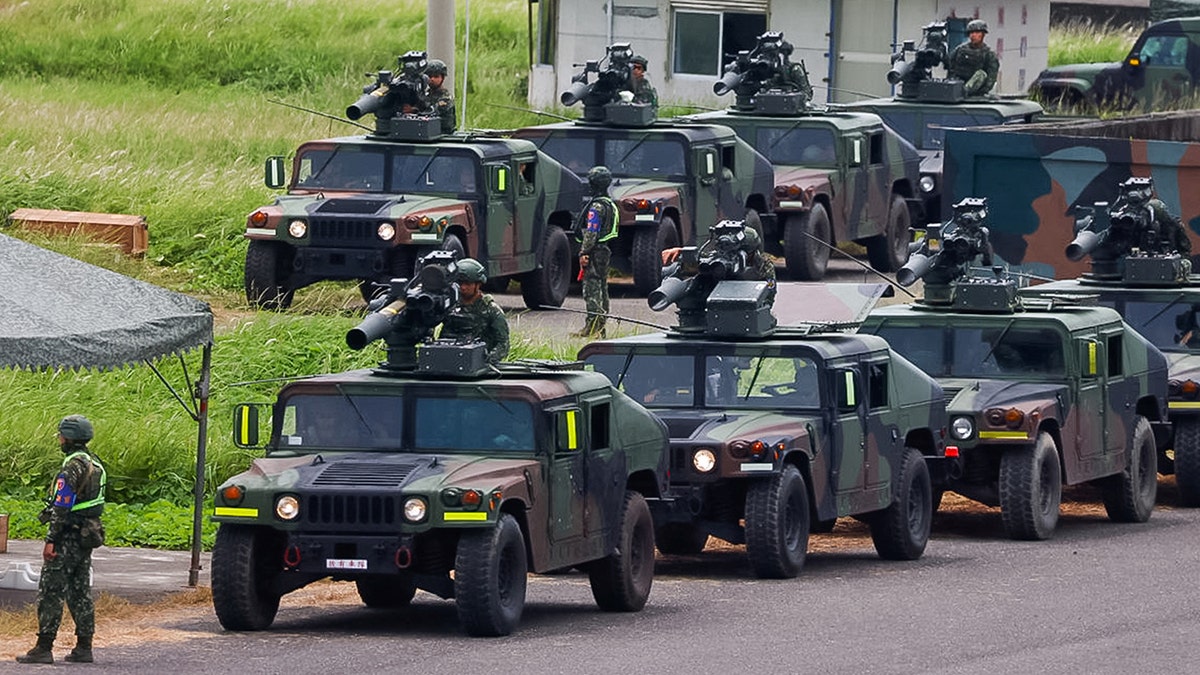
Central to this dispute is the ongoing commitment of the United States to sell advanced weaponry to Taiwan. While the U.S. Does not provide formal diplomatic recognition, it has historically maintained a robust military relationship to ensure the island can defend itself against potential incursions.
In response to the warnings from Washington, the Taiwanese government has explicitly reminded the United States of its commitment to these arms sales. For Taipei, the acquisition of high-tech defense systems is not merely a military necessity but a tangible sign of U.S. Support for its survival as a democratic entity.
The insistence on these sales serves as a hedge against the unpredictability of U.S. Political leadership. By anchoring the relationship in formal arms agreements and military hardware, Taiwan seeks to ensure that its security is not solely dependent on the shifting rhetoric of any single administration.
The Geopolitical Triangle: Washington, Taipei, and Beijing
The current tension is a reflection of the broader, systemic conflict between the U.S. And China over the future of the Asia-Pacific region. The three actors are locked in a complex dance of deterrence and diplomacy:
- The People’s Republic of China: Beijing continues to view Taiwan as one of its provinces, maintaining that the island must eventually be unified with the mainland. China has consistently pressured the U.S. To cease arms sales and limit official contact with Taipei.
- The United States: Washington seeks to maintain a “Free and Open Indo-Pacific,” which involves preventing a forced unification of Taiwan by China. However, as seen in President Trump’s recent comments, there is an internal tension between providing military deterrence and avoiding a catastrophic war.
- Taiwan: Taipei seeks to maintain its democratic way of life and sovereign autonomy without provoking a conflict that could lead to its absorption into the People’s Republic of China.
The insistence by the Ministry of Foreign Affairs of Taiwan that the island is not subordinate to Beijing is a direct challenge to China’s “One China” principle, while the reminder to the U.S. About arms sales is a plea for consistency in the face of strategic volatility.
Key Takeaways of the Current Crisis
| Stakeholder | Core Position | Primary Concern |
|---|---|---|
| United States | Robust military support; no formal recognition of independence. | Avoiding a high-cost war “15,000 kilometers” away. |
| Taiwan | Already a sovereign, democratic, and independent nation. | Ensuring continued U.S. Arms sales and security guarantees. |
| China | Taiwan is a province that must be unified with the mainland. | Ending U.S. Military interference in “internal affairs.” |
What Happens Next?
The immediate focus now shifts to whether the U.S. Administration will follow through on its scheduled arms deliveries or if the rhetoric from the Beijing visit will translate into a policy shift. Diplomatic observers will be watching for any changes in the frequency of high-level visits between Washington and Taipei, as well as any new military maneuvers in the Taiwan Strait.
For now, the “temperature” remains high. While President Trump has called for a cooling-off period, the fundamental disagreement over Taiwan’s status remains unresolved. The island’s insistence on its independence, coupled with its demand for military hardware, ensures that the cross-strait relationship will remain one of the world’s most dangerous flashpoints.
The next critical checkpoint will be the upcoming review of military assistance packages and any official joint statements issued following the U.S. President’s return to Washington.
Do you think the U.S. Should maintain its current level of military support for Taiwan despite the risks of escalation? Share your thoughts in the comments below or share this article to join the conversation.
Worth a look
- Denmark News: Teenagers Arrested for School Terror Plot and SAS Strike Threats
- Ukraine Drone Strikes Hit Russian Oil Refinery and Wildberries Logistics Center
- China’s AI Sector Challenges US Rivals With High-Performance Models (archyworldys.com)
- Hugging Face CEO: China’s Open Models Could Overtake US AI by Next Year (time.news)