Beijing’s Economic-Technological Development Area (BDA), also known as Yizhuang, is accelerating the construction of a global-scale embodied AI super factory, aiming for an annual production capacity of 500,000 humanoid robots by 2030. This development establishes the first 10,000-unit scale production facility for embodied intelligence within the Beijing-Tianjin-Hebei region, marking a significant shift from prototype development to mass-market manufacturing.
The expansion in Yizhuang reflects a broader industrial push to dominate the humanoid robotics sector. Local reports describe the district as increasingly resembling a “science fiction world” due to the density of high-tech manufacturing and automated systems. According to industry observations, the region is transitioning into a primary hub for the “embodied AI” supply chain, integrating advanced hardware with sophisticated machine learning models.
How is Beijing Yizhuang scaling humanoid robot production?
The Beijing Economic-Technological Development Area has set an ambitious target to reach a production capacity of 500,000 humanoid robot units annually by the year 2030. To reach this milestone, the district is focusing on the creation of “super factories” designed specifically for embodied AI. These facilities are intended to serve as global benchmarks for the industry, moving beyond small-batch assembly toward high-volume, standardized manufacturing.
A critical component of this scaling effort is the recent launch of the first 10,000-unit scale embodied intelligence robot factory in the Beijing-Tianjin-Hebei area. This facility represents a major leap in manufacturing capability. While previous years focused on research and development (R&D) and limited pilot testing, the move to 10,000-unit production lines indicates that the industry is entering a phase of rapid commercialization.
The scaling process involves several layers of the supply chain. The BDA is working to cluster component manufacturers—producing everything from high-torque motors and precision reducers to tactile sensors—within close proximity to the final assembly plants. This clustering strategy aims to reduce logistics costs and shorten the feedback loop between hardware engineers and AI software developers.
The rapid growth is already visible in the production metrics of individual firms within the cluster. Some companies operating within the Beijing robotics sector have reportedly expanded their production capacity tenfold within a single six-month period. This sudden surge in manufacturing readiness suggests that the underlying technology for humanoid movement and task execution has reached a level of stability suitable for industrial scaling.
What are the technical and logistical challenges facing the industry?
Despite the rapid expansion of physical hardware production, the embodied AI industry faces a critical “data bottleneck.” Unlike traditional Large Language Models (LLMs) that train on vast quantities of existing text from the internet, embodied AI requires high-quality, real-world physical interaction data to learn how to navigate and manipulate the environment. This data is significantly harder to collect and process at scale.
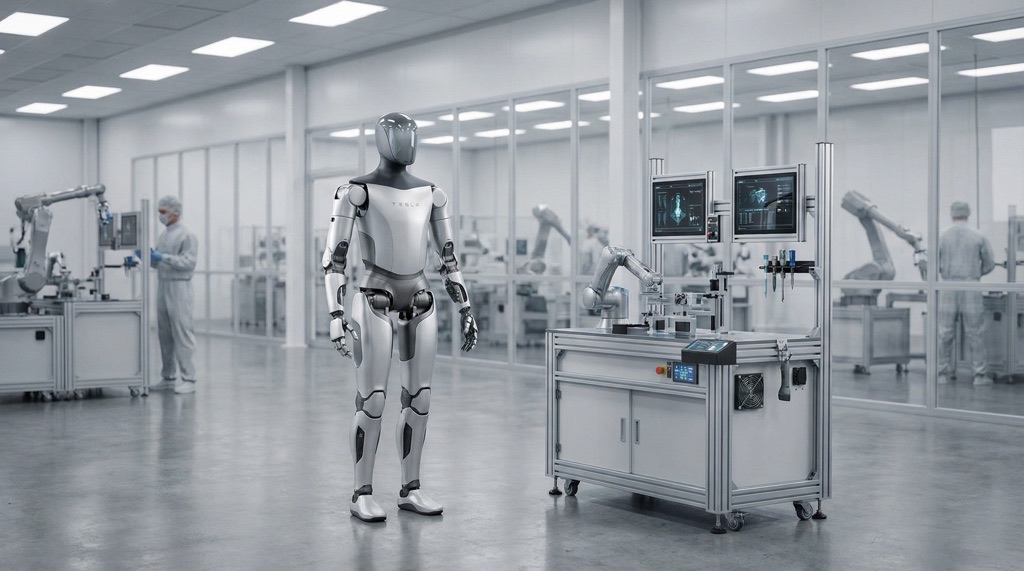
To function effectively, a humanoid robot must understand the relationship between its digital commands and physical outcomes. This requires “multimodal” data—integrating visual input, tactile feedback, and proprioception (the sense of its own body position). The current challenge for developers in the Yizhuang cluster is generating enough diverse, high-fidelity data to ensure robots can operate reliably in unpredictable human environments.
Industry analysts suggest that the industry must find ways to bridge the gap between simulation and reality. While “sim-to-real” transfer—training robots in a virtual environment before deploying them in the real world—is a common practice, the discrepancies between simulated physics and actual physical laws can lead to errors. Solving this requires more sophisticated simulation tools and more efficient ways to ingest real-world sensor data back into the training loop.
Furthermore, the rapid scaling of hardware capacity creates a secondary pressure on the software layer. As factories move toward producing hundreds of thousands of units, the demand for standardized, robust, and safe AI operating systems increases. Each unit must be able to receive seamless over-the-air (OTA) updates to improve its capabilities and safety protocols without requiring manual hardware adjustments.
Why does the Yizhuang robotics cluster matter for global markets?
The development of the BDA as a humanoid robot super-hub has significant implications for the global technology supply chain. By establishing a massive production base in China, the region is positioning itself to lower the unit cost of humanoid robots through economies of scale. This could accelerate the adoption of robotics in sectors such as logistics, elderly care, and hazardous manufacturing worldwide.
The economic impact of this cluster extends beyond the robots themselves. The concentration of expertise in Yizhuang attracts investment in specialized semiconductors, advanced materials, and precision engineering. This creates a self-sustaining ecosystem where the high demand for robot components drives further innovation in the underlying technologies.

For global competitors, the speed of the Beijing-Tianjin-Hebei expansion serves as a benchmark. The ability to move from a 10,000-unit scale to a 500,000-unit scale within a decade is an industrial feat that requires intense coordination between government policy, private capital, and academic research. This “speed-to-market” capability is a core component of the regional competitive advantage.
The following table outlines the projected trajectory of production capacity in the Beijing economic zone as it moves toward its 2030 goals:
| Production Phase | Estimated Scale | Primary Focus |
|---|---|---|
| Current/Recent Milestone | 10,000 units | First large-scale manufacturing lines |
| Mid-term Expansion | Not explicitly stated | Supply chain integration and data scaling |
| 2030 Target | 500,000 units | Global-scale mass production |
Understanding Embodied AI and its role in robotics
To understand why the Yizhuang development is so significant, it is necessary to define “embodied AI.” In traditional robotics, machines follow pre-programmed instructions to perform repetitive tasks in controlled environments. Embodied AI, however, involves an artificial intelligence that “lives” within a physical body and learns through interaction with its surroundings.
This distinction is vital. An embodied AI system does not just recognize a cup; it understands the weight of the cup, the friction of the surface it sits on, and the precise amount of force required to lift it without breaking it. This level of intelligence is what allows humanoid robots to transition from factory floors to more complex, unstructured environments like homes or hospitals.
The hardware required for this is significantly more complex than standard industrial robots. It requires high-degree-of-freedom joints, advanced sensory skins, and highly efficient power management systems to ensure the robot can operate for extended periods. The “super factories” being built in Beijing are designed to handle the extreme precision required to manufacture these complex components at a massive scale.
The convergence of high-end hardware manufacturing and cutting-edge AI training is what defines this new era of industrial production. The BDA is attempting to master both sides of this equation simultaneously.
The next major checkpoint for the industry will involve official reports on the successful integration of large-scale data collection methods to resolve current training bottlenecks. Observers will be watching for updates on the deployment of the first 10,000-unit production batches and any subsequent announcements regarding the technical specifications of the 2030 capacity roadmap.
Do you believe humanoid robots will reach mass-market adoption by 2030? Share your thoughts in the comments below and share this article with your network.